Harmonized brain ontology and 3D atlases for human, macaque, and marmoset basal ganglia.
A major goal of the BRAIN Initiative Cell Atlas Network (BICAN) is to create a suite of foundational reference cell atlases and associated standards for human and nonhuman primate brains. Central to this goal is the creation of cross-species-harmonized cellular taxonomies and structural parcellations with formal ontologies that can be mapped onto 3D reference frameworks, bridging neuroimaging and cellular and histological resolutions. We describe an iterative approach, focused initially on the b
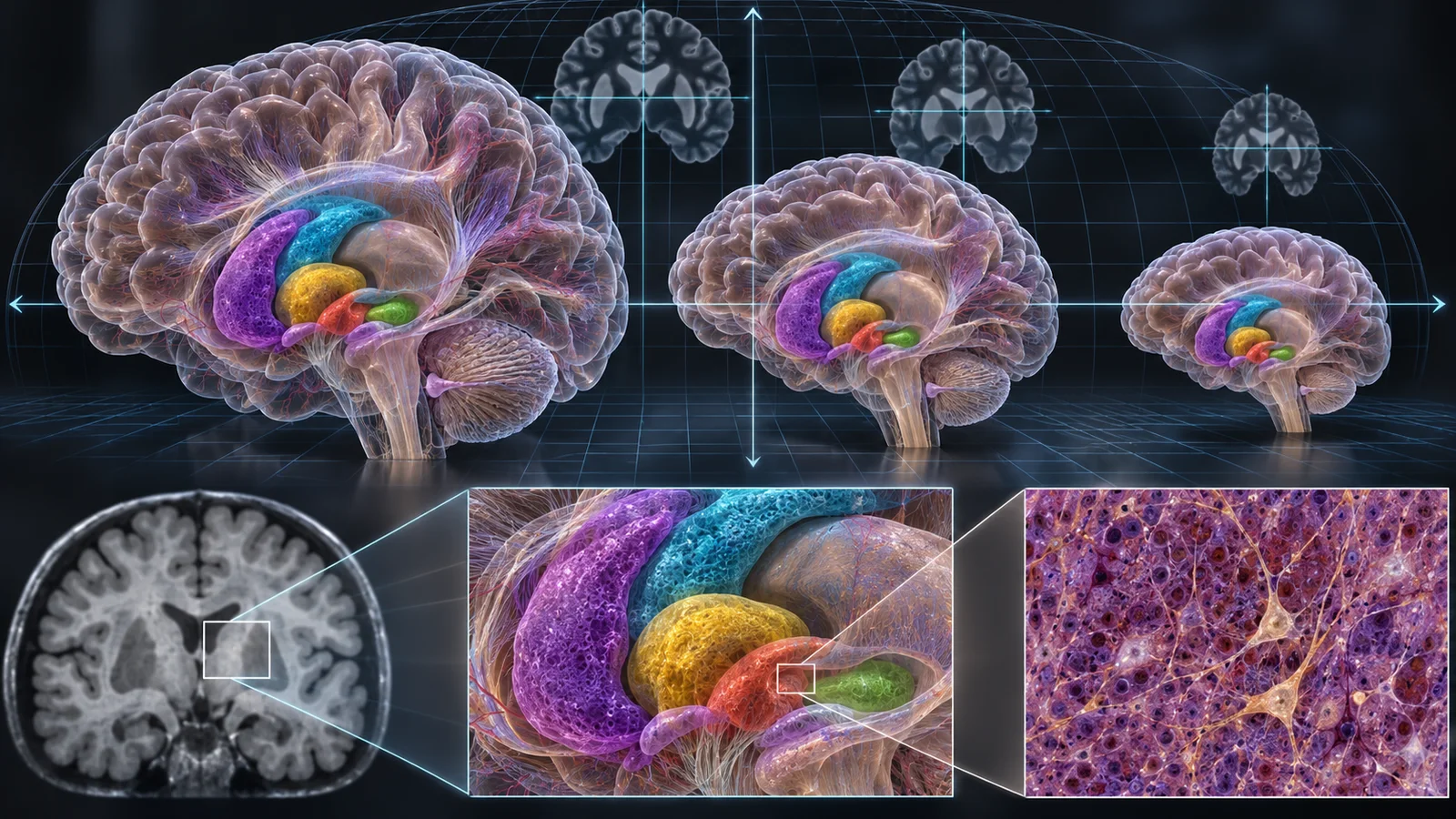
A major goal of the BRAIN Initiative Cell Atlas Network (BICAN) is to create a suite of foundational reference cell atlases and associated standards for human and nonhuman primate brains. Central to this goal is the creation of cross-species-harmonized cellular taxonomies and structural parcellations with formal ontologies that can be mapped onto 3D reference frameworks, bridging neuroimaging and cellular and histological resolutions. We describe an iterative approach, focused initially on the basal ganglia, to co-create structural and cellular ontologies for human, macaque, and marmoset brains and to map and refine structural parcellations into neuroimaging-based common coordinate frameworks. We create a Harmonized Ontology of Mammalian Brain Anatomy (HOMBA) to meet these needs. These references provide the framework for documenting and mapping all experimental sampling in BICAN, allowing analyses of cellular and molecular variation as a function of topographic position and enabling comparisons of cellular, molecular, and neuroimaging-based functional variation across species.