Giant tunneling electroresistance in sliding ferroelectrics
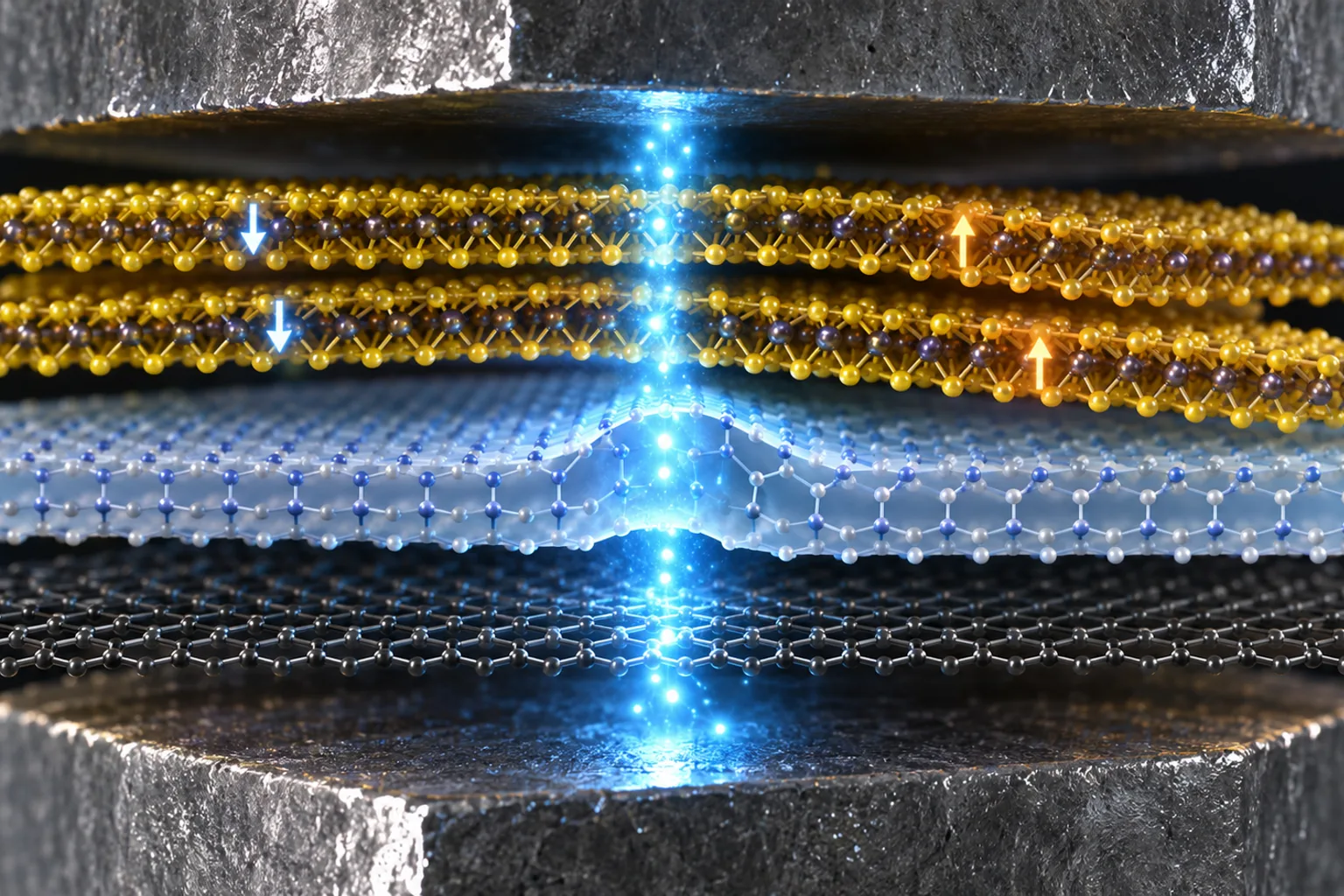
Nonvolatile memories should store information reliably while consuming little energy. Ferroelectric tunnel junctions offer compact readout, but conventional ionic displacement ferroelectrics can fatigue, and two-dimensional sliding ferroelectrics are robust but generate weak readout in two terminal devices. We engineered a van der Waals junction using rhombohedral molybdenum disulfide, hexagonal boron nitride, monolayer graphene, and chromium. This architecture converts small sliding polarizatio
Nonvolatile memories should store information reliably while consuming little energy. Ferroelectric tunnel junctions offer compact readout, but conventional ionic displacement ferroelectrics can fatigue, and two-dimensional sliding ferroelectrics are robust but generate weak readout in two terminal devices. We engineered a van der Waals junction using rhombohedral molybdenum disulfide, hexagonal boron nitride, monolayer graphene, and chromium. This architecture converts small sliding polarization into synergistic modulation of tunneling barrier height and carrier concentration. The devices showed tunneling electroresistance above 10 million, a high conductance state current density of 222 amperes per square centimeter at 0.5 volts, and an endurance beyond 100 billion cycles while switching with 13-nanosecond pulses at an estimated energy of 6.5 femtojoules, offering a route to compact low-power memory.