Formin-1 maintains cochlear microtubule architecture required for hearing in humans and mice.
Formin proteins contribute to the cytoskeletal organization of multiple mammalian organ systems. Genetic defects in formins lead to neurologic, renal, reproductive, and cardiac disorders, but no human phenotype has been described for mutation of FMN1 , encoding formin-1, the first-identified formin. In an extended Palestinian kindred, autosomal recessive congenital hearing loss proved due to homozygosity for FMN1 c.2162-2A>G, which leads to aberrant splicing, nonsense mediated decay, and abse
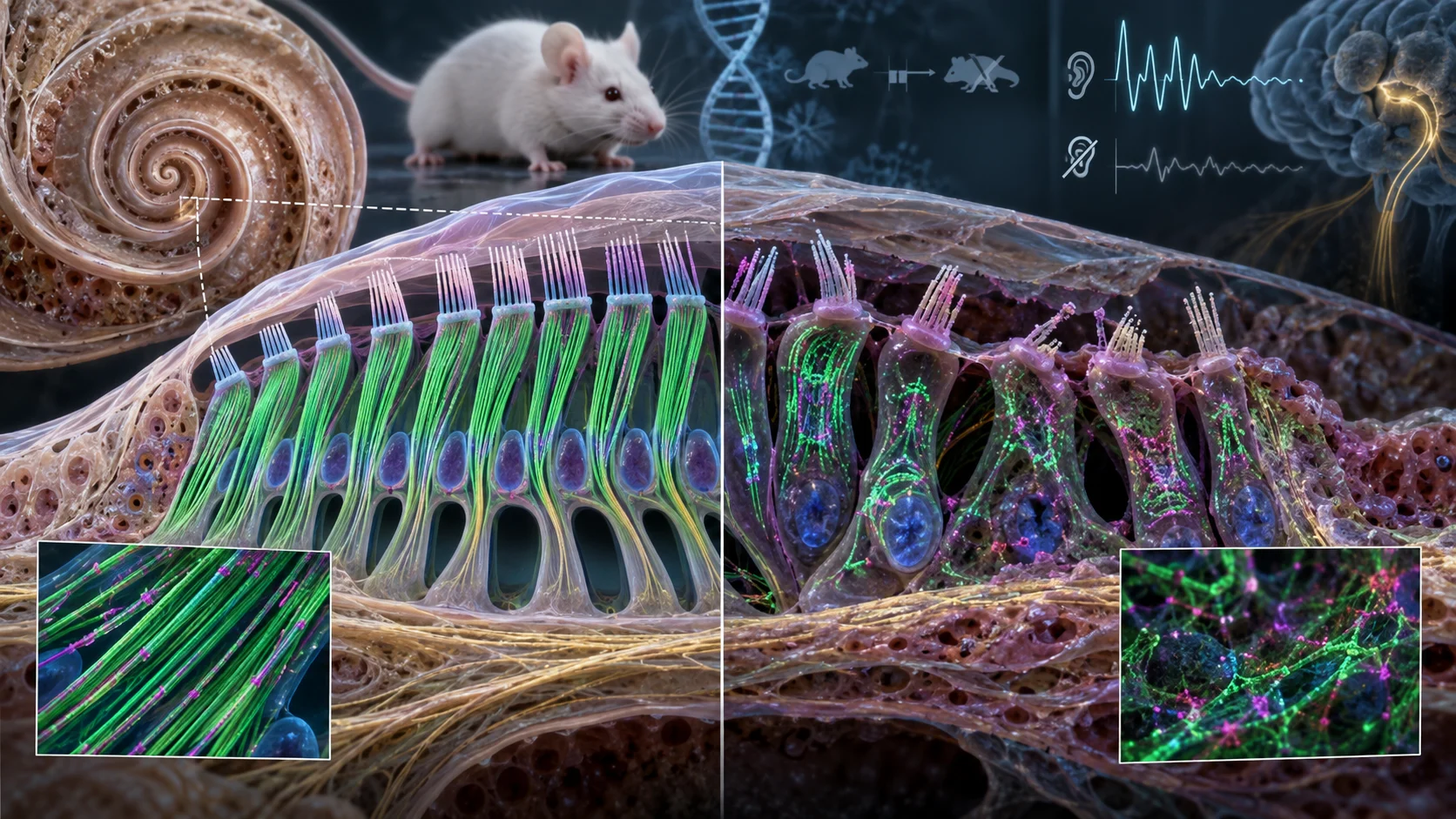
Formin proteins contribute to the cytoskeletal organization of multiple mammalian organ systems. Genetic defects in formins lead to neurologic, renal, reproductive, and cardiac disorders, but no human phenotype has been described for mutation of FMN1 , encoding formin-1, the first-identified formin. In an extended Palestinian kindred, autosomal recessive congenital hearing loss proved due to homozygosity for FMN1 c.2162-2A>G, which leads to aberrant splicing, nonsense mediated decay, and absence of detectable formin-1 protein. The hearing loss is bilateral, moderate, and stable, and accompanied by light hair with no other anomalies. The Fmn1 knockout mouse Fmn1 Pro/Pro , which contributed to the original formin-1 characterization, models the hearing loss of the human family. Imaging the cochlea of Fmn1 Pro/Pro mice revealed significant disorganization of supporting Deiters' and pillar cells, characterized by loss of tightly bundled microtubule architecture. These abnormalities emerged early postnatally and persisted with age. Disruption of microtubule organization was accompanied by reduced activity of the auditory nerve, revealed by reduced ABR wave I amplitudes, and by reduced numbers of auditory nerve fibers. Together these observations identify FMN1 as a gene required for auditory function and support a mechanism in which formin-1 loss disrupts microtubule organization and cytoskeletal architecture in cochlear supporting cells, compromising organ of Corti mechanics. Silvery-gray hair and mildly lighter skin of the affected individuals may be due to a different mechanism: the role of the formin-1-spire-1-myosin-5a complex in transport of melanosomes from microtubules to the surface of melanocytes. FMN1 adds another gene to the more than 200 essential for mammalian hearing.