Environment

First-principles channel model and capacity-achieving transmission scheme in thermal noise backscatter links.

| Source: Proceedings of the National Academy of Sciences of the United States of America

Thermal noise communication systems transmit information by modulating thermal radiation, eliminating the need for a dedicated signal power source and making them attractive solutions for low-power sensor networks. Their efficiency enables long-lived, unobtrusive operation, which is valuable in the Internet of Things, electromagnetic interference-sensitive environments, and radio frequency identification tag systems. However, a limited understanding of the wireless channel model and efficient tr

Thermal noise communication systems transmit information by modulating thermal radiation, eliminating the need for a dedicated signal power source and making them attractive solutions for low-power sensor networks. Their efficiency enables long-lived, unobtrusive operation, which is valuable in the Internet of Things, electromagnetic interference-sensitive environments, and radio frequency identification tag systems. However, a limited understanding of the wireless channel model and efficient transmission schemes has hindered their practical deployment. Here, we present a wireless channel model that elucidates how systems operating at ambient temperature can modulate thermal noise to convey information. Our results reveal a thermal noise backscatter mechanism that enables significantly higher data rates than previously achieved. We designed and built a thermal noise communication system leveraging this mechanism to achieve data rates in the kilobits-per-second range-over two orders of magnitude higher than prior demonstrations. We also derive the system capacity and show that using polar codes, we are able to achieve this expected capacity. Our channel model and transmission scheme pave the way for strategies in thermal noise sensing and communication, advancing practical low-power networking for next-generation wireless applications.


Read the original source →

Related Topics

Related Stories

Environment

Widespread plasma jets in the Martian magnetosheath revealed by dual-spacecraft observations.

Plasma jets in planetary magnetosheaths are transient, high dynamic pressure structures capable of strongly perturbing downstream magnetospheres and modulating solar wind energy transfer. Although recently identified at Mars, their formation mechanisms and global occurrence remain poorly constrained. Using dual-spacecraft observations from Mars Atmosphere and Volatile EvolutioN and Tianwen-1, we show that magnetosheath jets occur throughout the Martian magnetosheath, in striking contrast to Eart

Continue reading
Environment

Nutrient legacies from elephant megacarcasses create coldspots of biodiversity and hotspots of ecosystem processes.

Terrestrial megafauna (animals >1,000 kg) have substantial impacts on ecosystems while alive; yet, we know little about the impacts of these ecosystem engineers after they die. Like whale carcasses in the ocean, terrestrial megacarcasses may leave ecological legacies via the nutrient pulses they create on the landscape. Here, we investigated the impact of elephant megacarcasses on savanna ecosystems in Kruger National Park, South Africa. To determine how elephant carcasses affect below- and a

Continue reading
Environment

Global origins of tuna and billfish fisheries reveal the transition from coastal access to oceanic exploitation.

Ocean ecosystems have played a crucial role in people's lives around the world for millennia. However, questions persist about when, why, and how people first began removing biomass from offshore habitats and established fisheries in distant, oceanic environments. We explore the antiquity and evolution of tuna (Thunnini) and billfish (Istiophoridae/Xiphiidae) fisheries, two groups of fishes that occur around the world, are economically significant, and are ecologically important open ocean apex

Continue reading
Environment

Toward cooler cities by larger homogeneous functional clusters.

Urban heat island (UHI) intensifies heat-related risks and environmental degradation in cities worldwide, yet existing mitigation strategies have largely overlooked how the spatial scale of homogeneous functional building clusters influences local climate. This scale may matter because buildings with similar functions often share similar morphology, activity schedules, and anthropogenic heat-release patterns, allowing their spatial contiguity to shape ventilation and heat accumulation. Here, we

Continue reading
Environment

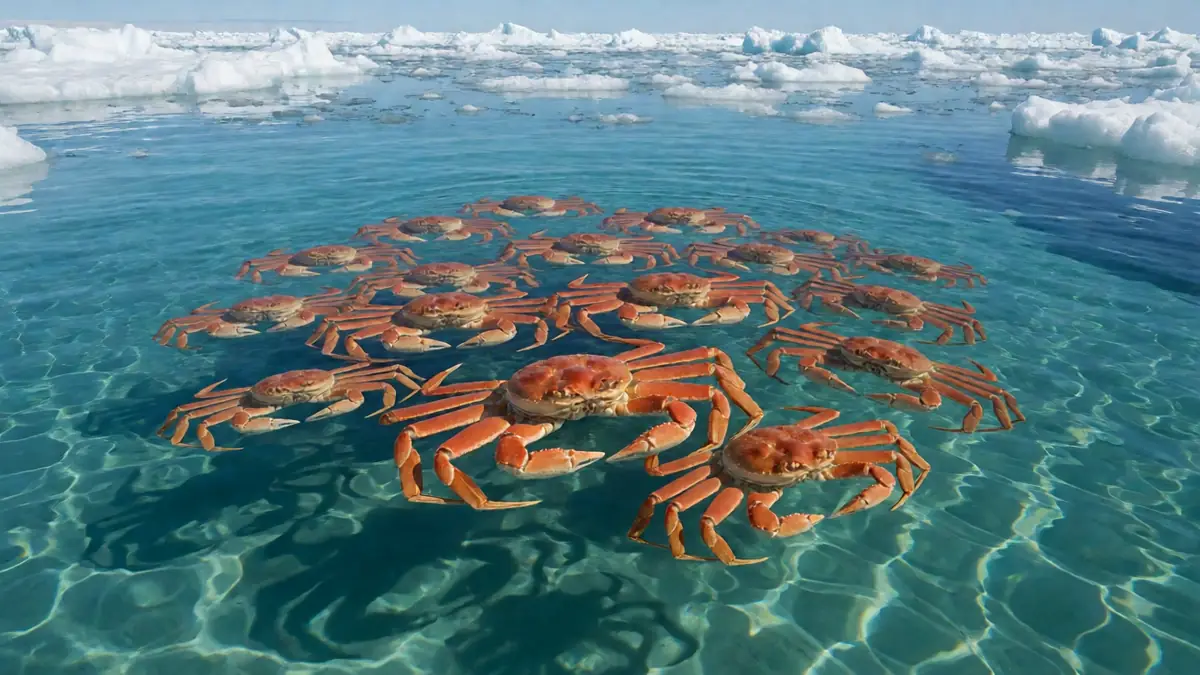
A Bering Sea marine heatwave triggers unprecedented crab hybridization, challenging fisheries management.

Marine heatwaves are increasingly recognized for their capacity to generate ecological surprises, yet the pathways that propagate these unexpected responses are often poorly understood. Here, we document an unanticipated ecological response 7 y after a Bering Sea marine heatwave, in which formerly rare snow crab ( Chionoecetes opilio ) × Tanner crab ( C. bairdi ) hybrid abundance increased 13.4-fold, and the proportion of commercial-sized hybrid males increased 13.1-fold, relative to histor

Continue reading