A Bering Sea marine heatwave triggers unprecedented crab hybridization, challenging fisheries management.
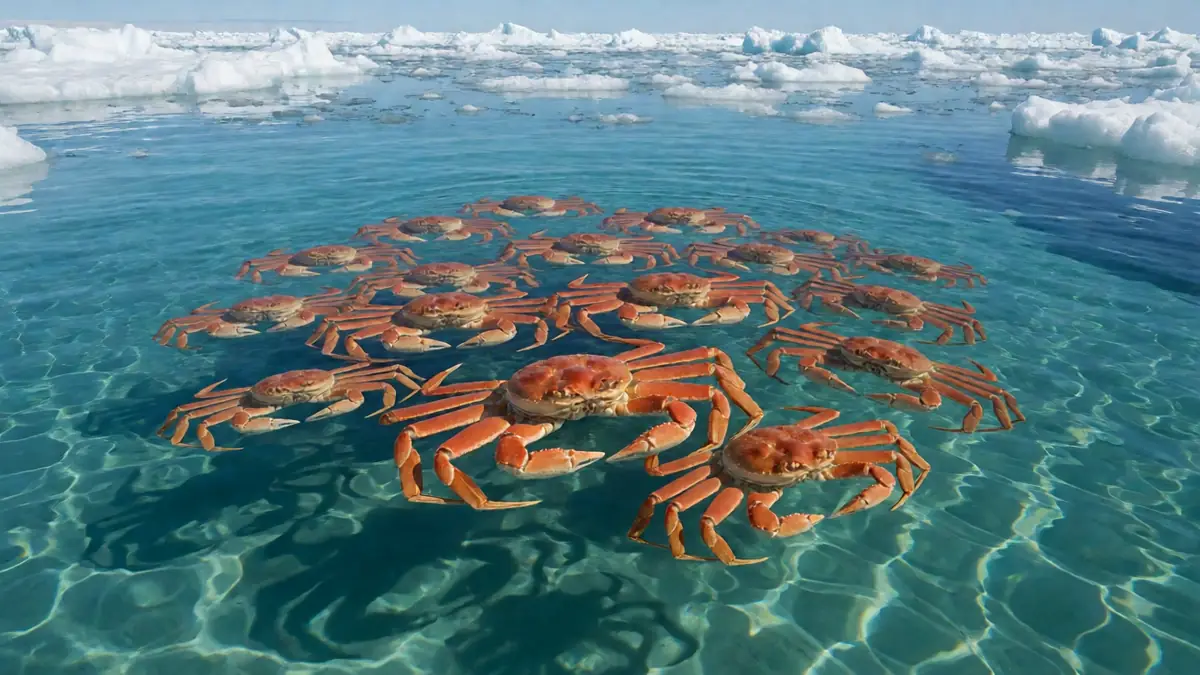
Marine heatwaves are increasingly recognized for their capacity to generate ecological surprises, yet the pathways that propagate these unexpected responses are often poorly understood. Here, we document an unanticipated ecological response 7 y after a Bering Sea marine heatwave, in which formerly rare snow crab ( Chionoecetes opilio ) × Tanner crab ( C. bairdi ) hybrid abundance increased 13.4-fold, and the proportion of commercial-sized hybrid males increased 13.1-fold, relative to histor
Marine heatwaves are increasingly recognized for their capacity to generate ecological surprises, yet the pathways that propagate these unexpected responses are often poorly understood. Here, we document an unanticipated ecological response 7 y after a Bering Sea marine heatwave, in which formerly rare snow crab ( Chionoecetes opilio ) × Tanner crab ( C. bairdi ) hybrid abundance increased 13.4-fold, and the proportion of commercial-sized hybrid males increased 13.1-fold, relative to historical averages. Using causal modeling, we show that the hybrid crab surge was mediated by a heatwave-induced collapse of snow crab rather than direct thermal effects on hybrid survival or increased spatial overlap between mature snow and Tanner crab. Our results reveal an indirect cascading pathway through which an extreme climate event triggered unexpected ecological consequences and unforeseen challenges for fisheries management in the Bering Sea. The dramatic increase in abundance of harvestable hybrid crab, coupled with their exclusion from existing management frameworks, highlights the vulnerability of inflexible management systems to unanticipated ecosystem responses.