Epigenetic heterogeneity in breast tumours informs diagnosis and prognosis.
Breast cancer, the most diagnosed cancer among women, is stratified by gene expression patterns into luminal and basal-like subtypes, and the latter is associated with worse prognosis 1-3 . Recent advances in single-cell technologies have underscored the presence of intratumour heterogeneity, which poses substantial challenges in cancer treatment and achieving long-term disease-free survival 4-7 . Here we extensively profile epigenetic heterogeneity in a cohort of treatment-naive human luminal t
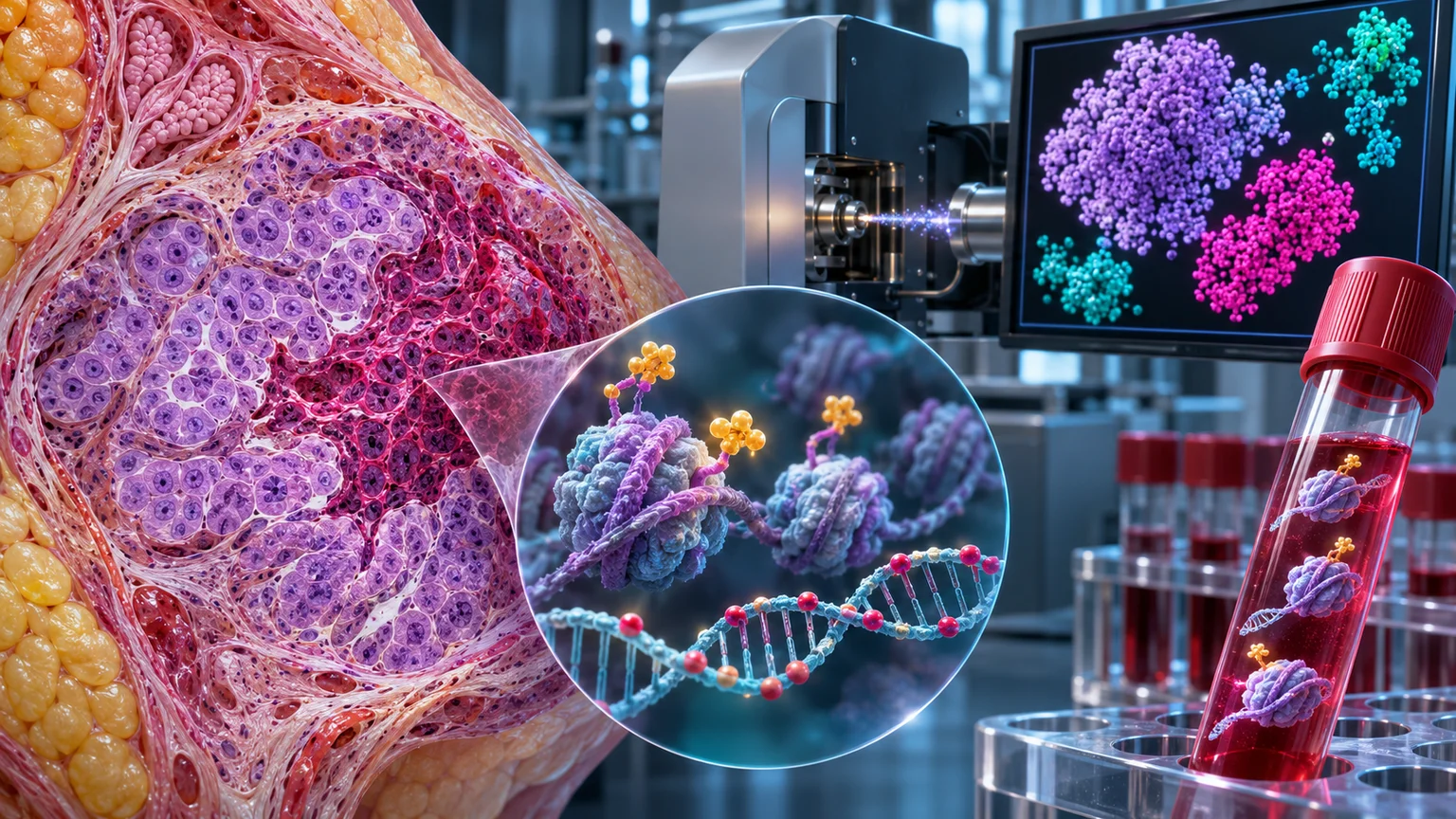
Breast cancer, the most diagnosed cancer among women, is stratified by gene expression patterns into luminal and basal-like subtypes, and the latter is associated with worse prognosis 1-3 . Recent advances in single-cell technologies have underscored the presence of intratumour heterogeneity, which poses substantial challenges in cancer treatment and achieving long-term disease-free survival 4-7 . Here we extensively profile epigenetic heterogeneity in a cohort of treatment-naive human luminal tumours, which were obtained directly after surgical resection. By applying a single-cell epigenetic approach based on cytometry by time-of-flight, we identify a recurrent subpopulation of basal-like cells in luminal tumours with a conserved epigenetic signature across patients. These basal-like cells, also identified by deconvolution of whole-genome DNA methylation patterns, are characterized by high expression of aggressive oncogenic traits and downregulation of hormone receptor signalling. Direct comparison of single-cell proteomic and genomic profiling of monomethylation and trimethylation of histone 3 on lysine 4 revealed that these marks are key features associated with loss of luminal identity. Finally, we highlight the potential of concomitant single-molecule profiling of histone modifications on cell-free nucleosomes in blood as an epigenetic liquid biopsy approach for early diagnosis of breast cancer. Moreover, the epigenetic basal signature measured in blood is linked to prognosis, which enables the identification of patients at increased risk for disease relapse.