Health & Medicine

Neuromodulatory control of cortical function: Cell-type-specific regulation of neuronal information transfer.

| Source: Proceedings of the National Academy of Sciences of the United States of America

Neuromodulatory systems such as dopamine and acetylcholine enable cortical circuits to rapidly shift between behavioral states, yet it remains unclear how receptor-specific signaling reshapes what single neurons compute. Here, we combined whole-cell recordings from excitatory and inhibitory neurons in layer 2/3 of mouse somatosensory cortex with information-theoretic analyses under frozen-noise stimulation. We quantified stimulus-to-spike information transfer and profiled each neuron across four

Neuromodulatory systems such as dopamine and acetylcholine enable cortical circuits to rapidly shift between behavioral states, yet it remains unclear how receptor-specific signaling reshapes what single neurons compute. Here, we combined whole-cell recordings from excitatory and inhibitory neurons in layer 2/3 of mouse somatosensory cortex with information-theoretic analyses under frozen-noise stimulation. We quantified stimulus-to-spike information transfer and profiled each neuron across four functional domains: passive membrane biophysics, action potential dynamics, intrinsic adaptation currents, and input feature selectivity captured by spike-triggered averages. Activation of D1, D2, or M1 receptors revealed three main findings. First, neuromodulators altered fractional information and firing output in a cell-type- and receptor-specific manner, demonstrating selective regulation of encoding. Second, unsupervised clustering based on functional attribute sets showed that receptor activation reorganizes baseline functional grouping, consistent with a dynamic computational phenotype. Third, multiset correlation and factor analysis revealed that neuromodulation systematically reorganizes covariance among functional domains. In excitatory neurons, dopaminergic activation decreased coordination between input feature selectivity and other functional properties while strengthening coordination among response-based features such as spike dynamics and adaptation. Inhibitory neurons, by contrast, generally exhibited increased coordination across domains. In unison, these findings identify neuromodulation as a reconfiguration signal that reshapes not only individual cellular properties, but also the statistical architecture linking them across the recorded cohort, thereby revealing a higher-dimensional mode of single-neuron regulatory control in the cortex.


Read the original source →

Related Stories

Health & Medicine

The honey bee stinger: An unusual pump with collapsible double pistons.

Most stinging animals deliver venom by contracting muscles around a venom reservoir, but honey bees employ a fundamentally different strategy. The stingers of worker bees have the unique ability to autotomize, separating from the body, to continue to sting independently. Despite more than a century of anatomical descriptions, the mechanics of venom pumping have remained unresolved due to the challenges of observing them in action. We recorded high-speed videos of active, autotomized stingers, co

Continue reading
Health & Medicine

mechanoLight: A genetically encoded fluorescent biosensor for visualizing 5-HT2AR mechanotransduction in live cells.

G protein-coupled receptors (GPCRs) are pivotal sensors of the mechanical environment, yet how they sense and transduce physical stimuli into biochemical signals within live cells remains largely elusive. Here we introduce mechanoLight, a genetically encoded red fluorescent biosensor designed to report the mechanical activation of the 5-hydroxytryptamine 2A receptor (5-HT2AR). By incorporating a circularly permuted mApple (cp-mApple) into the third intracellular loop of 5-HT2AR with the optimize

Continue reading
Health & Medicine

Identification and characterization of neoplastic cells in keratin-positive giant cell-rich tumors.

Keratin-positive giant cell-rich tumor (KPGCT) is a newly described bone and soft tissue tumor. The tumor is characterized by scattered keratin-positive cells and the presence of HMGA2::NCOR2 fusions. It is not known if the HMGA2::NCOR2 fusion is located in the keratin-positive cells, and little is known about how KPGCT develops. KPGCT shares some histologic features with tenosynovial giant cell tumor (TGCT), a soft tissue tumor with CSF1 rearrangements. Single-nuclei RNA sequencing and Xenium s

Continue reading
Health & Medicine

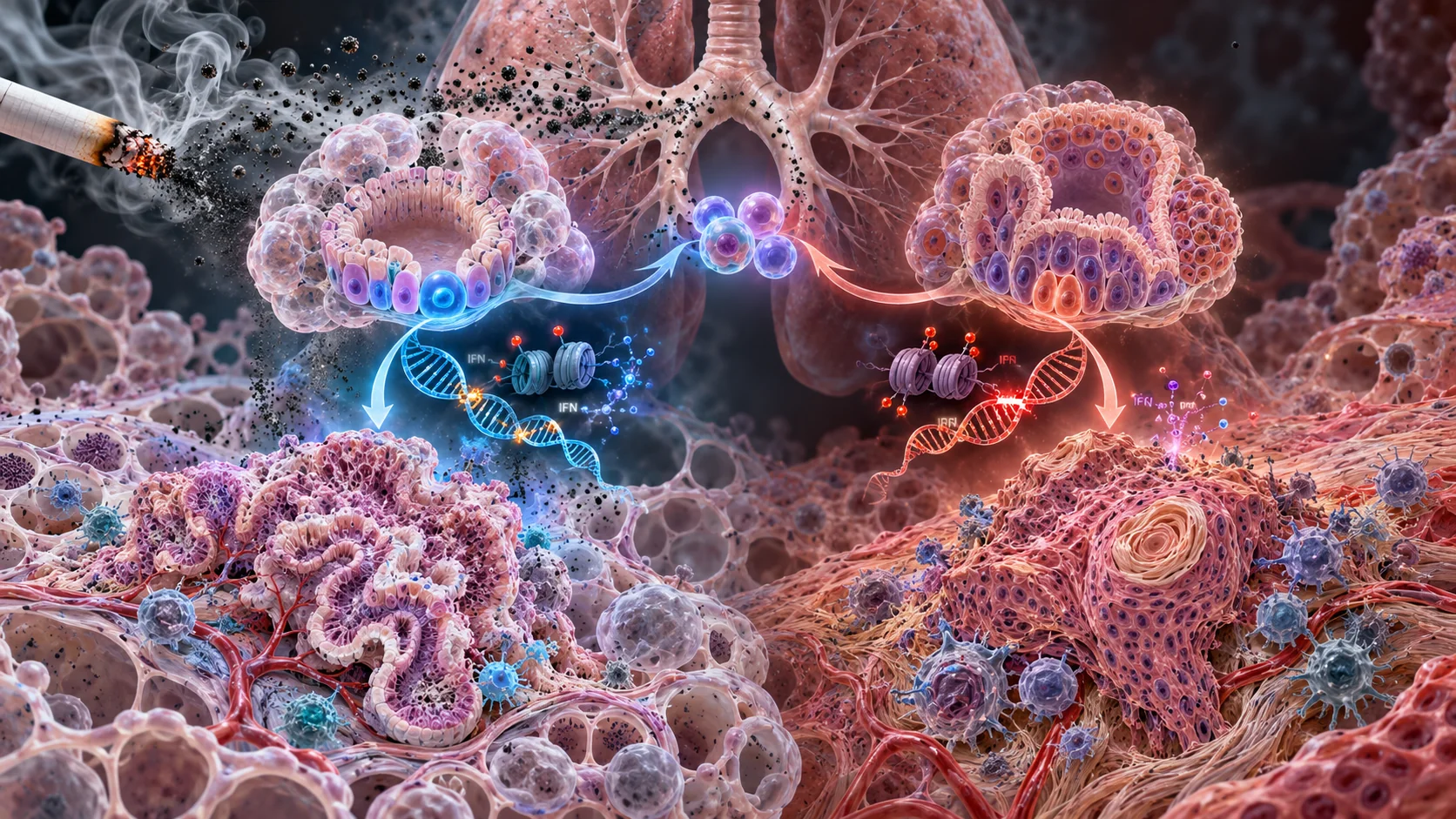
Chronic cigarette smoke exposure induces distinct stem cell states driving genetic driver-specific non-small cell lung cancer subtypes.

Cigarette smoke-induced chronic inflammation (CI) potentiates development of non-small cell lung cancer (NSCLC) by mediating genetic and epigenetic events. Using normal lung organoids (LOs), we define how chronic cigarette smoke condensate (CSC) exposure drives two separate stem cell populations to evolve premalignant states harboring progressive epigenetic and linked transcriptomic abnormalities in the absence of major driver mutations. These dynamics facilitate evolution of an immune evasive s

Continue reading
Health & Medicine

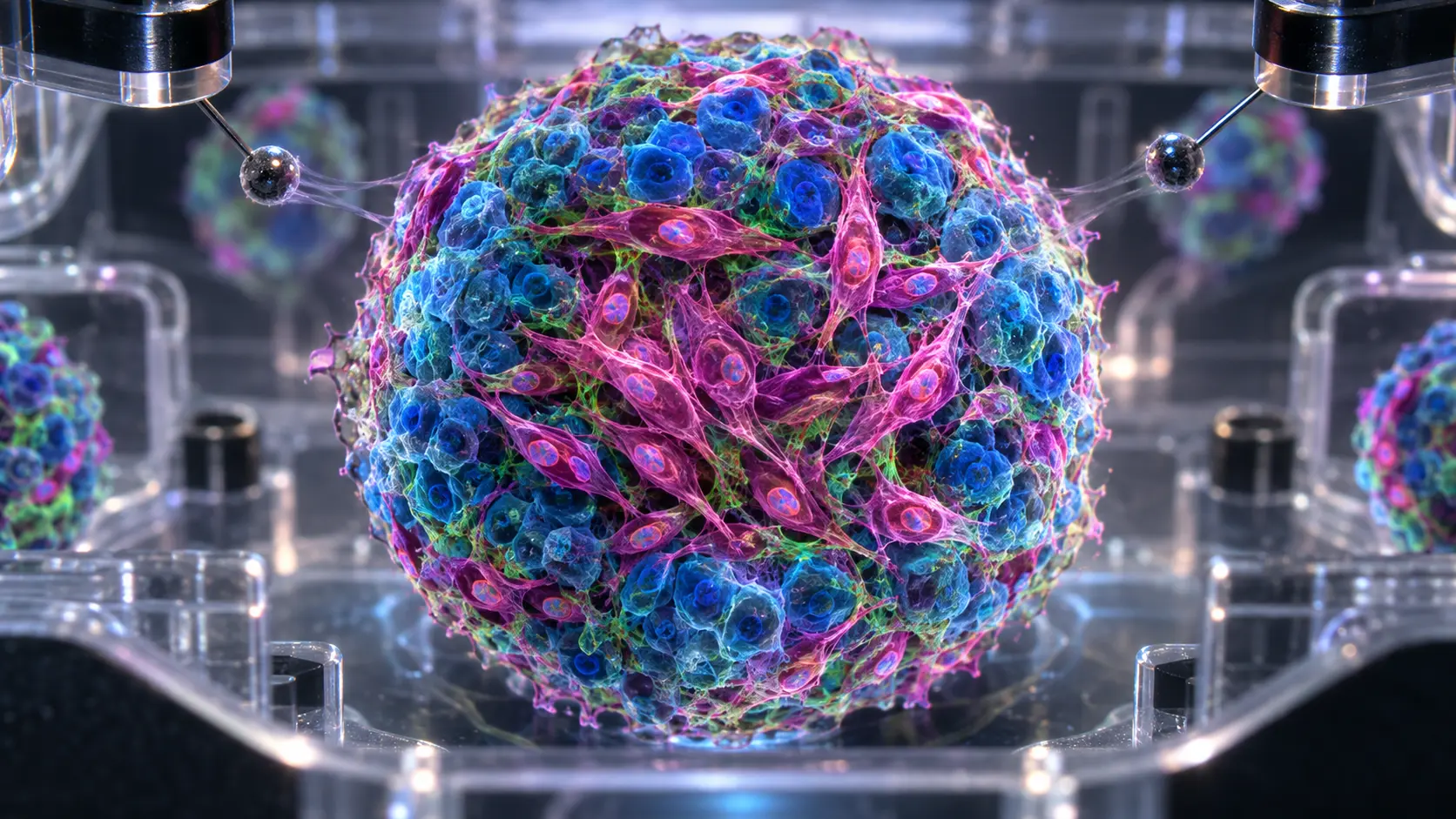
Cell identity competes with surface tension to determine stromal organization in tumor spheroids beyond the CAF shell paradigm.

Cancer-associated fibroblasts (CAFs) are often found forming a peripheral stromal barrier around tumors. Here, this paradigm is challenged using microfabricated 3D cancer-CAF spheroid models combined with quantitative magnetic force tensiometry. A surface tension atlas is established for eight cancer cell lines, three CAF populations, and heterotypic tumor-CAF assemblies, spanning nearly two orders of magnitude. Surface tension is first shown to govern spheroid morphology and modulate drug respo

Continue reading