Controlled Synthesis of Chiral β-Chloramines and Aziridines via an Organo- and Biocatalytic Cascade.
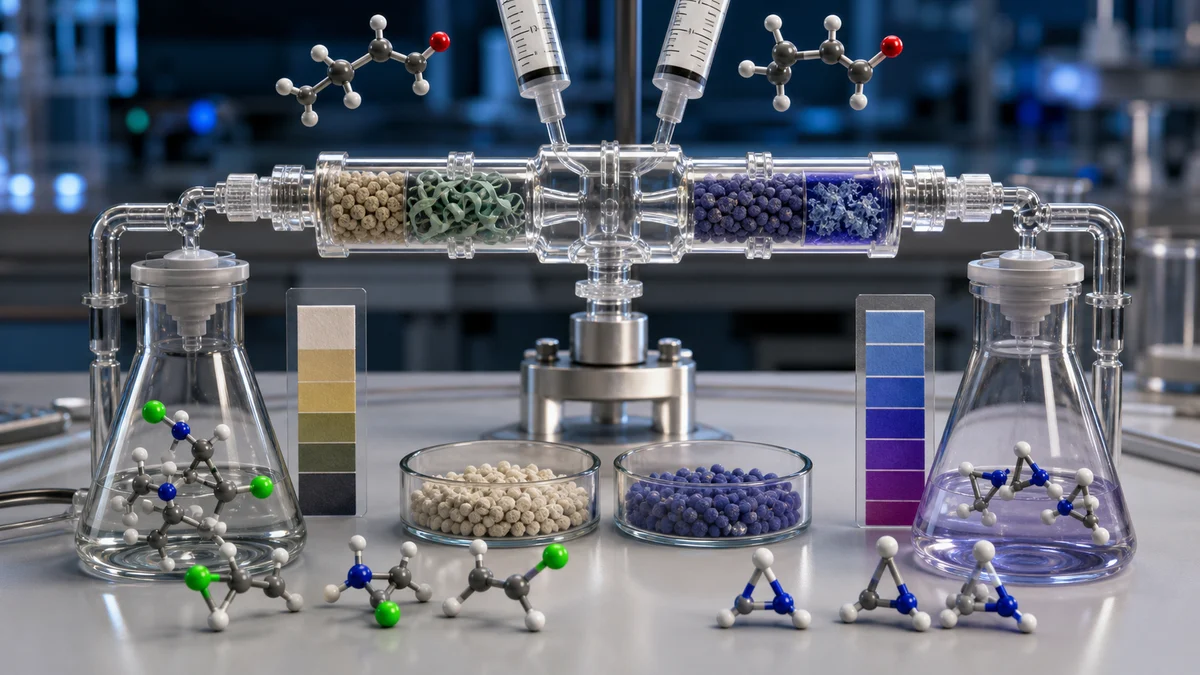
Chiral organochlorides bearing C-Cl stereocenters are highly desirable motifs in synthetic and medicinal chemistry, yet their direct asymmetric synthesis from simple starting materials via biocatalysis alone remains challenging. Here, we report an integrated organo- and biocatalytic cascade that converts readily available aldehydes into enantiomerically enriched β-chloramines. Under optimized near-neutral conditions, the method delivers a broad array of β-chloramines in high yield (u
Chiral organochlorides bearing C-Cl stereocenters are highly desirable motifs in synthetic and medicinal chemistry, yet their direct asymmetric synthesis from simple starting materials via biocatalysis alone remains challenging. Here, we report an integrated organo- and biocatalytic cascade that converts readily available aldehydes into enantiomerically enriched β-chloramines. Under optimized near-neutral conditions, the method delivers a broad array of β-chloramines in high yield (up to 88%) with exceptional enantioselectivity (up to >99:1 enantiomeric ratio). Notably, by simply raising the pH to 9.5, the same cascade system diverges to directly generate chiral aziridines, enabling pH-controlled access to two valuable product classes from a unified platform. The utility of this strategy is further demonstrated by preparative-scale syntheses from inexpensive commercial substrates, followed by divergent linchpin transformations to diverse chiral building blocks, including aziridines, azido amines, and acetoxy amines. Mechanistic studies provide insight into the origins of stereoselectivity and the key factors governing stereochemical outcomes.