Co-option of retrotransposons promotes antibody diversification.
Activation-induced cytidine deaminase (AID) accomplishes somatic hypermutation (SHM) of V H (D)J H genes in germinal center B cells for antibody diversification and affinity maturation. How AID specifically targets V H (D)J H remains unclear. We report the discovery of LINE-1 (L1) retrotransposons upstream to many V H genes in the immunoglobulin locus. These L1s are evolutionarily old, truncated, and retrotransposition dead. Recombined V H promoters generate long, strong antisense RNAs encoding
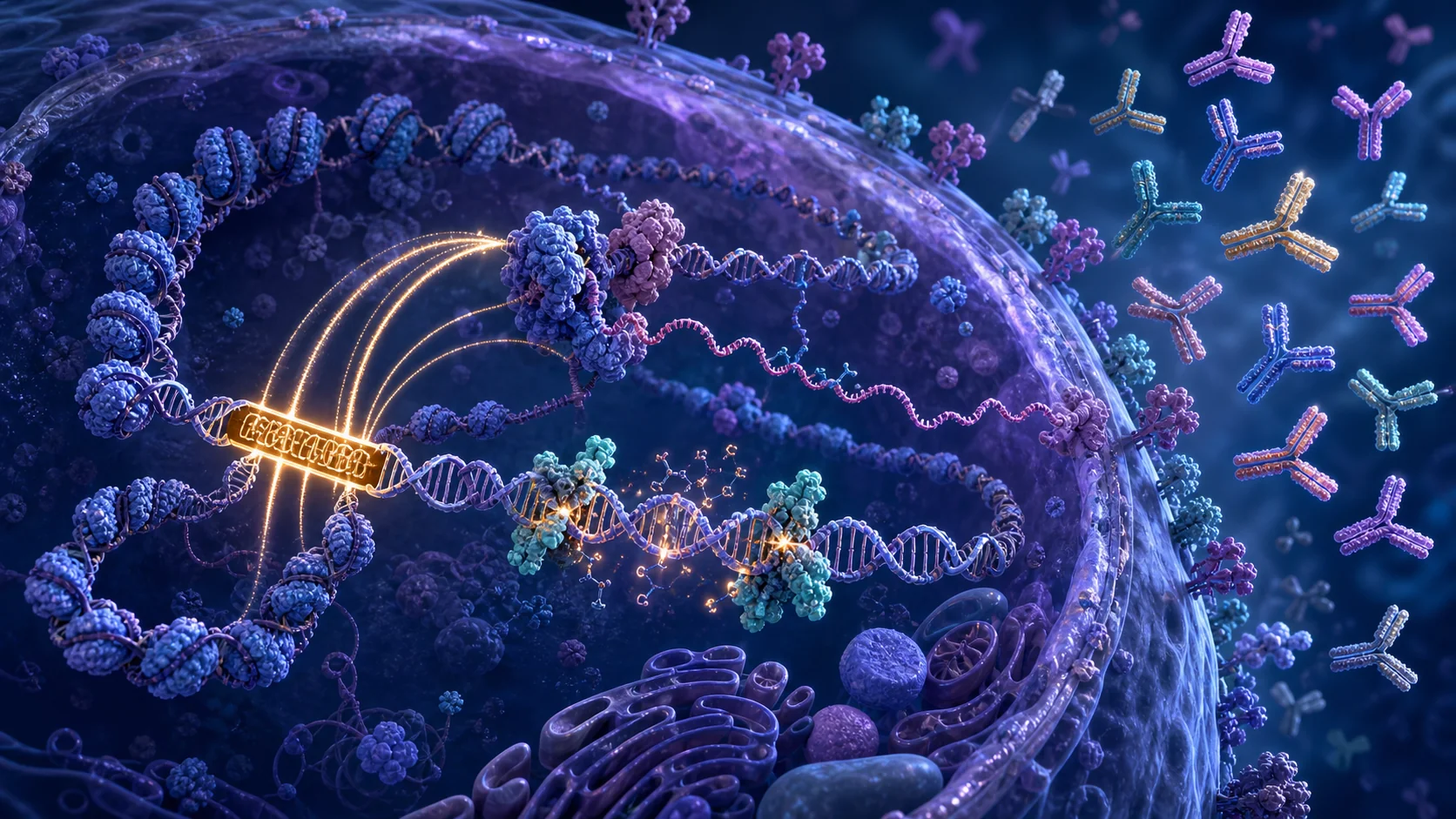
Activation-induced cytidine deaminase (AID) accomplishes somatic hypermutation (SHM) of V H (D)J H genes in germinal center B cells for antibody diversification and affinity maturation. How AID specifically targets V H (D)J H remains unclear. We report the discovery of LINE-1 (L1) retrotransposons upstream to many V H genes in the immunoglobulin locus. These L1s are evolutionarily old, truncated, and retrotransposition dead. Recombined V H promoters generate long, strong antisense RNAs encoding upstream L1s, triggering the human silencing hub (HUSH) complex and AID recruitment, which we term L1-driven SHM. We show that L1-driven SHM occurs in vivo using HUSH conditional knockout mice and engineered mice with V H genes devoid of upstream L1s. Insertion of transcriptionally active L1s at non-immunoglobulin loci endogenously lacking upstream L1s promotes off-target SHM. We demonstrate that old retrotransposons serve physiological roles, and our findings reveal how B cells co-opted an anti-retrotransposon silencing mechanism to promote antibody diversity. In doing so, we established a new link between cell-intrinsic innate and adaptive immunity.