Why did some viruses evolve to be giants while others did not?
Viruses are ubiquitous mobile genetic elements that are obligate symbionts of cellular life forms and replicate exclusively within host cells. The current taxonomy of viruses includes 10 realms (the top rank taxon), 8 of which have small genomes in the range of one to about 60 kilobases and commensurately small virions. However, the two realms of viruses with double-stranded DNA genomes, Varidnaviria and Duplodnaviria , include several groups of viruses known as giant viruses, with genomes reach
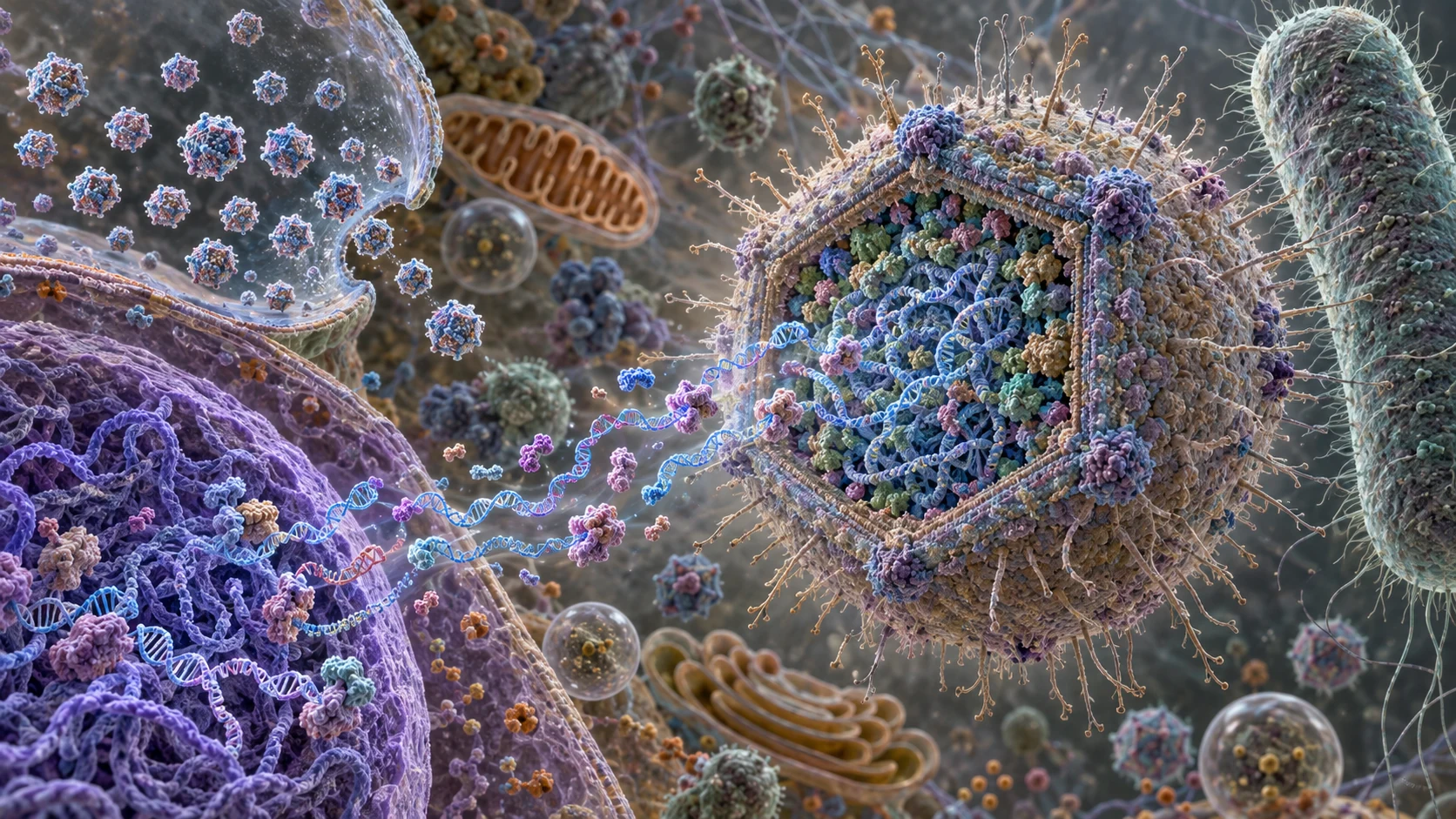
Viruses are ubiquitous mobile genetic elements that are obligate symbionts of cellular life forms and replicate exclusively within host cells. The current taxonomy of viruses includes 10 realms (the top rank taxon), 8 of which have small genomes in the range of one to about 60 kilobases and commensurately small virions. However, the two realms of viruses with double-stranded DNA genomes, Varidnaviria and Duplodnaviria , include several groups of viruses known as giant viruses, with genomes reaching nearly 5 megabase pairs, larger than the genomes of the majority of bacteria and archaea, and large virions also exceeding in size many prokaryotic cells. The discovery of giant viruses has been widely claimed to blur the differences between viruses and cells, especially, because some of these viruses encode signature cellular proteins, such as many translation system components. We summarize evidence that, despite the large sizes of their particles and genomes, and vast, diverse gene repertoires, giant viruses are typical viruses that evolved from smaller ones via accretion of genes recruited from the hosts. The divide between viruses and cellular life forms lies between replicators and reproducers which is, arguably, the most fundamental gulf in biology that appears to have never been crossed. A key question on evolution of viruses is what factors drive some groups of viruses to follow the K evolutionary strategy, accruing numerous genes involved in virus-host interactions and reaching giant genome sizes, whereas others follow the r strategy, retaining compact genomes under selection for maximum replication rate.