Transcriptome-based classification in mice with ASD-risk mutations
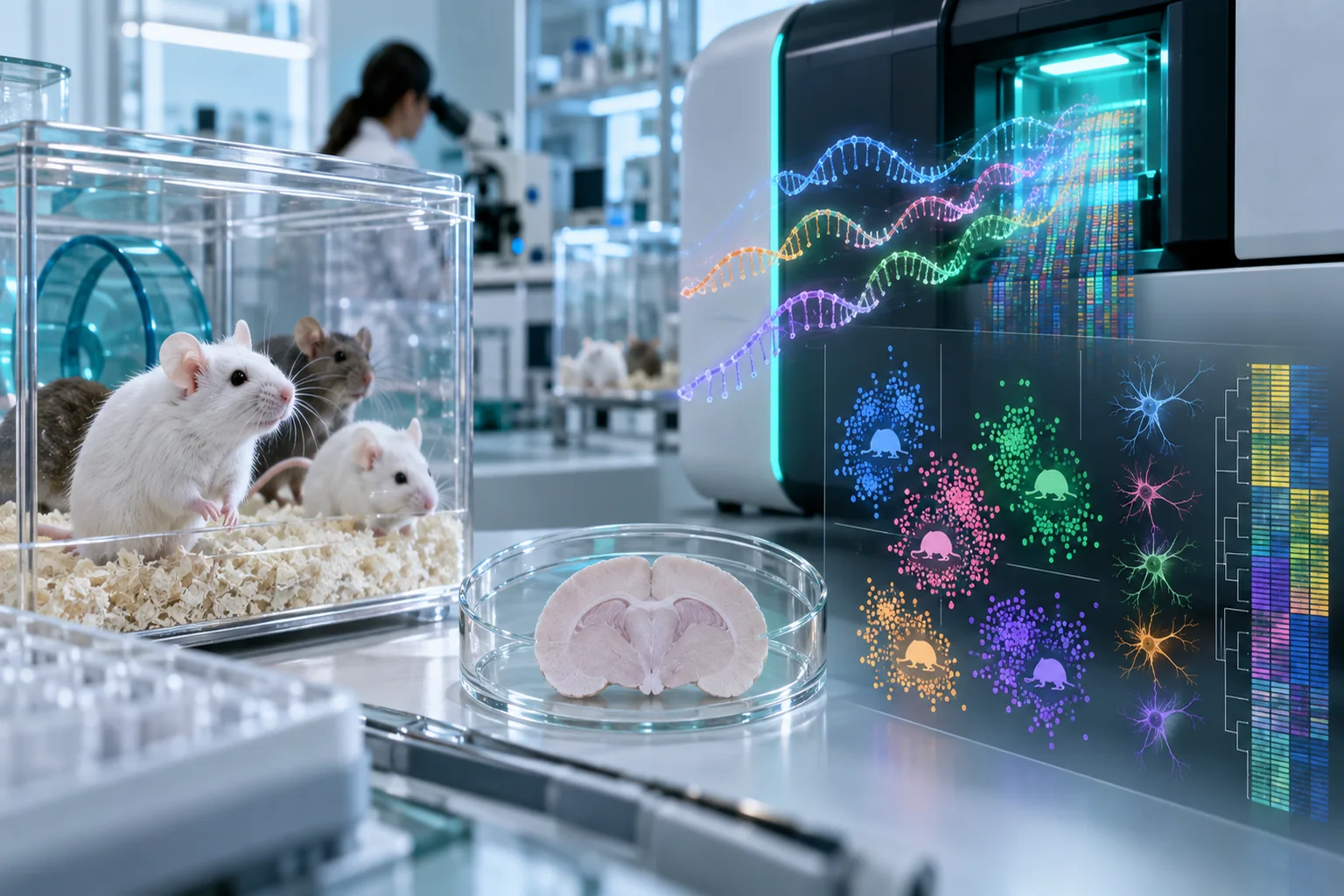
Autism spectrum disorder (ASD) is a neurodevelopmental condition with a strong genetic component. Large-scale human genetic studies have identified >1200 ASD-risk genes. We report a sex-balanced atlas of 1008 prefrontal RNA sequencing (RNA-seq) profiles from 17 mouse lines carrying ASD-risk mutations. Our analysis identified two opposing transcriptomic states. The two groups differed in sex bias, regional specificity, developmental stability, cell type remodeling, and responses to fluoxetine
Autism spectrum disorder (ASD) is a neurodevelopmental condition with a strong genetic component. Large-scale human genetic studies have identified >1200 ASD-risk genes. We report a sex-balanced atlas of 1008 prefrontal RNA sequencing (RNA-seq) profiles from 17 mouse lines carrying ASD-risk mutations. Our analysis identified two opposing transcriptomic states. The two groups differed in sex bias, regional specificity, developmental stability, cell type remodeling, and responses to fluoxetine and lithium. Single-nucleus RNA-seq revealed broader cell type remodeling in group 1 than in group 2, and cell type–specific modules showed reciprocal associations that mirrored bulk transcriptomic signatures. The framework classifies independent mouse lines and identifies subgroups with conserved synaptic directionality, supporting molecular stratification.