Subnuclear genome compartmentalization controls bivalent chromatin activity.
The nuclear genome is spatially organized into a three-dimensional architecture by physical association of large chromosomal domains with subnuclear compartments including the nuclear lamina at the radial periphery and nuclear speckles within the nucleoplasm 1-5 . However, how higher-order spatial genome architecture regulates human development has been overlooked, and the interplay between chromatin state and subnuclear genome compartmentalization is poorly understood. Here we generate high-res
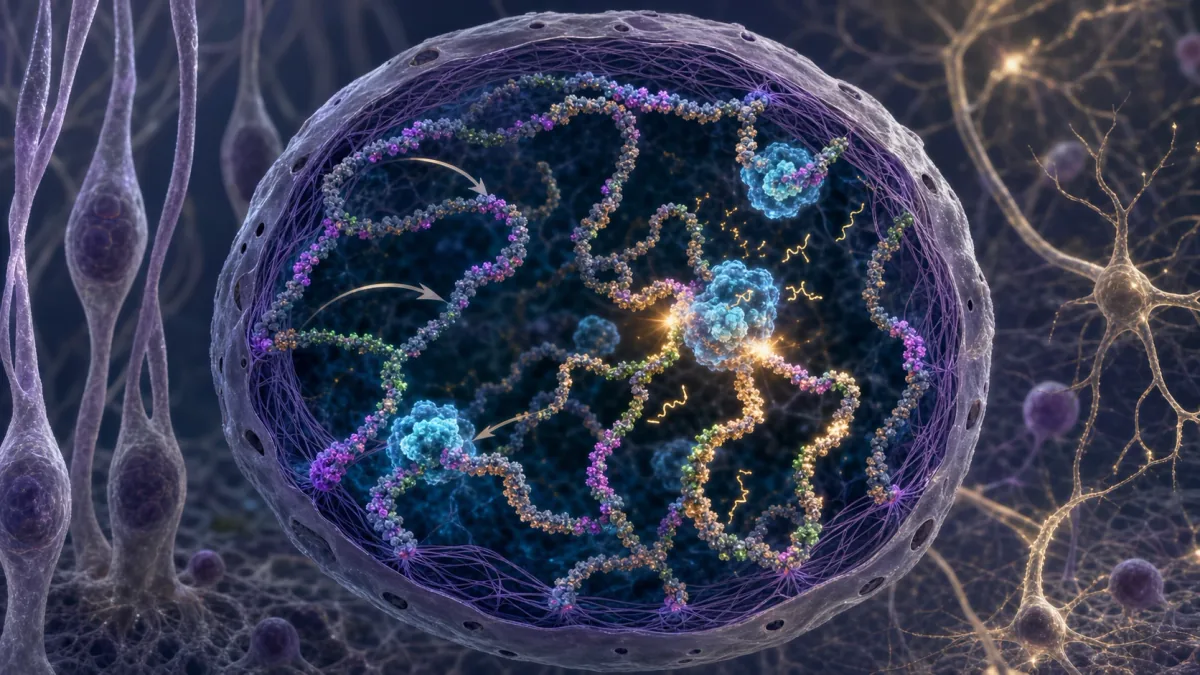
The nuclear genome is spatially organized into a three-dimensional architecture by physical association of large chromosomal domains with subnuclear compartments including the nuclear lamina at the radial periphery and nuclear speckles within the nucleoplasm 1-5 . However, how higher-order spatial genome architecture regulates human development has been overlooked, and the interplay between chromatin state and subnuclear genome compartmentalization is poorly understood. Here we generate high-resolution maps of genomic interactions with the lamina and speckles in cells of the neurogenic lineage isolated from mid-gestational human cortex, identifying an intimate association between subnuclear genome compartmentalization, chromatin state and transcription. During cortical neurogenesis, subnuclear genome compartmentalization is extensively remodelled, relocating hundreds of neuronal genes from the lamina to speckles, including key neurodevelopmental genes bivalent for trimethylation of histone H3 at Lys27 (H3K27me3) and Lys4 (H3K4me3). At the lamina, bivalent genes have exceptionally low expression, and relocation to speckles enhances resolution of bivalent chromatin to H3K4me3 monovalency and increases transcription more than eightfold. We further demonstrate that proximity to the nuclear periphery-not the presence of H3K27me3-maintains the lowly expressed, poised state of bivalent genes embedded in the lamina. We find that the repressive environment of the lamina is associated with spatial segregation of the transcriptional elongation machinery from the nuclear periphery. Our results establish a paradigm in which knowing the spatial location of a gene is necessary for understanding its epigenomic regulation.