Spatiotemporal co-transcriptomics uncovers coordinated rhizobia-legume stress programs supporting nitrogen fixation in Medicago.
Rhizobial nitrogen fixation in legume nodules requires precise spatial and temporal coordination between host and bacterial gene expression. Here, we applied spatial enhanced resolution omics sequencing (Stereo-seq) to profile Medicago nodules across five developmental stages, generating a co-transcriptomic atlas of nodule development. Using a mixed-probe capture strategy, we simultaneously detected host and rhizobial transcripts within the same tissue sections, enabling analysis of host-microbe
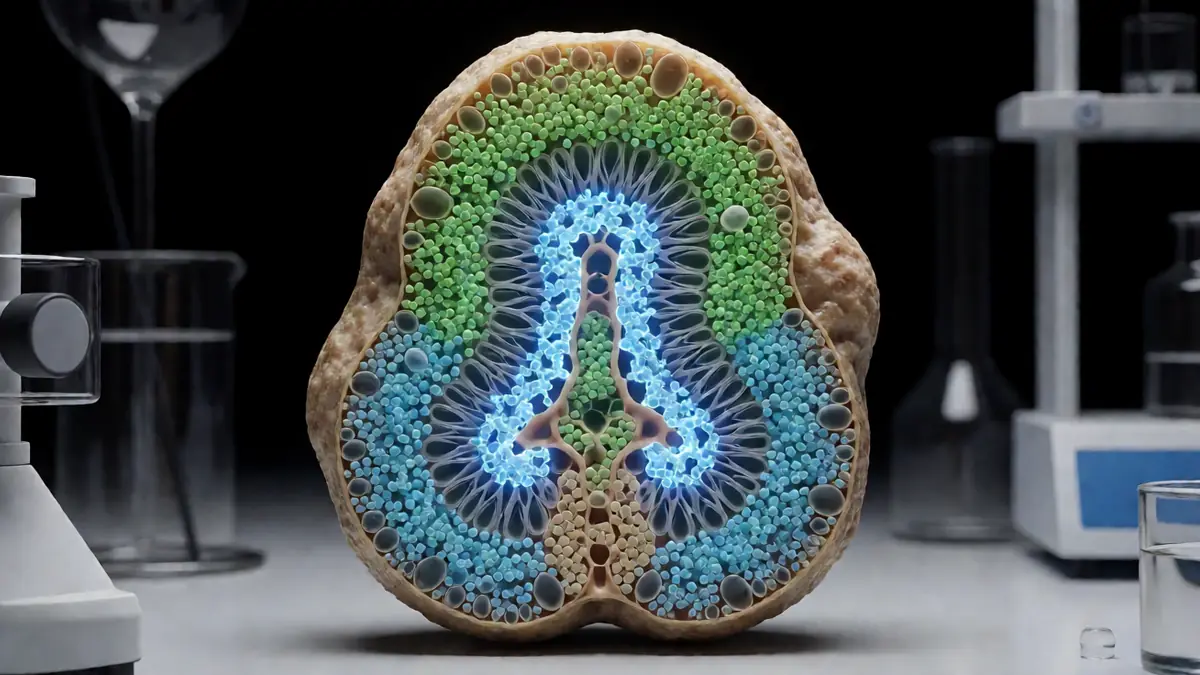
Rhizobial nitrogen fixation in legume nodules requires precise spatial and temporal coordination between host and bacterial gene expression. Here, we applied spatial enhanced resolution omics sequencing (Stereo-seq) to profile Medicago nodules across five developmental stages, generating a co-transcriptomic atlas of nodule development. Using a mixed-probe capture strategy, we simultaneously detected host and rhizobial transcripts within the same tissue sections, enabling analysis of host-microbe transcriptional coordination during symbiosis. We identified dynamic changes in host cell composition and developmental trajectories and uncovered two transcription factors, MtERF82 and MtDOF53, required for maintenance of the indeterminate nodule meristem. Rhizobial and host genes exhibited stage- and zone-specific expression patterns along the nodule apex-to-base axis. Notably, reactive oxygen species (ROS)-associated stress responses in both host cells and rhizobia were linked to symbiotic nitrogen fixation. Functional analyses further showed that MtERF71 and MtCBF1 promote nitrogen fixation by regulating ROS homeostasis and activating key symbiotic genes, highlighting stress signaling as an integral component of mutualistic symbiosis.