Environment

Rising plant extinction rates on European mountain summits.

| Source: Science (New York, N.Y.)

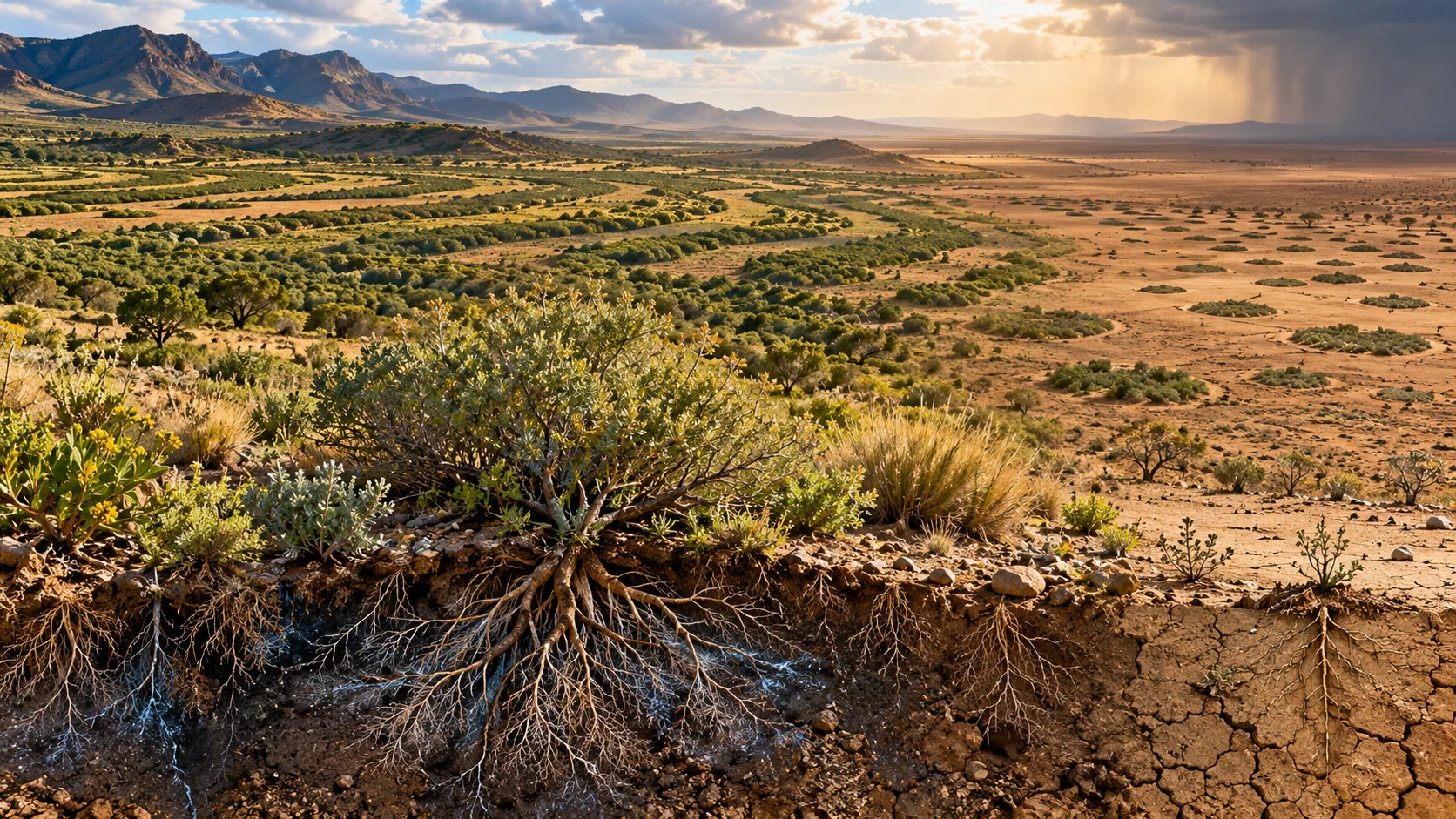
Climate change increases plant species richness in alpine ecosystems. However, to what extent this diversity enrichment masks extinction dynamics of resident species remains elusive. In this study, we used floristic resurvey data from 896 permanent vegetation plots across 62 European mountain summits to show that local extinctions have increased over the past 21 years. Extinction rates rose with the magnitude of warming, and species were more likely to go extinct toward their low-elevation range

Climate change increases plant species richness in alpine ecosystems. However, to what extent this diversity enrichment masks extinction dynamics of resident species remains elusive. In this study, we used floristic resurvey data from 896 permanent vegetation plots across 62 European mountain summits to show that local extinctions have increased over the past 21 years. Extinction rates rose with the magnitude of warming, and species were more likely to go extinct toward their low-elevation range margins and in communities undergoing stronger thermophilization. Moreover, local extinctions were significantly related to preceding abundance declines, which can serve as an early warning signal. These findings suggest that despite increasing plant species richness, plant assemblages above the treeline face an accelerating but so far neglected loss of their most characteristic species.

Read the original source →

Related Topics

Related Stories

Environment

Co-option of ancestral stem regulators drove recurrent evolution of underground storage organs.

Geophytes are plants that produce underground storage organs such as tubers, rhizomes, and bulbs, to facilitate asexual reproduction and withstand a myriad of environmental challenges. While the potato ( Solanum tuberosum L.) serves as the primary model for studying tuberization, the genetic mechanisms encoding this trait across diverse angiosperm lineages remains unclear. This study utilized a phylogenomic-transcriptomic approach to compare tuber development across nine tuberizing species with

Continue reading
Environment

Major role for internal variability in tropical Pacific warming pattern over satellite era.

Home to El Niño, the tropical Pacific is a key player in the global climate system. While most of the planet has warmed during the satellite era of 1982-2024, the eastern tropical Pacific surface has mysteriously cooled. What is troubling is that fully coupled global climate models mostly fail to simulate this distinctive pattern. By replacing wind stress applied to the ocean with observations, here we show that climate models successfully reproduce the La Niña-like (LN) trend pattern

Continue reading
Environment

Reconstruction of an extinct soundscape reveals ultrasonic communication in the Jurassic.

Very little is known about the acoustic landscape of long-gone environments, such as the Jurassic forests. The sounds made by dinosaurs and other charismatic vertebrates are not definitively known because their vocal organs rarely preserve well in fossils. Unlike tetrapod vocal cords, the sound-producing organs present in the sclerotized cuticle of some arthropods do fossilize well. For example, the stridulatory structures (file, plectrum) can be observed and measured in the fossilized forewings

Continue reading
Environment

Psilocybin prevents chemotherapy-induced peripheral neuropathy through mitochondrial trafficking preservation.

Chemotherapy-induced peripheral neuropathy (CIPN) is a disabling, often irreversible toxicity that affects millions of patients, limits life-saving cancer therapy, and lacks proven treatment. In this work, we show that as little as two doses of psilocybin before chemotherapy durably prevented the onset of CIPN across platinum- and taxane-based models, including repeated chemotherapy cycles, without impairing antitumor efficacy. Peripherally, psilocybin maintained tactile sensitivity and intraepi

Continue reading
Environment

Autothermal methane pyrolysis: Scalable heat integration for hydrogen and graphite production.

Methane pyrolysis (MP) offers a compelling opportunity to meet low-carbon hydrogen demand using existing energy infrastructure. A key limitation in scaling MP is the efficient delivery of high-temperature heat into the reactor. We show that hydrogen-fueled autothermal operation overcomes this limitation, enabling an increase of several orders of magnitude in the reactor throughput for commercially relevant bed diameters. It also yields a carbon coproduct of 96.0% degrees of graphitization, meeti

Continue reading