Environment

Maternal ranging strategies facilitate offspring social play at energetic cost in the most solitary ape.

| Source: Proceedings of the National Academy of Sciences of the United States of America

In most vertebrates, social play among peers is considered essential for behavioral development. Yet in solitary species bearing single offspring, opportunities for social play are inherently scarce. Whether mothers of such species actively facilitate play opportunities for their offspring, and at what cost, remains unknown. We used 15 y of behavioral and movement data (∼32,600 observation hours) from 31 wild Bornean orangutan ( Pongo pygmaeus wurmbii ) mother-offspring pairs to test whet

In most vertebrates, social play among peers is considered essential for behavioral development. Yet in solitary species bearing single offspring, opportunities for social play are inherently scarce. Whether mothers of such species actively facilitate play opportunities for their offspring, and at what cost, remains unknown. We used 15 y of behavioral and movement data (∼32,600 observation hours) from 31 wild Bornean orangutan ( Pongo pygmaeus wurmbii ) mother-offspring pairs to test whether mothers adjust ranging behavior to increase their offspring's access to play with neighboring peers. Neighboring mothers with similarly aged offspring showed disproportionately high annual overlap in space use, independent of their relatedness or fruit availability. Correspondingly, peer play between neighboring offspring was more frequent when they were closer in age. Mothers also incurred energetic costs; on days their offspring played with peers, mothers traveled farther and spent less time feeding. Travel distances were also elevated on the days before and after play, with mothers orienting movement toward play partners' core areas before play and back toward their own core areas after play. This suggests these encounters are planned and actively pursued over multiple days rather than arising by chance. These findings reveal that orangutan mothers incorporate their infants' social needs into daily ranging decisions, at a cost to their own energy budgets. This points toward an underappreciated form of maternal investment and illustrates how the social requirements of development can be met even near the solitary extreme of animal social organization.

Read the original source →

Related Stories

Environment

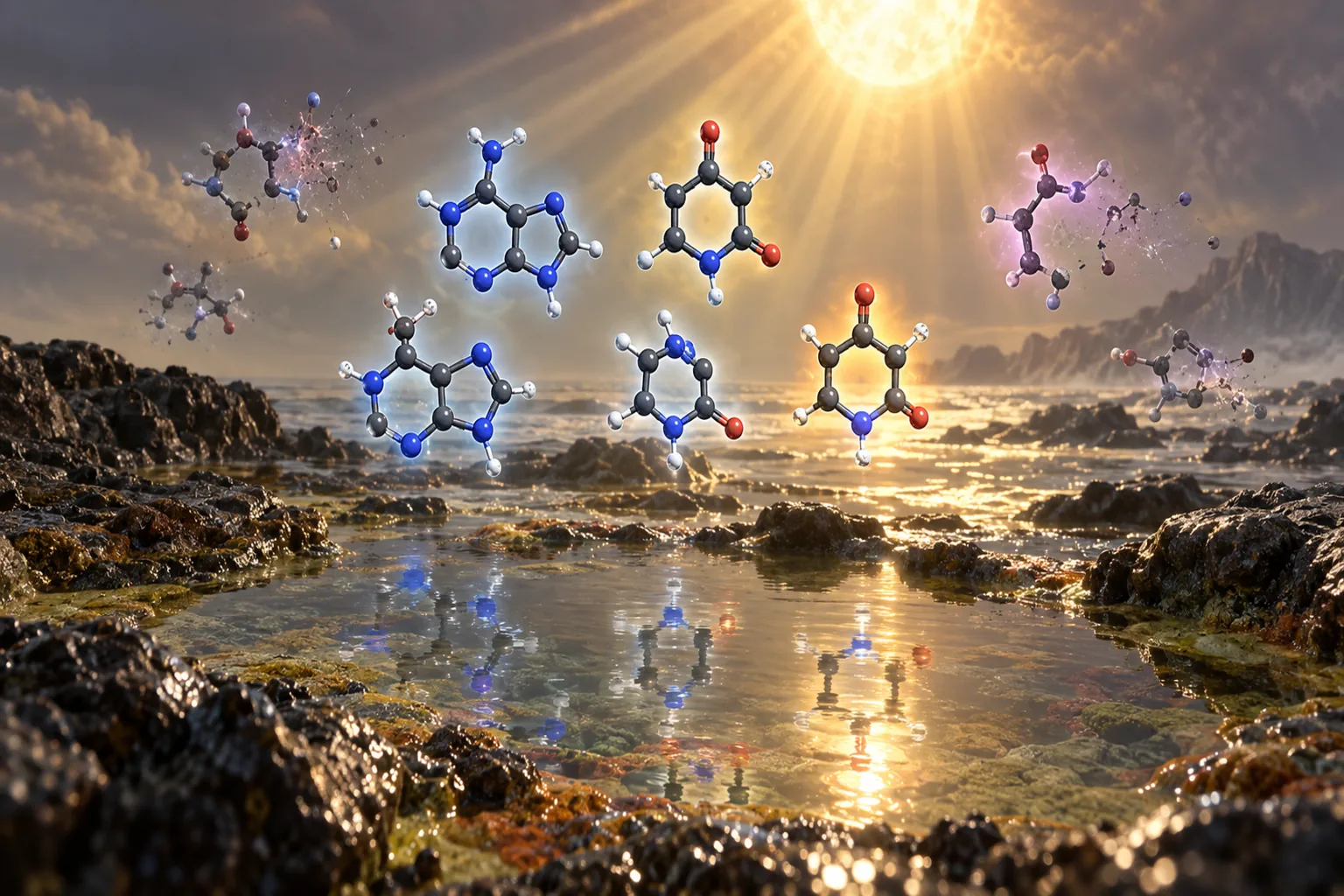
Continuous UV irradiation played an inconclusive role in selecting the canonical genetic alphabet.

An abundance of heterocyclic molecules analogous to canonical nucleobases (i.e., adenine, thymine, guanine, cytosine, and uracil) used as the genetic alphabet in DNA and RNA could have been present in various prebiotic environments on early Earth. However, extant biology generally uses the canonical nucleobases and nucleosides as the genetic alphabet, and not any number of possible noncanonical counterparts. Ultraviolet (UV) irradiation was likely abundant on the surface of the early Earth and h

Continue reading
Environment

Fault-controlled natural hydrogen reservoirs as underground hydrogen storage sites.

Underground hydrogen storage requires geological formations with demonstrated hydrogen containment, yet no conventional storage candidate (salt caverns, aquifers, or depleted hydrocarbon reservoirs) offers direct, prior evidence of H 2 -specific sealing. We propose that subcommercial natural hydrogen reservoirs, where H 2 has accumulated over geological timescales, can serve as precertified storage sites. This proposition is evaluated using the Bulqizë fault-controlled natural H 2 reservoir

Continue reading
Environment

Breaking trait scaling via the evolution and regulation of dimorphic decoupling in ants.

The evolution of allometry, changing how morphological traits scale to body size, has fueled adaptive radiations. In ants, allometry has facilitated the repeated evolution of a worker-soldier caste system. Here, we reveal an unexpected morphological pattern and its superorganismal regulation within the hyperdiverse genus Pheidole . We uncovered that antennal sizing between the small worker and the big soldier is identical, lacking intercaste scaling (antennae-body scaling is decoupled) yet retai

Continue reading
Environment

Meteoritic organic matter records primitive oxygen reservoirs of the solar system.

Unraveling the complex formation and alteration history for extraterrestrial organic matter is key to understanding the chemical evolution of the solar system (SS) and potentially even life's emergence on Earth. In this study, we performed high-precision triple oxygen isotope measurements on insoluble organic matter (IOM) sourced from a diverse suite of carbonaceous chondrites (CCs). Remarkably, the IOM from primitive Type 1 and 2 CCs-including CI, CM, CR, Bells, and Tarda-have oxygen isotope co

Continue reading
Environment

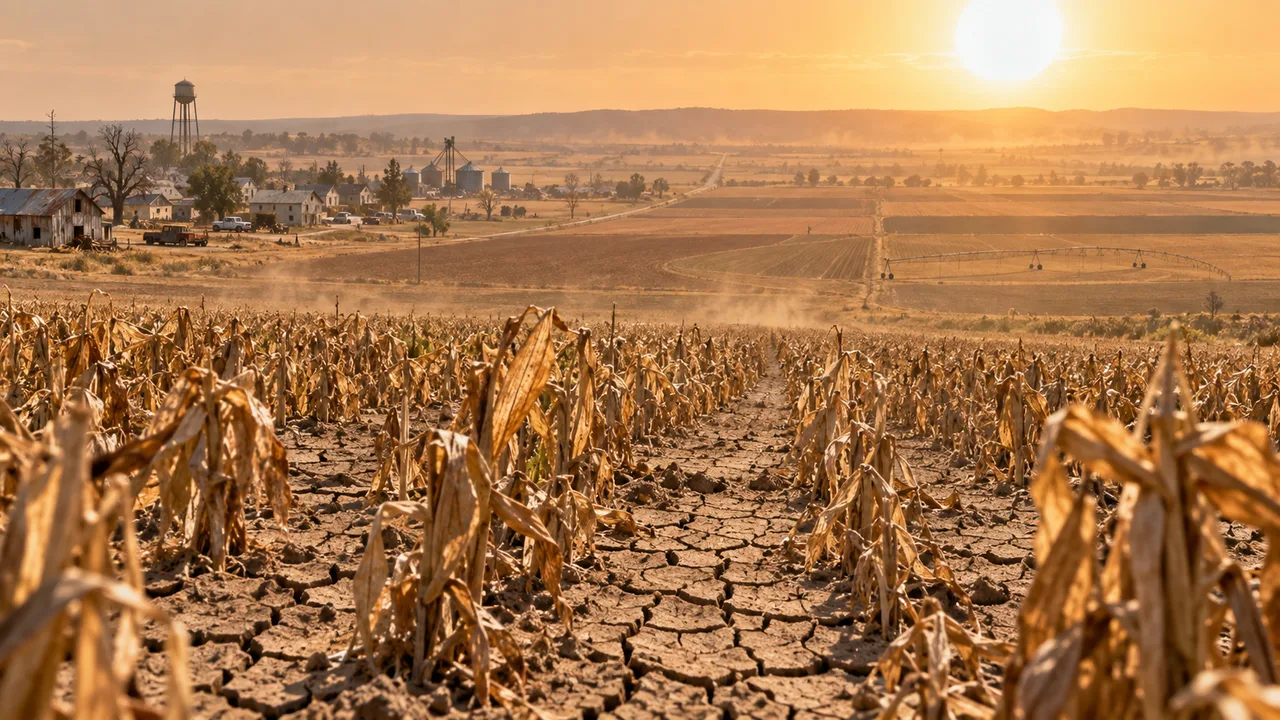
Compound drought-heat wave hazards are concentrated in US regions with multiple social vulnerabilities and agricultural dependence.

Compound drought and heat wave (CDHW) events are becoming more frequent and intense across the contiguous United States, increasing risks to human health, ecosystems, agriculture, and energy production systems. However, their distribution across socioeconomically vulnerable communities remains largely unexplored at the national scale. In this study, we develop a CDHW metric by integrating weekly US Drought Monitor classifications with daily temperature extremes from 2000-2021, allowing consisten

Continue reading