Ratiometric transcriptional activation by protein degradation.
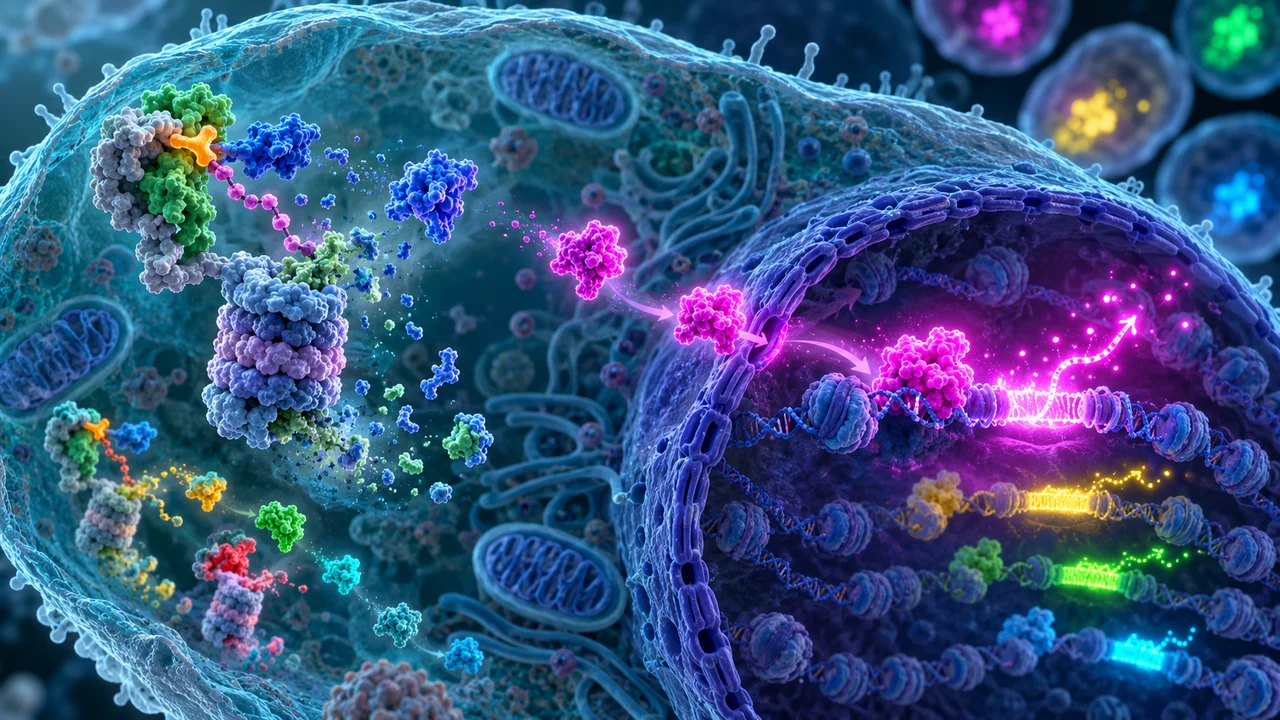
Cells can respond to alterations in the abundances of specific proteins through transcriptional outputs. Synthetic approaches inspired by native post-transcriptional circuits that convert protein abundance changes into programmable gene expression would be transformative. Here, we discover and describe design principles that effectively convert protein degradation into transcriptional outputs in live cells. We define ratiometric transcriptional activation, where control over the ratio between a
Cells can respond to alterations in the abundances of specific proteins through transcriptional outputs. Synthetic approaches inspired by native post-transcriptional circuits that convert protein abundance changes into programmable gene expression would be transformative. Here, we discover and describe design principles that effectively convert protein degradation into transcriptional outputs in live cells. We define ratiometric transcriptional activation, where control over the ratio between a transcription factor and a protein of interest fused to its inhibitor enables detection of abundance changes with high sensitivity at scale. We show that ratiometric transcriptional activation can be implemented in single cells using triply orthogonal circuits or in multicellular pools, operating independently of the mechanism of protein downregulation and enabling simultaneous detection of multiple protein downregulation events through outputs such as cell survival, fluorescent protein expression, or barcode sequencing. These circuits can be applied to oncogenic targets and enable discovery of new molecular glue degraders.