Health & Medicine

Controlled functionalization of cellulose nanocrystals directs polymer-specific protein coronas and immune cell interactions.

| Source: Proceedings of the National Academy of Sciences of the United States of America

Polymer coatings are widely used to suppress nonspecific protein adsorption and modulate nanoparticle-cell interactions. However, the biological outcomes of polymer-functionalized nanoparticles remain difficult to predict in complex biological environments because protein corona formation rapidly alters nanoparticle identity. This challenge is particularly pronounced when hydrophobic moieties are incorporated for imaging or therapeutic applications, as they can promote nonspecific interactions a

Polymer coatings are widely used to suppress nonspecific protein adsorption and modulate nanoparticle-cell interactions. However, the biological outcomes of polymer-functionalized nanoparticles remain difficult to predict in complex biological environments because protein corona formation rapidly alters nanoparticle identity. This challenge is particularly pronounced when hydrophobic moieties are incorporated for imaging or therapeutic applications, as they can promote nonspecific interactions at the nano-bio interface. Herein, we establish a modular grafting-to platform based on cellulose nanocrystals (CNCs) that enables systematic comparison of polyethylene glycol (PEG)-based, zwitterionic, and acrylamide-based polymers with controlled grafting density and chain conformation on a common porphyrin-modified surface. We demonstrate that dense polymer brushes reduce nonspecific protein adsorption in single-protein assays. By contrast, all CNC surfaces form dynamic coronas upon exposure to serum proteins, while specific polymer coatings selectively enrich or suppress distinct protein populations. We further demonstrate that polymer-dependent immune cell interactions are substantially reduced following protein corona formation, although differences among polymer chemistries persist. Zwitterionic coatings broadly suppress immune cell interactions, whereas PEG-based coatings preferentially promote interactions with antigen-presenting cells. These findings establish design principles for polymer-functionalized nanoparticles with specific immune cell interaction profiles.

Read the original source →

Related Topics

Related Stories

Health & Medicine

Spontaneous gas film expansion at an oil-water interface.

Spontaneous interfacial separation of oil and water, by inserting a gas film between the two liquids, is thermodynamically unfavorable because the oil-water interface is replaced by oil-gas and water-gas interfaces with a higher combined interfacial energy. Here, we demonstrate that microstructural confinement enables this transition after bubble introduction through the coupling of wetting, capillarity, and gas transport. Spontaneous oil imbibition into a water-submerged micropillar array, toge

Continue reading
Health & Medicine

Senescent CD8 T effector memory cells are functionally impaired, enriched in aging and disease, and a barrier to immunotherapy.

Senescent cells play important roles in various biological processes that promote fitness and health; however, their timely elimination by immune cells is critical to maintain tissue homeostasis and prevent disease. Despite this, senescent cells accumulate systemically with age, suggesting that certain immune cells also become senescent and dysfunctional during aging. In support of this, we previously demonstrated that CD8 T cells, immune cells capable of targeting senescent cells, increasingly

Continue reading
Health & Medicine

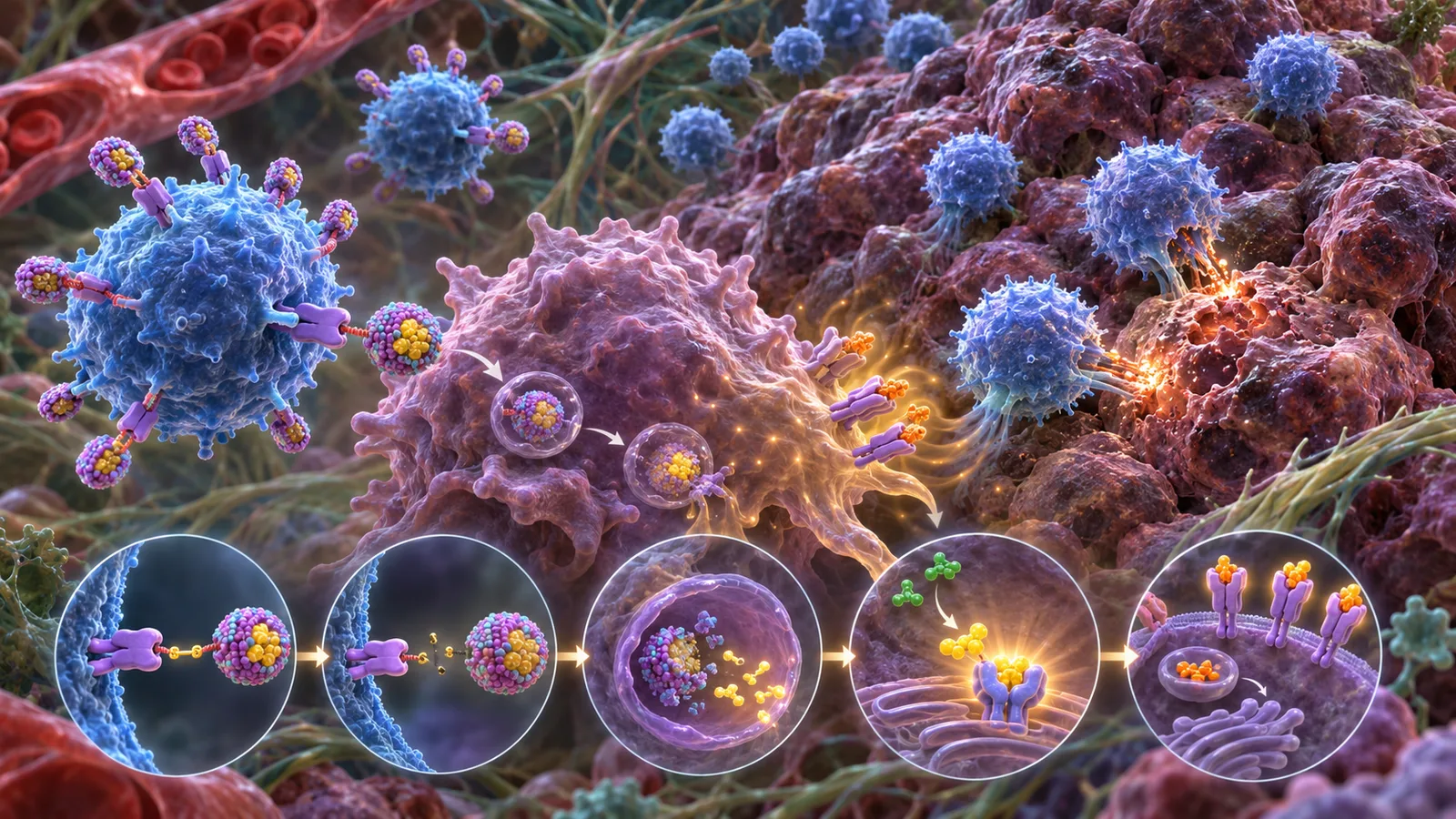
Engineered T cell-agonist chimera for logic-gated STING activation and augmented cancer immunotherapy.

The efficacy of adoptive T cell therapy against solid tumors is markedly hindered by the immunosuppressive microenvironment. Here, we demonstrate that stimulator of interferon genes (STING) activation in tumor-associated macrophages (TAM) enhances the intratumoral infiltration and cytotoxicity of adoptive T cells. We next design a TAM-targeted nanoagonist and engineer a T cell - agonist chimera (SNTC) via covalent surface anchoring, to achieve synchronized biodistribution of STING agonist with a

Continue reading
Health & Medicine

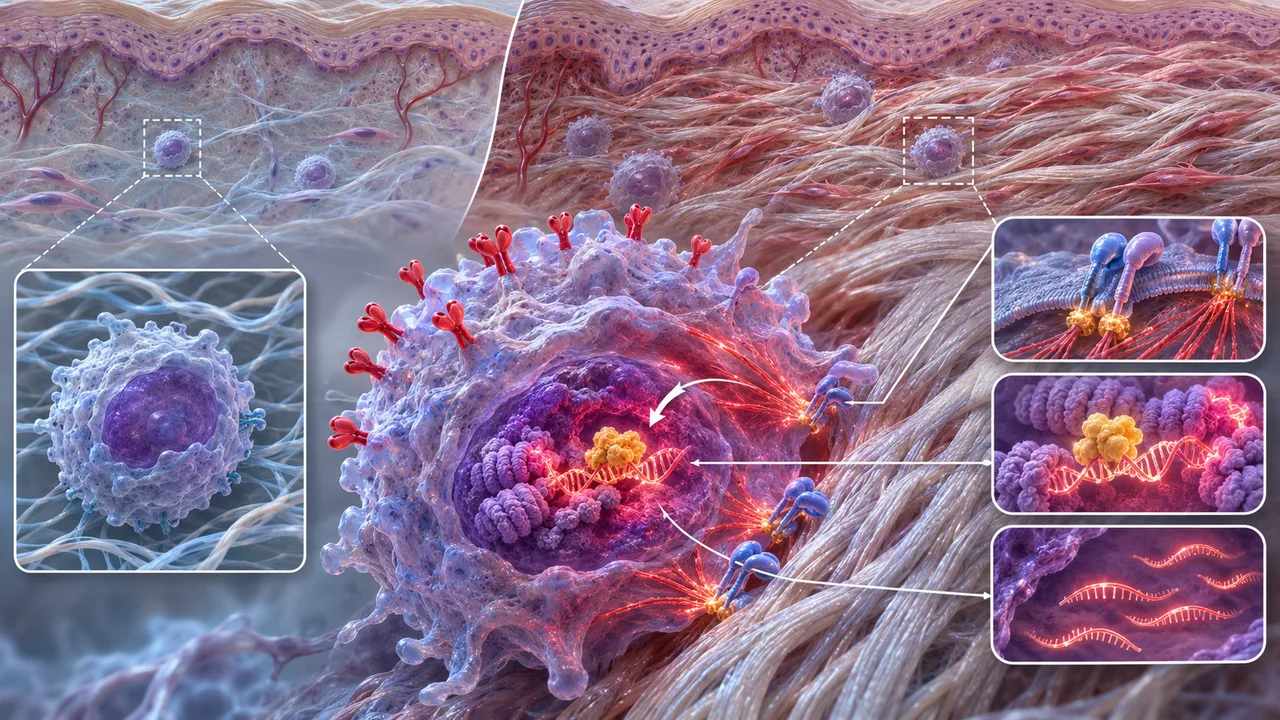
Dysregulation of mechanosensing signaling in monocytes of patients with systemic sclerosis is associated with skin inflammation.

Systemic sclerosis (SSc) is a severe autoimmune connective tissue disease characterized by immune dysregulation and progressive fibrosis of the skin and internal organs, resulting in substantial organ dysfunction and increased mortality. Fibrosis is driven in part by infiltration of immune cells, including monocytes that become activated within fibrotic tissue. However, how the mechanical properties of fibrotic skin regulate their function remains poorly understood. Here, we demonstrate that inc

Continue reading
Health & Medicine

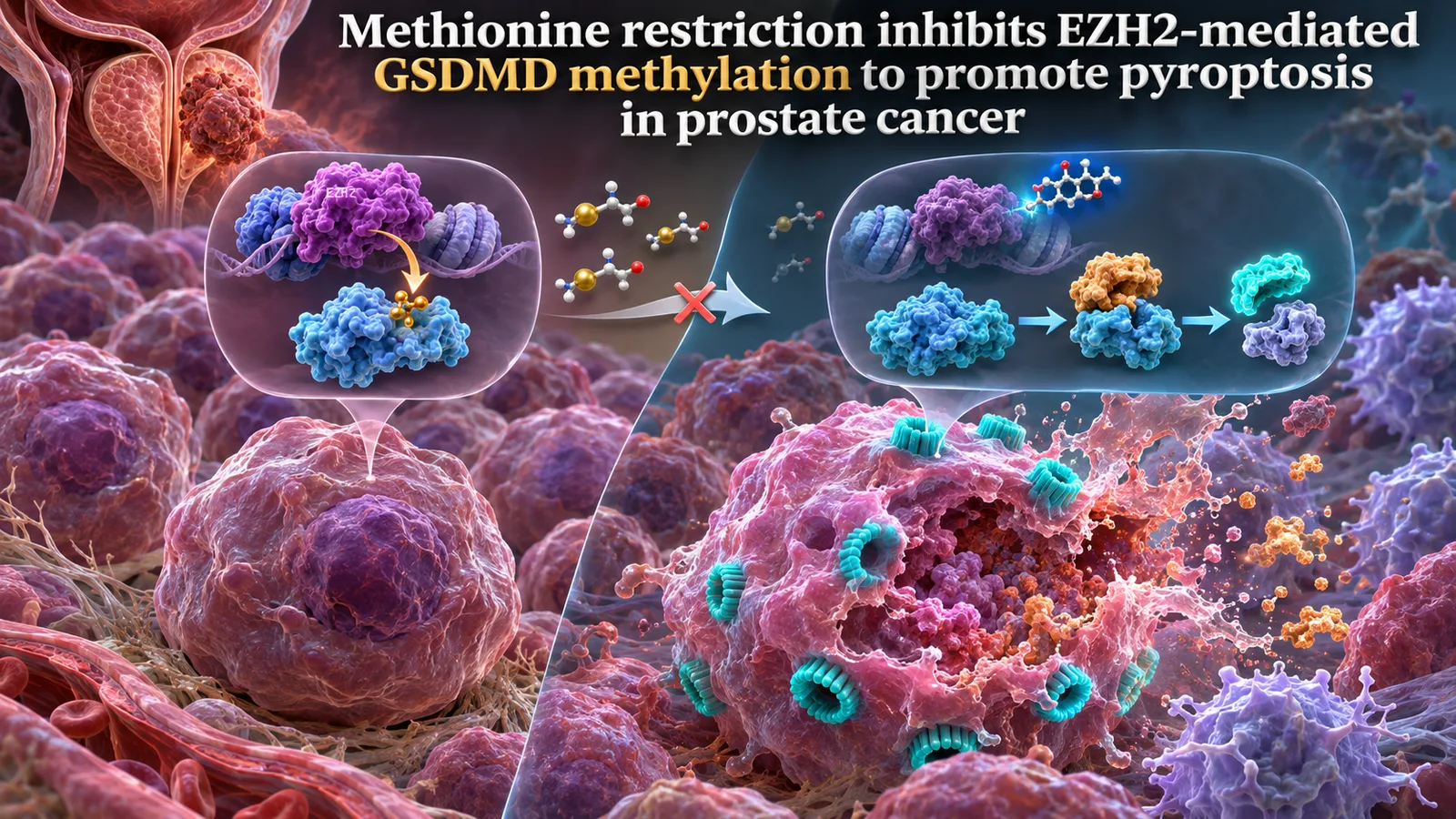
Methionine restriction inhibits EZH2-mediated GSDMD methylation to promote pyroptosis in prostate cancer.

EZH2 is frequently overexpressed in solid tumors, yet the clinical efficacy of its inhibitors remains limited, highlighting an urgent need to elucidate their cytotoxic mechanisms. Here, we identify EZH2 as a posttranslational suppressor of pyroptosis through direct methylation of GSDMD. We revealed that EZH2 inhibition triggered GSDMD-dependent pyroptosis in prostate cancer cells. Clinical specimens showed an inverse correlation between EZH2 levels and cleaved GSDMD (GSDMD N-terminal, GSDMD-N) l

Continue reading