Predicting key viral mutations from within-host deep sequencing data.
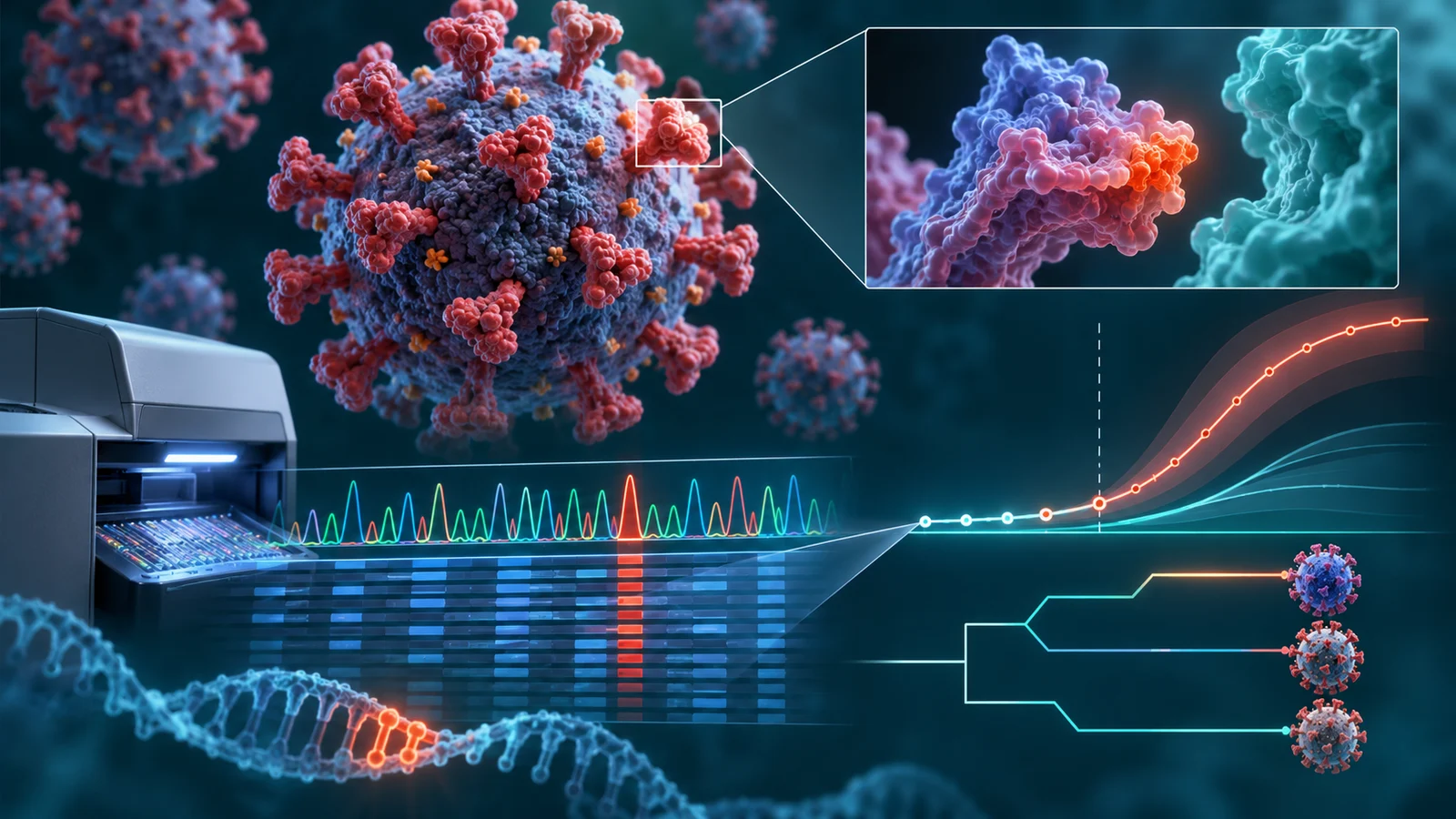
Rapid SARS-CoV-2 evolution drives continuous epidemic waves, harming vaccine protection and exerting heavy burden to population health. Predicting virus evolution holds the key for current and future medical countermeasures against infectious diseases by allowing well-matching vaccines and timely epidemic response. However, due to its high genetic diversity, fast transmissibility and evolutionary rate, accurate and timely prediction of SARS-CoV-2 evolution remains a challenge. To address this, w
Rapid SARS-CoV-2 evolution drives continuous epidemic waves, harming vaccine protection and exerting heavy burden to population health. Predicting virus evolution holds the key for current and future medical countermeasures against infectious diseases by allowing well-matching vaccines and timely epidemic response. However, due to its high genetic diversity, fast transmissibility and evolutionary rate, accurate and timely prediction of SARS-CoV-2 evolution remains a challenge. To address this, we developed a computational framework, Beth-2, to predict key mutations of SARS-CoV-2 through analyzing within-host viral genome deep sequencing data. We leveraged the early fitness signals of variants exhibited within-host and their fitness pattern between-host to infer the emerging mutations with fitness potential. In retrospective data validation, 98.6% of the key SARS-CoV-2 mutations on receptor binding domain could be detected by our model with a median lead time of 9 mo before they reached predominance at population level. Among the 26 prospectively predicted mutations, 69% of them exhibited significantly enhanced transmissibility and five showed significant immune escape from plasma of subjects who received COVID-19 mRNA vaccine collected 6 mo after the prediction time. The mutations predicted by Beth-2 that are functionally enhanced include F456L, the defining mutation of multiple current circulating lineages, including KP.3, NB.1.8.1, and XFG. The model captures mutations of high fitness potential under the natural immune environment of host and is applicable to other pathogens. The framework can be implemented along with the existing genome surveillance network and offers an efficient and effective instrument for vaccine preparation and epidemic response.