Society & Culture

Phototropic and skototropic growth in inorganic films.

| Source: Proceedings of the National Academy of Sciences of the United States of America

We report herein phototropic growth toward, and skototropic growth away from, an incoherent, unstructured, low-intensity light stimulus in the deposition of nonliving, inorganic material. Fundamental light-matter interactions yield growth of inorganic deposits with ordered mesostructures that are a function of the characteristics of the light stimulus. Illumination at normal incidence, as well as at substantial inclination, resulted in phototropic growth toward the direction of incidence. Howeve

We report herein phototropic growth toward, and skototropic growth away from, an incoherent, unstructured, low-intensity light stimulus in the deposition of nonliving, inorganic material. Fundamental light-matter interactions yield growth of inorganic deposits with ordered mesostructures that are a function of the characteristics of the light stimulus. Illumination at normal incidence, as well as at substantial inclination, resulted in phototropic growth toward the direction of incidence. However, illumination incident at shallow inclinations resulted in growth away from the stimulus, a skototropic response. We show that the skototropic behavior of these materials is an emergent phenomenon produced primarily by nearest-neighbor optical scattering interactions during growth. We moreover observe similar scaling relations between the morphologies of the inorganic deposits and the growth habits of trees and forest stands, despite the differences in growth mechanisms and differences of >10 8 in scale length.


Read the original source →

Related Stories

Society & Culture

Global greenhouse gas cobenefits of US irrigated agriculture.

Land use and land conversion for agriculture contribute nearly a quarter of global greenhouse gas (GHG) emissions, making the sector a key priority for emissions reductions. Crop yields are one factor that modulate agricultural land demand, with, all else equal, global land use change increasing with yield declines and decreasing with yield gains. Therefore, agricultural practices drive both direct, on-farm emissions, and indirect land use change emissions through yield effects. Here, we couple

Continue reading
Society & Culture

Dynamic attribute activation explains gaze biases in choice.

People tend to choose the options they look at more. Prior work explains this effect by assuming that visual attention increases preference for the attended option. However, it remains unclear why looking at an option increases its preference and when this relationship is weakened. Using an experimental paradigm that combines eye-tracking and a think-aloud protocol, we provide evidence that visual attention shapes preference by activating attributes associated with the attended option. Criticall

Continue reading
Society & Culture

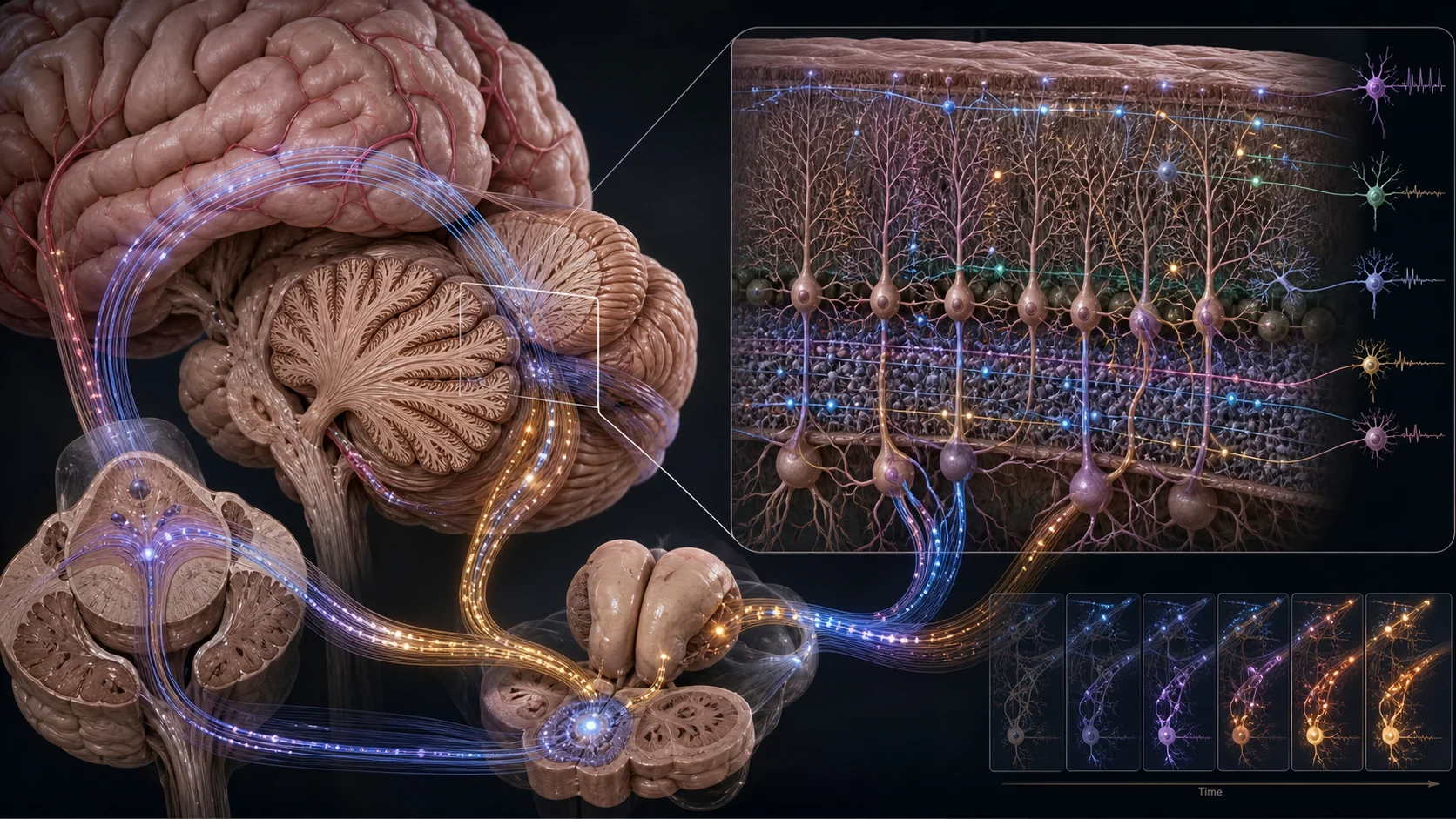
Cerebellar microcircuits enable robust evidence-based decisions through cortico-cerebellar coupling.

The cerebellum is increasingly implicated in perceptual decision-making, yet it remains unclear how the cerebellar cortex can support sparse evidence accumulation over behavioral time scales without assuming cortical-style dense local excitatory recurrence. We present a biologically constrained modeling framework showing that cerebellar microcircuits can implement graded accumulation and competition in the absence of such recurrence. In our model, type-II Purkinje-neuron excitability generates f

Continue reading
Society & Culture

Loss of neuronal population organization links pathology to behavior in a model of Alzheimer's disease.

Alzheimer's disease and related dementias are typically described at two levels: the accumulation of molecular pathology and the emergence of cognitive impairment. Understanding the relationship between pathology, often studied in animal models, and human cognition will require measurements spanning intermediate scales, including single neurons, neuronal populations, and distributed networks. Here we combine longitudinal measurements of behavior and neuronal population activity with fluid and hi

Continue reading
Society & Culture

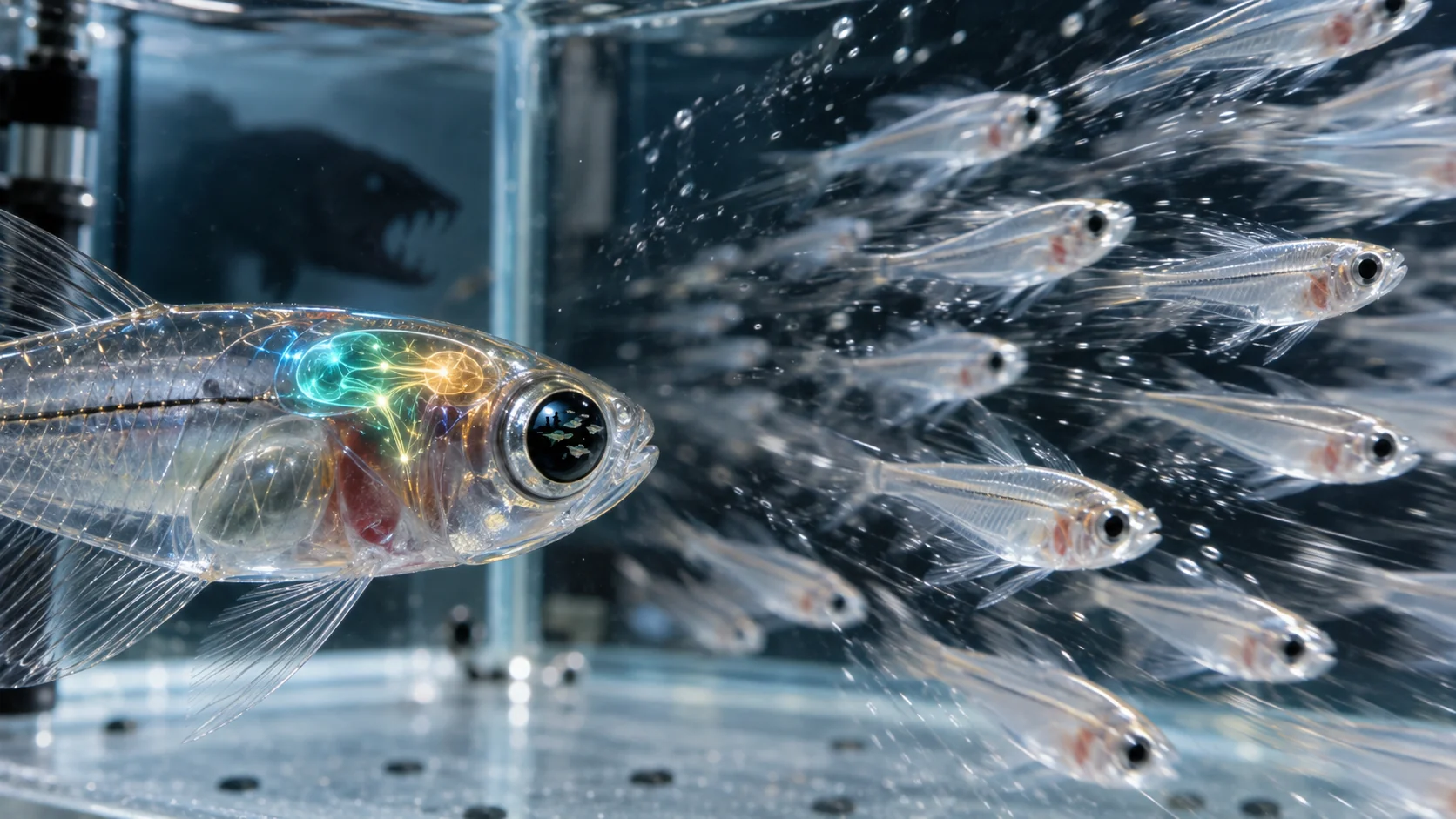
Neuronal detection of social actions directs collective escape behaviour.

Animals in groups obtain information from social partners to engage in adaptive behaviour 1-3 . Social information transmission is observed in fish schools 4-6 , bird flocks 7,8 and human groups 9,10 , but the neural representation of such socially acquired information is poorly understood 3,11,12 . Here we show that, in the schooling glassfish Danionella cerebrum 13-15 , collective escape from danger can be mediated by an individual's visual perception of other escaping animals. To understand t

Continue reading