Economics

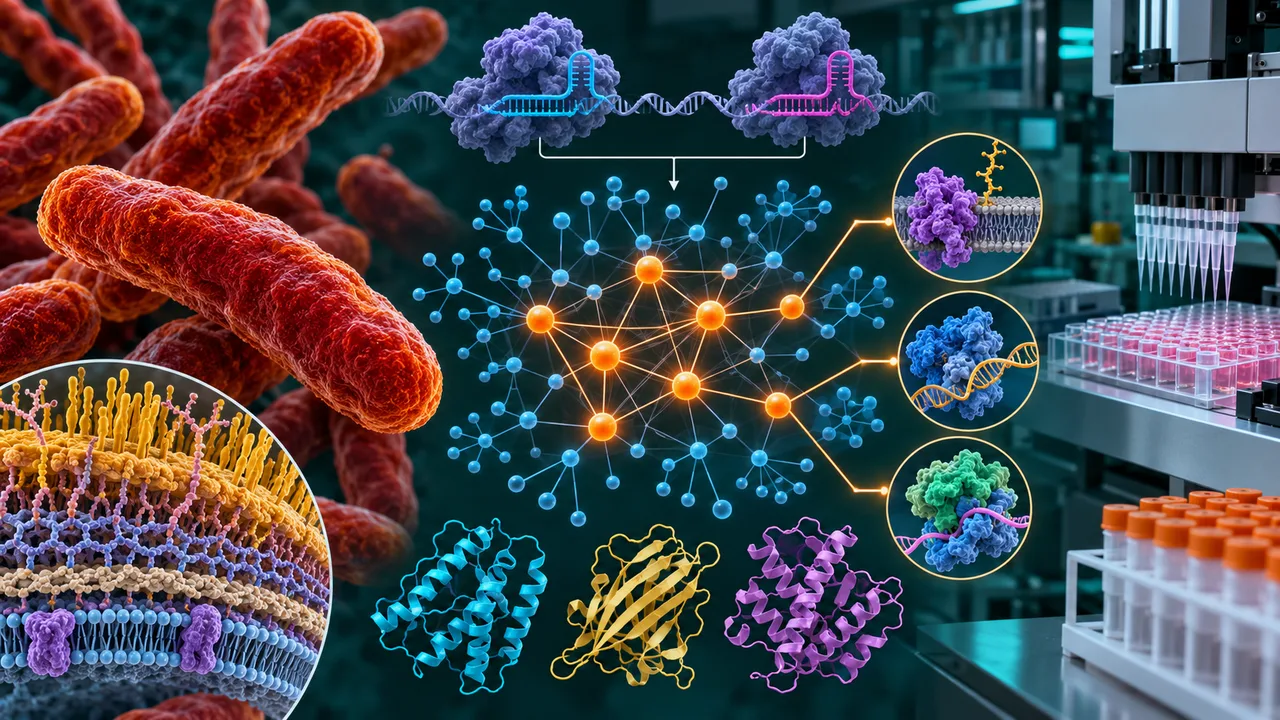
Comprehensive mapping of essential-gene interactions in M. tuberculosis.
| Source: Nature

Mycobacterium tuberculosis, the causative agent of tuberculosis, remains the world's deadliest pathogen 1 . Despite intensive study, many of its genes remain uncharacterized, which limits the insight that can be gained into tuberculosis biology and constrains drug development. Genetic interaction (GI) mapping is a powerful strategy to define functional relationships between genes by quantifying how the phenotypic effects of combined perturbations deviate from expectations based on single-gene pe

Mycobacterium tuberculosis, the causative agent of tuberculosis, remains the world's deadliest pathogen 1 . Despite intensive study, many of its genes remain uncharacterized, which limits the insight that can be gained into tuberculosis biology and constrains drug development. Genetic interaction (GI) mapping is a powerful strategy to define functional relationships between genes by quantifying how the phenotypic effects of combined perturbations deviate from expectations based on single-gene perturbations 2,3 . Here we develop a dual-sgRNA CRISPR-interference platform that enables high-throughput GI mapping in mycobacteria. We address key technical challenges in library construction and data interpretation by incorporating unique barcodes for each sgRNA pair and implementing a robust statistical pipeline for GI detection. Focusing on essential genes, we generate comprehensive GI maps in the model mycobacterium Mycobacterium smegmatis and the pathogen M. tuberculosis. These maps recapitulate known biology, uncover thousands of previously unrecognized interactions and identify functional connections between essential genes and drug targets. By generating AlphaFold3-based protein-protein interaction predictions 4 for all gene pairs in our GI maps, we show that a subset of GIs is likely to reflect underlying physical associations. Validation of selected GIs confirms both novel biological relationships and opportunities for synergistic targeting. Overall, this work establishes a generalizable framework for dual-gene perturbation and defines the architecture of essential-gene networks in mycobacteria, advancing both our understanding of tuberculosis biology and the rational design of combination therapies.

Read the original source →

Related Stories

Economics

Core effectors of the Fusarium pan-effectome contribute to host specificity.

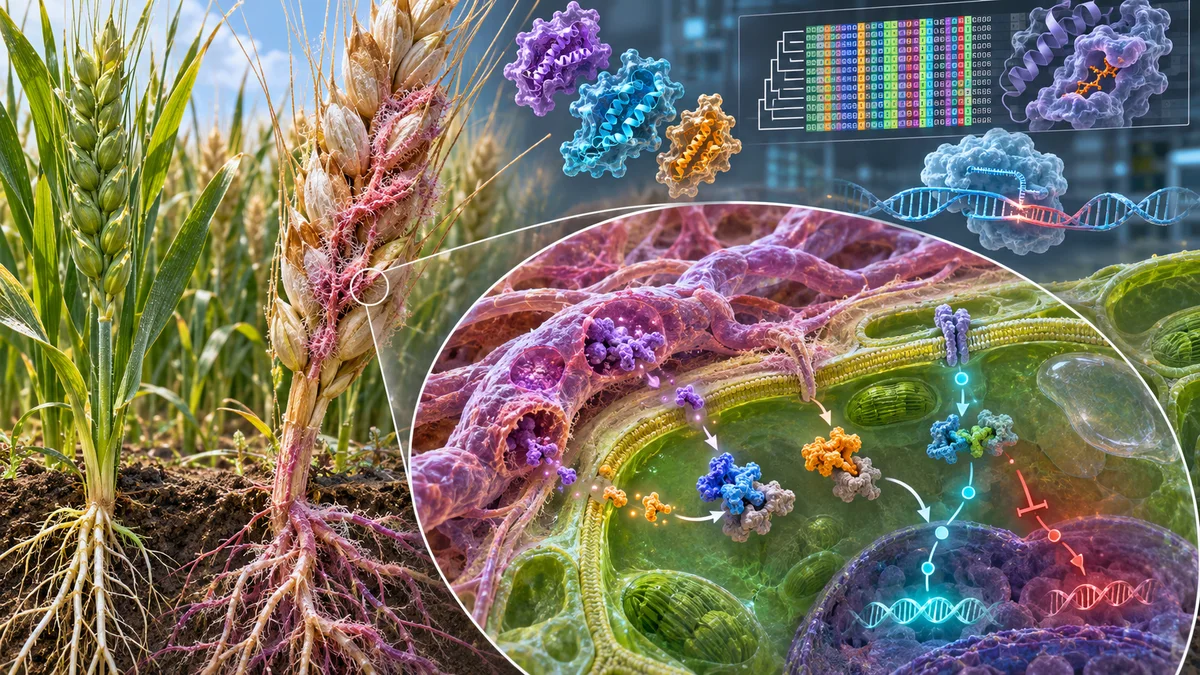
Fusarium fungi cause economically important diseases of cereal crops, including Fusarium head blight, ear blight, and root rot. Central to these interactions are secreted effector proteins that manipulate host biology to promote infection. In turn, plants have evolved to recognize effector activity to activate immune responses and restrict disease. Despite their importance, the diversity, conservation, and evolution of Fusarium effectors remain poorly understood. Here, we present the Fusarium sa

Continue reading
Economics

A glycan superbinder reveals polysialylated-CD56 as a precision biomarker for pancreatic cancer.

Pancreatic cancer remains one of the most lethal malignancies, largely due to the lack of reliable biomarkers for early detection. Aberrant glycosylation presents a promising source of diagnostic signatures, yet polysialic acid (polySia), a distinctive glycan, has remained underexplored, primarily owing to limitations in detection methods and recognition tools. Here, we report the development of a polySia "superbinder," a nanoscale molecularly imprinted polymer (nanoMIP) that exhibits superior s

Continue reading
Economics

Structural basis of glycoprotein recognition by the human folding sensor UDP-glucose:glycoprotein glucosyltransferase.

UDP-glucose:glycoprotein glucosyltransferase 1 (UGGT1) plays a central role in quality control of glycoprotein folding within the early secretory pathway, yet the molecular basis of UGGT1 substrate recognition remains poorly understood. Here, we report cryo-EM structures of human full-length multidomain UGGT1. Monomeric UGGT1 structures reveal two conformational states corresponding to "open" and "closed" architectures. Three-dimensional variability and molecular dynamics simulations suggest the

Continue reading
Economics

HAR1 receptor kinase links nodule autoregulation with repression of auxin signaling and lateral root development.

Nitrogen-fixing root nodules develop as lateral organs on legume roots and their formation is restricted by autoregulation of nodulation (AON), a systemic mechanism with unclear evolutionary origins. We identify Lotus japonicus NUCLEAR FACTOR Y subunit A4 ( NF-YA4 ) gene as a central target of the leucine-rich repeat receptor kinase HAR1, which controls both AON and root system architecture. Under nonsymbiotic conditions, HAR1 suppresses expression of NF-YA4 and its close paralog NF-YA1 , at lea

Continue reading
Economics

Evolution of the arbuscular mycorrhizal regulatory network through differential GRAS gene retention and protein interaction in land plants.

Plants rely on an ancient genetic "toolkit" to establish arbuscular mycorrhizal symbiosis (AMS) with fungal partners. However, the symbiotic outcomes vary among AMS hosts, indicating divergence in downstream transcriptional reprogramming after the perception of symbiotic signals. To uncover the cross-species variation of the AMS regulatory network, we traced the evolutionary trajectory of the GRAS gene family, which encodes the major group of transcription factors in AMS regulation. Phylogenetic

Continue reading