Economics

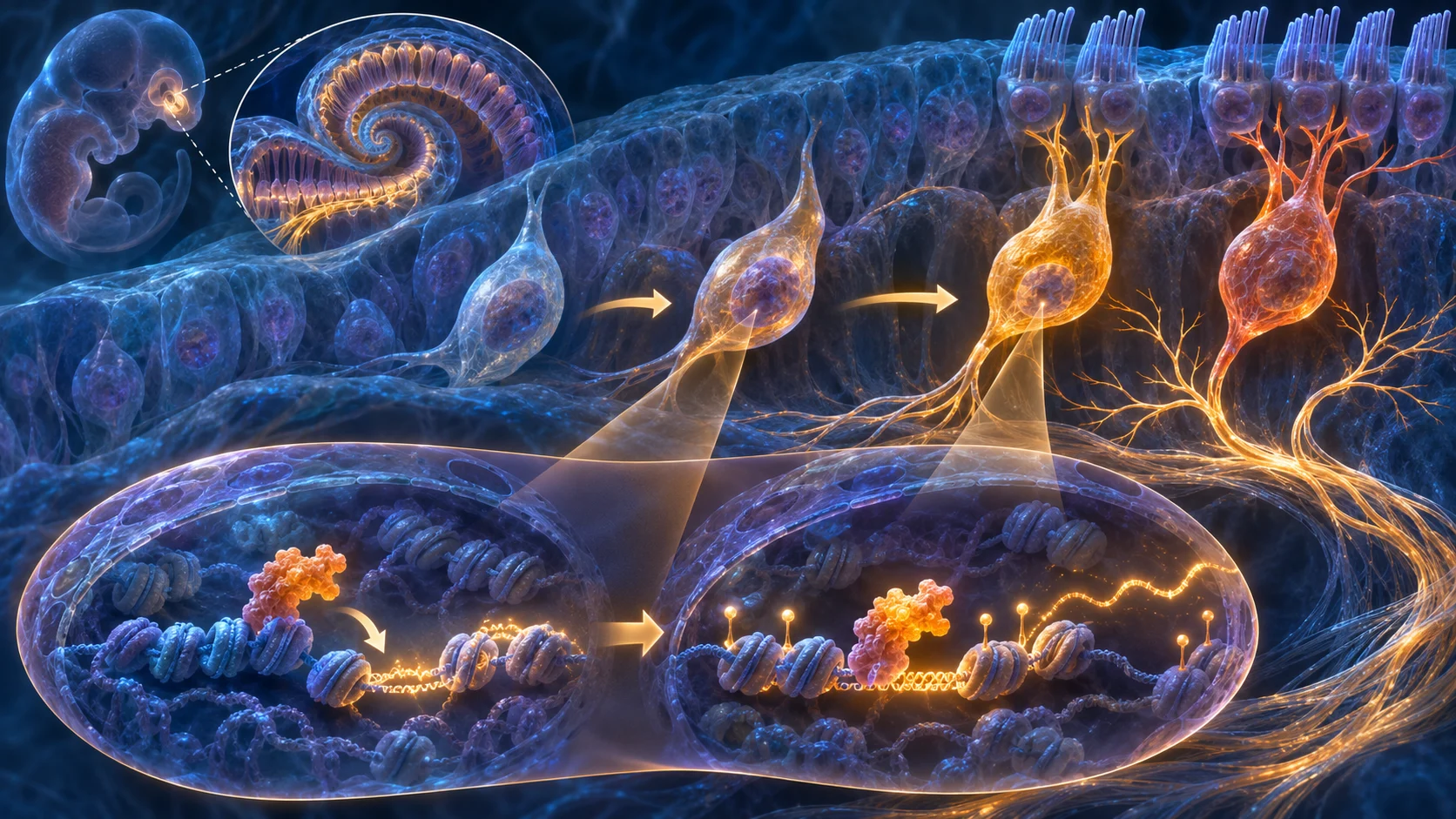
Two-phase NEUROD1 pioneer activity synchronizes sensory neuronal differentiation and subtype specification.
| Source: Proceedings of the National Academy of Sciences of the United States of America

Temporal control of neuronal differentiation is essential for establishing stable neuronal identities, yet the transcriptional and epigenetic mechanisms underlying this process remain poorly understood. Using auditory neurons as an in vivo model, we investigate the role of the proneural factor NEUROD1 in regulating neuronal differentiation timing and subtype specification. To bypass early neuronal loss in germline Neurod1 deletion mutants, we generated a delayed, self-terminating conditional kno

Temporal control of neuronal differentiation is essential for establishing stable neuronal identities, yet the transcriptional and epigenetic mechanisms underlying this process remain poorly understood. Using auditory neurons as an in vivo model, we investigate the role of the proneural factor NEUROD1 in regulating neuronal differentiation timing and subtype specification. To bypass early neuronal loss in germline Neurod1 deletion mutants, we generated a delayed, self-terminating conditional knockout mouse ( Neurod1ST ) that permits analysis of later differentiation stages. Integration of NEUROD1 chromatin binding and histone profiling at embryonic day (E) 11.5 with transcriptomic analyses across E11.5, E14.5, and E18.5 reveals a two-phase regulatory program during auditory neuron development that parallels dynamic Neurod1 expression. In the first phase, coinciding with Neurod1 upregulation during early neuronal differentiation, NEUROD1 preferentially binds putative enhancers of neuronal differentiation genes and promotes their transition to active chromatin states, consistent with pioneer factor activity. Loss of Neurod1 disrupts these epigenomic transitions, resulting in persistence of progenitor-like states with premature activation of differentiation and axonogenesis programs. This dysregulation is accompanied by activation of alternative regulatory networks, leading to defective neuronal migration and innervation, progressive identity instability, and apoptosis. In the second phase, marked by reexpression of Neurod1 in developing Type Ib/Ic precursors, Neurod1 deletion selectively impairs Type Ic specification while promoting a Type Ib-like identity. These findings identify NEUROD1 as a temporal regulator that coordinates developmental progression and stabilizes auditory neuron identity through phased regulatory activity, providing a mechanistic framework for how pioneer transcription factors couple chromatin remodeling to developmental timing.

Read the original source →

Related Stories

Economics

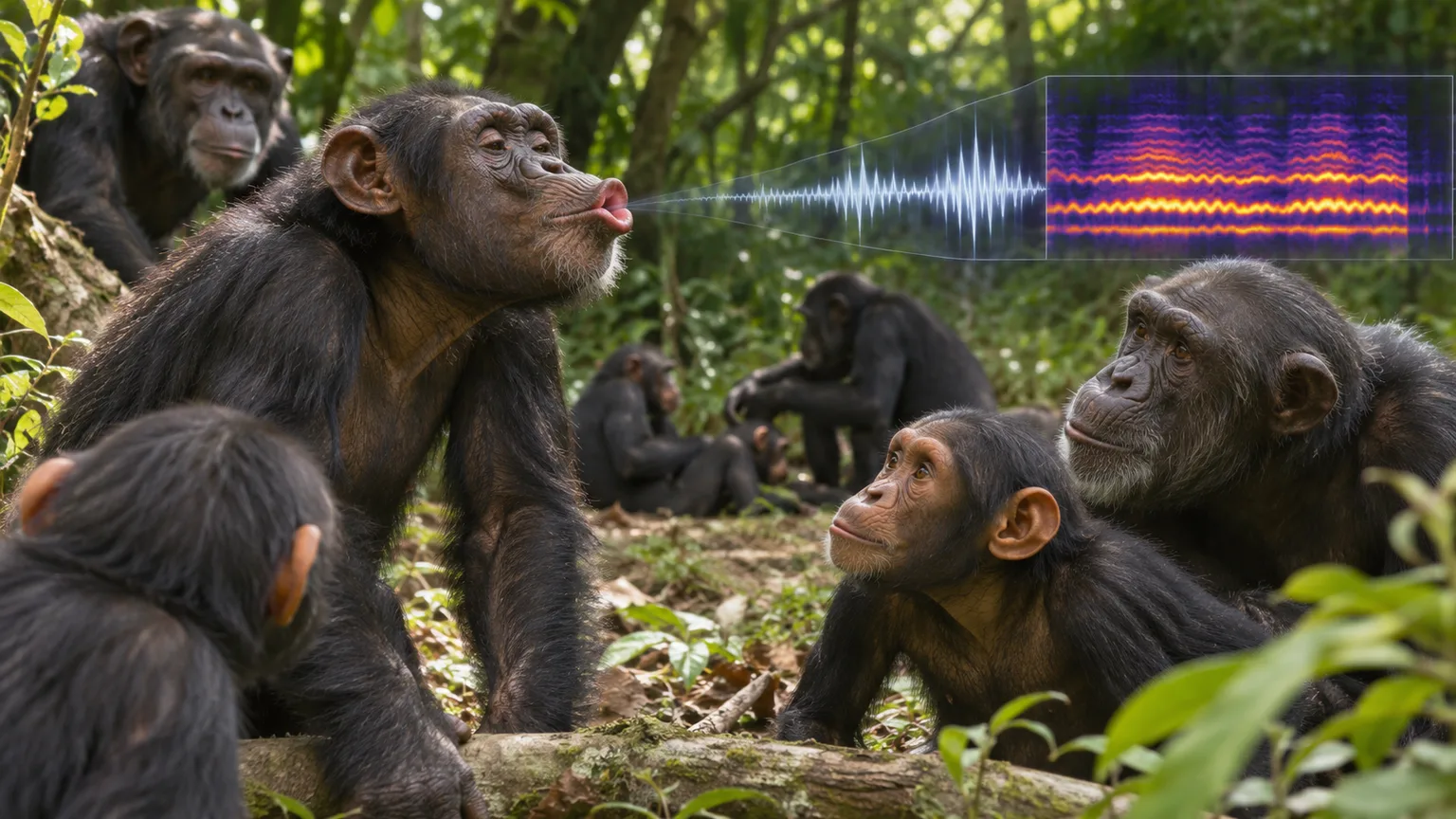
A signal convention in natural chimpanzee communication.

Human language relies on conventional signals that are arbitrary, stable, and socially transmitted. Whether other animals exhibit meaning-based communicative conventions is virtually unknown. Using a quasi-experimental design, we investigated this in chimpanzee unvoiced calls (UCs), such as acoustic raspberries, known to show usage variation. We collected audio and contextual data in 91 chimpanzees (0 to 55 y), across eight wild and captive groups that differed in the presence or absence of adul

Continue reading
Economics

Metasurface waveguides for all-day augmented reality glasses.

Augmented reality (AR) displays, originating from early optical see-through head-mounted systems 1 , have evolved towards lightweight glasses that seamlessly integrate digital information with the physical world 2,3 . However, their widespread adoption requires compact optical systems that enable bright, wide-field and comfortable viewing. Diffractive waveguides (WGs) offer a promising approach towards lightweight AR displays yet face inherent trade-offs among field of view (FoV), optical effici

Continue reading
Economics

Core effectors of the Fusarium pan-effectome contribute to host specificity.

Fusarium fungi cause economically important diseases of cereal crops, including Fusarium head blight, ear blight, and root rot. Central to these interactions are secreted effector proteins that manipulate host biology to promote infection. In turn, plants have evolved to recognize effector activity to activate immune responses and restrict disease. Despite their importance, the diversity, conservation, and evolution of Fusarium effectors remain poorly understood. Here, we present the Fusarium sa

Continue reading
Economics

Comprehensive mapping of essential-gene interactions in M. tuberculosis.

Mycobacterium tuberculosis, the causative agent of tuberculosis, remains the world's deadliest pathogen 1 . Despite intensive study, many of its genes remain uncharacterized, which limits the insight that can be gained into tuberculosis biology and constrains drug development. Genetic interaction (GI) mapping is a powerful strategy to define functional relationships between genes by quantifying how the phenotypic effects of combined perturbations deviate from expectations based on single-gene pe

Continue reading
Economics

A glycan superbinder reveals polysialylated-CD56 as a precision biomarker for pancreatic cancer.

Pancreatic cancer remains one of the most lethal malignancies, largely due to the lack of reliable biomarkers for early detection. Aberrant glycosylation presents a promising source of diagnostic signatures, yet polysialic acid (polySia), a distinctive glycan, has remained underexplored, primarily owing to limitations in detection methods and recognition tools. Here, we report the development of a polySia "superbinder," a nanoscale molecularly imprinted polymer (nanoMIP) that exhibits superior s

Continue reading