Nuclear cGAS inhibits stimulation-induced inflammatory gene transcription via HDAC1.

Cyclic GMP-AMP synthase (cGAS) is a cytosolic DNA sensor that detects aberrant DNA and activates the STING-dependent innate immune response. Although cGAS is predominantly localized in the nucleus under physiological conditions, its nuclear function remains incompletely understood. Here, we identify nuclear cGAS as a transcriptional repressor that restrains inflammatory gene expression independently of STING signaling. Using macrophages challenged with lipopolysaccharide (LPS), we found that cGA
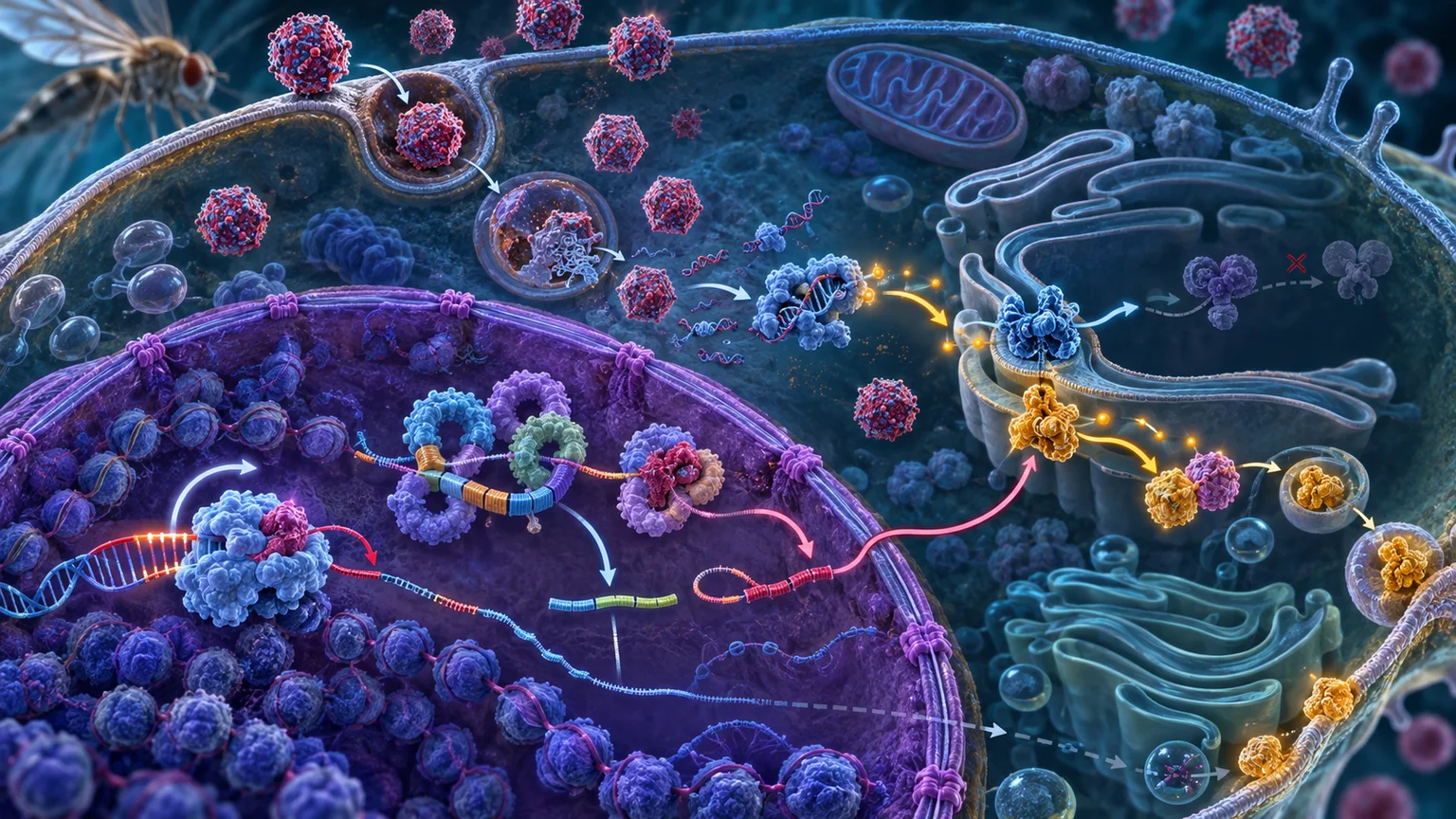
Cyclic GMP-AMP synthase (cGAS) is a cytosolic DNA sensor that detects aberrant DNA and activates the STING-dependent innate immune response. Although cGAS is predominantly localized in the nucleus under physiological conditions, its nuclear function remains incompletely understood. Here, we identify nuclear cGAS as a transcriptional repressor that restrains inflammatory gene expression independently of STING signaling. Using macrophages challenged with lipopolysaccharide (LPS), we found that cGAS selectively suppresses the transcription of primary response genes, including Cxcl1 and Tnf . Mechanistically, this activity requires nucleosome binding but not cGAS enzymatic signaling. Upon inflammatory stimulation, the transcription factor PU.1 recruits cGAS to target promoters, where the carboxyl-terminal domain of cGAS interacts with histone deacetylase 1 (HDAC1). This complex promotes deacetylation of H3K27ac and restricts transcriptional activation of inflammatory genes. Genome-wide chromatin accessibility and occupancy analyses revealed that cGAS-dependent transcriptional repression occurs at a distinct subset of PU.1-associated inflammatory loci. Functionally, macrophage-specific Hdac1 deficiency phenocopied the exaggerated inflammatory responses observed in Cgas -deficient mice during endotoxemia, whereas the pathogenic effects of Hdac1 loss were abolished in the absence of Cgas . Moreover, increased mortality and neutrophil infiltration in Cgas- deficient mice were rescued by deletion of Csf3r . Together, these findings uncover a previously unrecognized transcriptional function of nuclear cGAS and identify nuclear cGAS as an intrinsic brake that restrains excessive inflammatory responses.