Physical/Tech

Experience-driven plasticity in the secondary somatosensory cortex in people born without hands.
| Source: Proceedings of the National Academy of Sciences of the United States of America

In congenital handlessness, where individuals rely on their feet for compensatory manual functions, reorganization in the primary somatosensory cortex (SI) appears to be limited to local shifts by adjacent body parts. It remains unclear how congenital handlessness and lifelong compensatory foot use shape the sensorimotor system beyond SI, and whether compensatory abilities can drive broader functional reorganization. Here, we used task-based and resting-state functional MRI (fMRI) to investigate

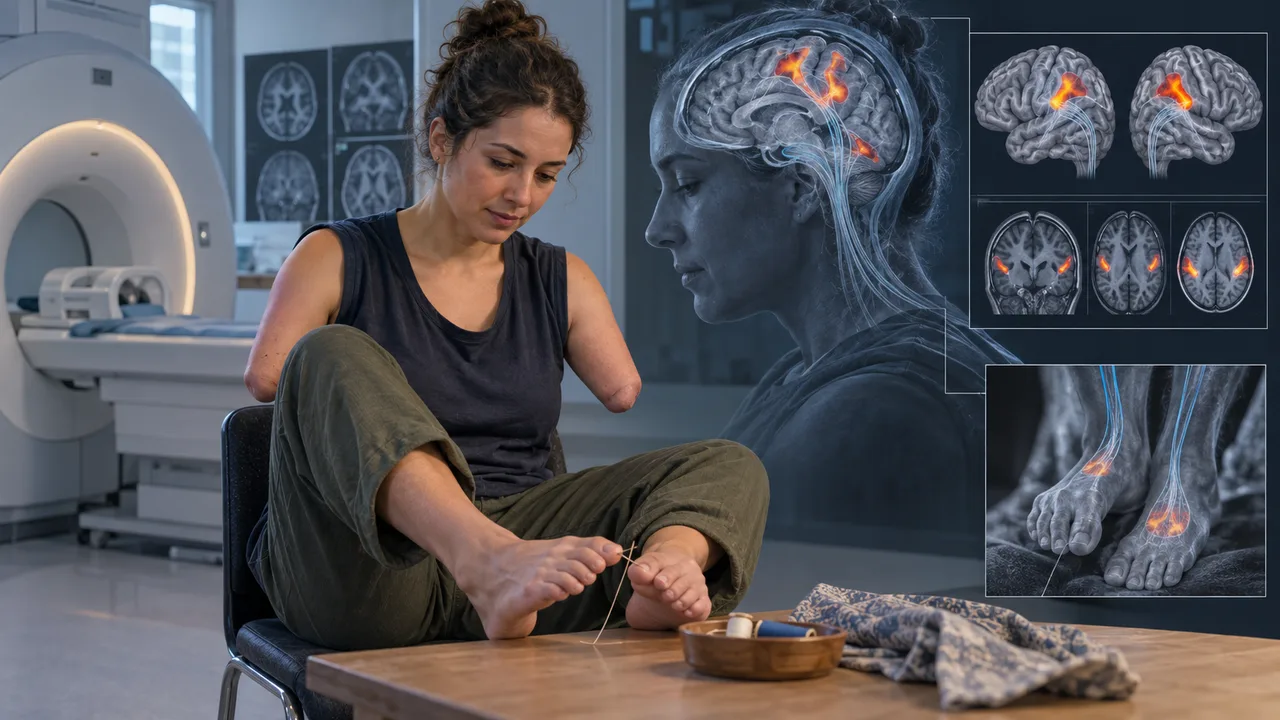
In congenital handlessness, where individuals rely on their feet for compensatory manual functions, reorganization in the primary somatosensory cortex (SI) appears to be limited to local shifts by adjacent body parts. It remains unclear how congenital handlessness and lifelong compensatory foot use shape the sensorimotor system beyond SI, and whether compensatory abilities can drive broader functional reorganization. Here, we used task-based and resting-state functional MRI (fMRI) to investigate how compensatory foot use changes body representations in the secondary somatosensory cortex (SII) in people born without hands (individuals with upper-limb dysplasia, IDs). We found that IDs showed a shift toward foot selectivity in the left hand-selective SII, with stronger foot activity than typically developed (TD) control participants during action execution. Notably, this reorganization in the left SII hand area cannot simply be explained by this area's intrinsic organization-the typical secondary preference of this area in the TDs when hand responses are excluded: TDs showed both shoulder and foot selectivity when the hand activity was excluded from the analysis in this area, whereas the reorganization in IDs was limited to the foot. This indicates a functional reweighting that stems from the IDs' sensorimotor experience. Resting-state results further revealed altered functional connectivity between SII and primary sensorimotor regions in IDs. Our findings suggest that SII exhibits flexible, experience-dependent plasticity, revealing a hierarchical principle of cortical plasticity, whereby reorganization in the SI is constrained by somatotopic principles while SII reflects functional or experience-dependent reweighting plasticity.

Read the original source →

Related Stories

Physical/Tech

Cassiterite U-Pb geochronology: A framework for tin provenance in the Bronze Age world.

The origin of Bronze Age tin is one of the most compelling mysteries in global archaeology. A number of studies were carried out to identify fingerprints to determine tin sources, but all failed to suit the contexts of Bronze Age China. This study provides the first comprehensive provenance analysis of the tin ore utilized during the Shang dynasty of China. Using U-Pb dating analysis on cassiterite grains surviving in various contexts including primary smelting site, metal resource hoard, and br

Continue reading
Physical/Tech

Host-mediated insecticide sequestration in target-site-resistant pests impacts parasitoid fitness and evolution.

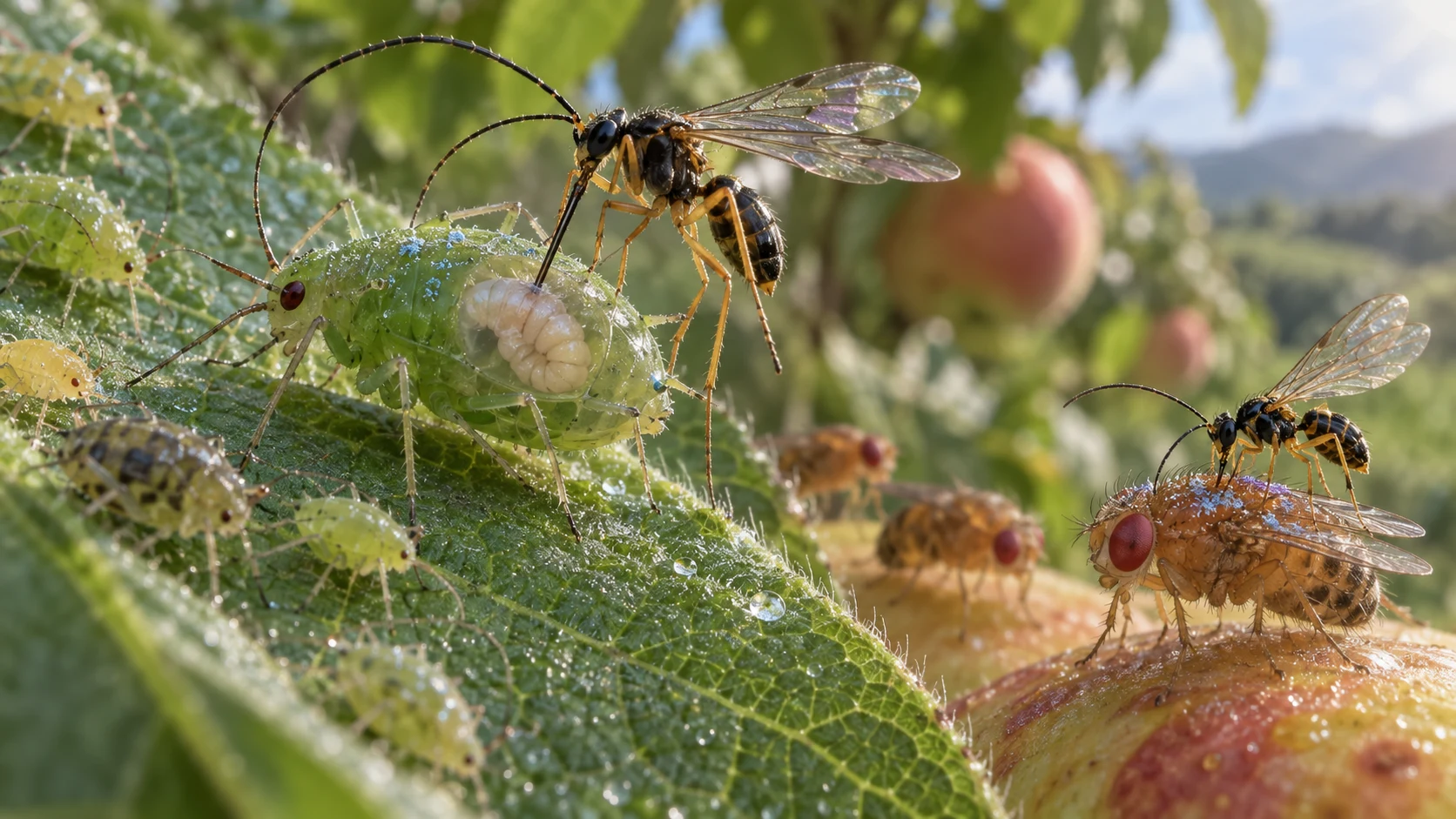
Insecticide resistance poses a major challenge to global pest management, yet its cascading effects on ecological networks remain poorly understood. Here, we show that target-site-resistant herbivorous insects can accumulate unmetabolized insecticides and inadvertently function as "toxic prey," impairing the fitness of their natural enemies. Using neonicotinoid- and spinosyn-resistant Myzus persicae and genetically modified Drosophila melanogaster , we demonstrate that resistant hosts surviving

Continue reading
Physical/Tech

Human learning is an understudied but promising lever for boosting human-AI synergy.

Humans collaborating with AI hold the promise of achieving superior outcomes compared to either acting alone (i.e., human-AI synergy). However, the conditions that facilitate such synergy when humans are advised by AI are not well understood. A recent meta-analysis showed that, on average, human-AI combinations do not outperform the better individual agent. We argue that this pessimistic conclusion arises from insufficient attention to human learning in experimental designs. To substantiate this

Continue reading
Physical/Tech

Multiband condensate of magnons in two dimensions.

Wavelike bosonic particles can accumulate in a single mode characterized by a particular wavelength, and such condensates are at the heart of phenomena such as superconductivity and superfluidity where usually a single complex number describes their state. If there are several flavors of excitations or particles, a vector containing several complex numbers can characterize multicomponent condensation, thus opening new possibilities for textures, dynamics, and devices. Thus far, multicomponent co

Continue reading
Physical/Tech

Indirect reciprocity with dual private assessment.

People often cooperate out of concern for their reputation. The corresponding theory of indirect reciprocity predicts that such cooperation can only evolve if people's opinions of each other are sufficiently correlated. This correlation, however, can be difficult to achieve when individuals form their opinions independently from one another, as in private assessment models. In that case, errors can generate disagreements that propagate throughout a population. Here, we identify a simple mechanis

Continue reading