Society & Culture

Neuronal detection of social actions directs collective escape behaviour.

| Source: Nature

Animals in groups obtain information from social partners to engage in adaptive behaviour 1-3 . Social information transmission is observed in fish schools 4-6 , bird flocks 7,8 and human groups 9,10 , but the neural representation of such socially acquired information is poorly understood 3,11,12 . Here we show that, in the schooling glassfish Danionella cerebrum 13-15 , collective escape from danger can be mediated by an individual's visual perception of other escaping animals. To understand t

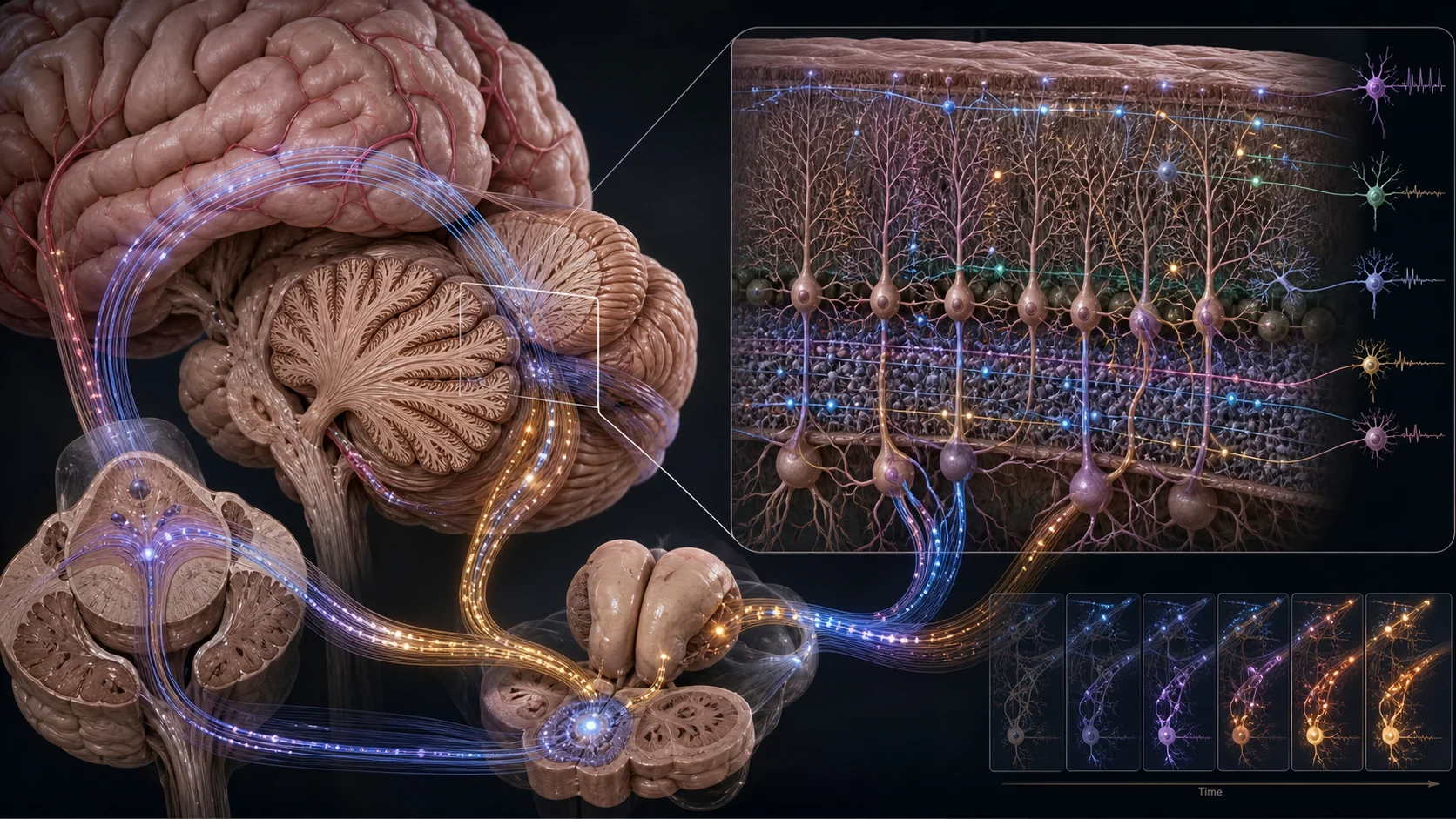
Animals in groups obtain information from social partners to engage in adaptive behaviour 1-3 . Social information transmission is observed in fish schools 4-6 , bird flocks 7,8 and human groups 9,10 , but the neural representation of such socially acquired information is poorly understood 3,11,12 . Here we show that, in the schooling glassfish Danionella cerebrum 13-15 , collective escape from danger can be mediated by an individual's visual perception of other escaping animals. To understand the neural basis of socially transmitted escape behaviour, we imaged neural activity from adult glassfish viewing the actions of virtual conspecifics. Visual neurons in the midbrain optic tectum 16,17 and thalamus 18 increased their activity when virtual conspecifics escaped. Escape-responsive neurons also responded to the sudden disappearance of virtual fish, yet were unaffected by the disappearance of stimuli moving with non-biological linear motion. Behaviourally, fish retreated from virtual schools that escaped or disappeared, but only those swimming with biological burst-and-glide motion. Neural encoding of this rapid social offset allows fish to infer danger from social information alone, a potentially effective strategy for animals that are capable of rapid movement but have a limited visual range 14,19 . These results show how the neural computations of individuals enable rapid information sharing in collectives.

Read the original source →

Related Stories

Society & Culture

Global greenhouse gas cobenefits of US irrigated agriculture.

Land use and land conversion for agriculture contribute nearly a quarter of global greenhouse gas (GHG) emissions, making the sector a key priority for emissions reductions. Crop yields are one factor that modulate agricultural land demand, with, all else equal, global land use change increasing with yield declines and decreasing with yield gains. Therefore, agricultural practices drive both direct, on-farm emissions, and indirect land use change emissions through yield effects. Here, we couple

Continue reading
Society & Culture

Cerebellar microcircuits enable robust evidence-based decisions through cortico-cerebellar coupling.

The cerebellum is increasingly implicated in perceptual decision-making, yet it remains unclear how the cerebellar cortex can support sparse evidence accumulation over behavioral time scales without assuming cortical-style dense local excitatory recurrence. We present a biologically constrained modeling framework showing that cerebellar microcircuits can implement graded accumulation and competition in the absence of such recurrence. In our model, type-II Purkinje-neuron excitability generates f

Continue reading
Society & Culture

Loss of neuronal population organization links pathology to behavior in a model of Alzheimer's disease.

Alzheimer's disease and related dementias are typically described at two levels: the accumulation of molecular pathology and the emergence of cognitive impairment. Understanding the relationship between pathology, often studied in animal models, and human cognition will require measurements spanning intermediate scales, including single neurons, neuronal populations, and distributed networks. Here we combine longitudinal measurements of behavior and neuronal population activity with fluid and hi

Continue reading
Society & Culture

Deconstruction of lysergic acid diethylamide.

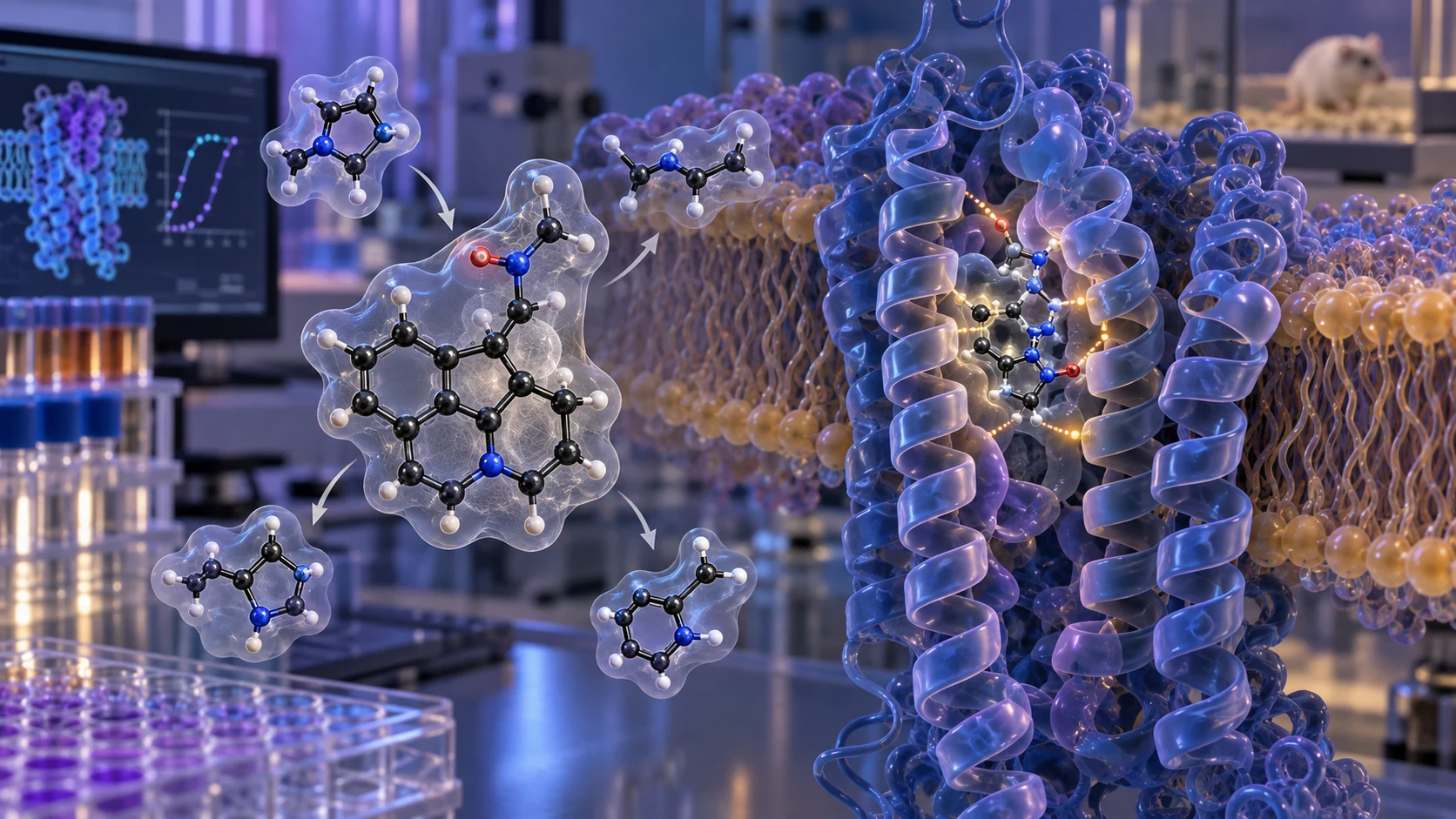
Of the classic psychedelics, lysergic acid diethylamide (LSD) is perhaps the best-known, but its complex chemical architecture has limited synthetic investigations aimed at generating analogues with improved safety and efficacy profiles. Here, we systematically deconstruct the tetracyclic ergoline core of LSD to create 9 simplified ergoline analogues (i.e., ergologs) and evaluate them in pharmacological assays relevant to 5-HT2A, 5-HT2B, and 5-HT2C receptor function. Our work revealed the key mo

Continue reading
Society & Culture

From past, persisting, and consolidating ecologies of segregation to ecologies of repair.

Across the United States and Europe, urban and periurban spaces have historically been shaped by land dispossession and enclosure that systematically exclude marginalized, non-White communities from the benefits of society, including access to nature. These dynamics, which have played out and perdured over centuries as part of historic land dispossession and recent green racial capitalism, form the bedrock of contemporary urban segregation and socioecological inequalities. As a result, we see th

Continue reading