Environment

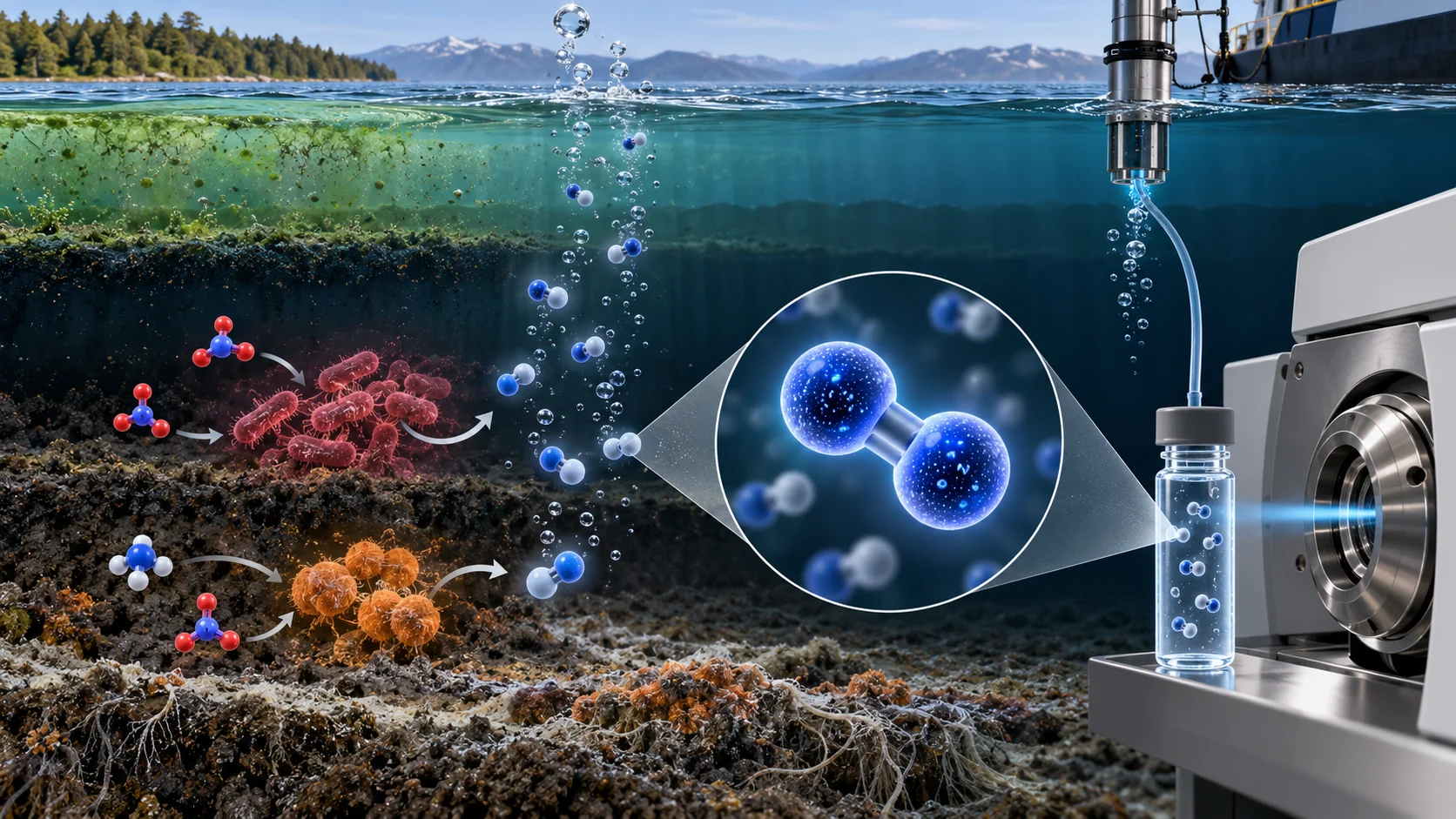
Natural 15 N 15 N abundances constrain fixed nitrogen loss.
| Source: Science (New York, N.Y.)

Nitrogen regulates primary productivity across much of the biosphere, yet fixed nitrogen loss remains poorly constrained because existing methods rely on indirect proxies or ex situ experiments. In this study, we show that natural abundances of the rare 15 N 15 N isotopologue of dinitrogen (N 2 ) provide a direct tracer of biological N 2 production across diverse aquatic environments. N 2 produced by denitrification and anammox has a near-stochastic 15 N 15 N distribution [0 per mil (‰)],

Nitrogen regulates primary productivity across much of the biosphere, yet fixed nitrogen loss remains poorly constrained because existing methods rely on indirect proxies or ex situ experiments. In this study, we show that natural abundances of the rare 15 N 15 N isotopologue of dinitrogen (N 2 ) provide a direct tracer of biological N 2 production across diverse aquatic environments. N 2 produced by denitrification and anammox has a near-stochastic 15 N 15 N distribution [0 per mil (‰)], whereas atmospheric N 2 carries a distinct 15 N 15 N excess (19‰), allowing the two sources to be quantitatively distinguished. Across aquifers, stratified lakes, coastal basins, oxygen minimum zones, and marine sediments, 15 N 15 N measurements reveal widespread nitrogen loss previously obscured by physical gas accumulation and nitrogen fixation. Natural 15 N 15 N abundances therefore provide a general framework for directly constraining fixed nitrogen loss across the aquatic nitrogen cycle.

Read the original source →

Related Stories

Environment

Windblown dunes are born in sand at the brink of transport.

Windblown dunes are found everywhere in the Solar System where a supply of loose sediment is mobilized by gas flows, from the sluggish winds of Venus to speed-of-sound sublimation flows on comets. Their abundance is nontrivial because dunes only form where grains hop ballistically ("saltate"). This implies that winds across the Solar System reach "goldilocks" speeds that are just right to initiate and maintain saltation of whatever sediment is available despite vast variations in material and fl

Continue reading
Environment

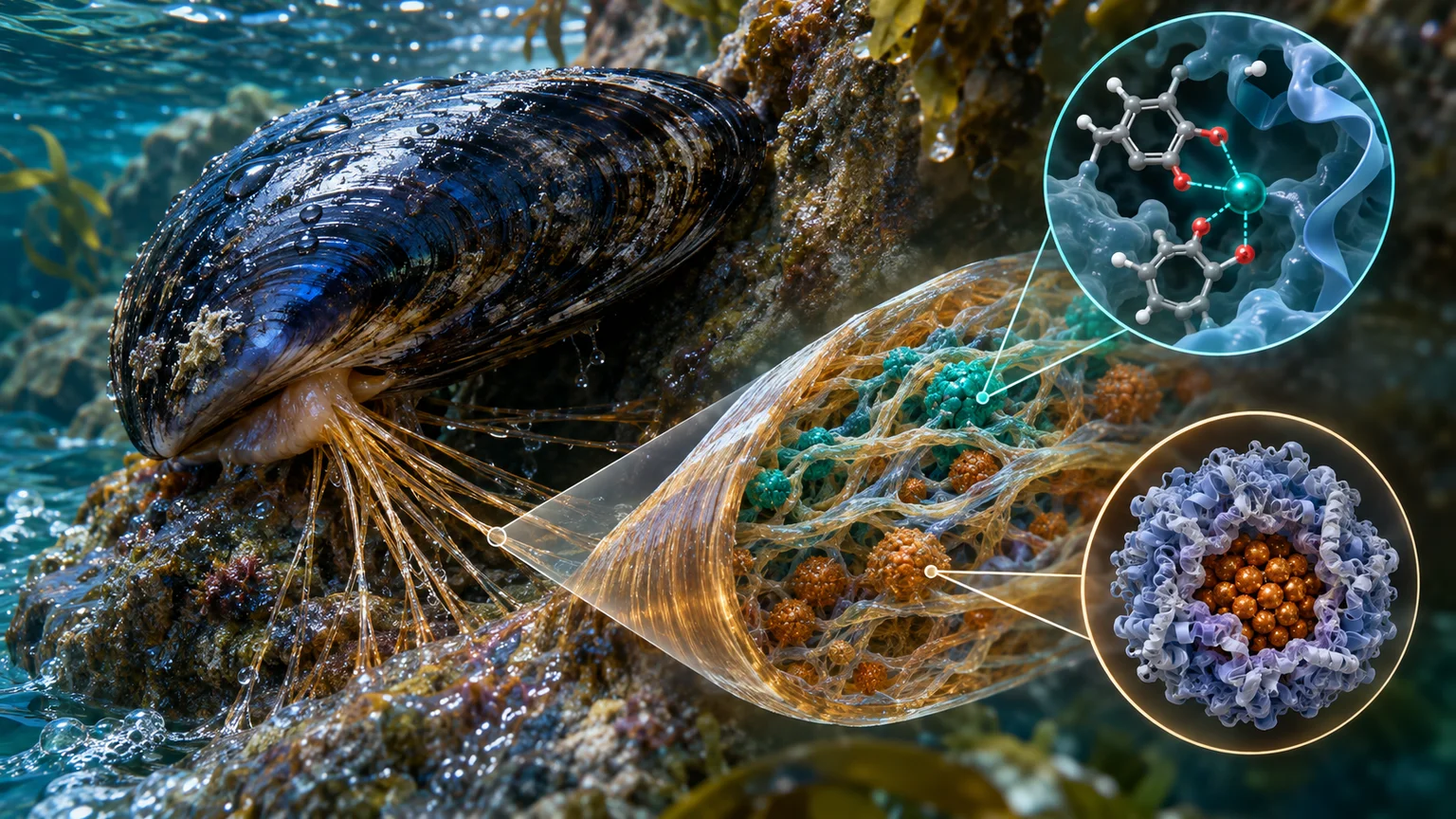
Mussels possess distinct vanadium and iron storage systems for fabricating metal-reinforced adhesive fibers.

Mussels fashion a protein-based fibrous adhesive holdfast known as a byssus to tether themselves in marine habitats against crashing waves. The capacity of mussels to anchor securely is dependent on load-bearing protein-metal cross-links mediated by 3,4-dihydroxyphenylalanine (DOPA) residues coordinated to metal ions, which significantly enhance byssus mechanical properties (e.g., adhesive strength, abrasion resistance, toughness, self-healing capacity). However, the natural metal incorporation

Continue reading
Environment

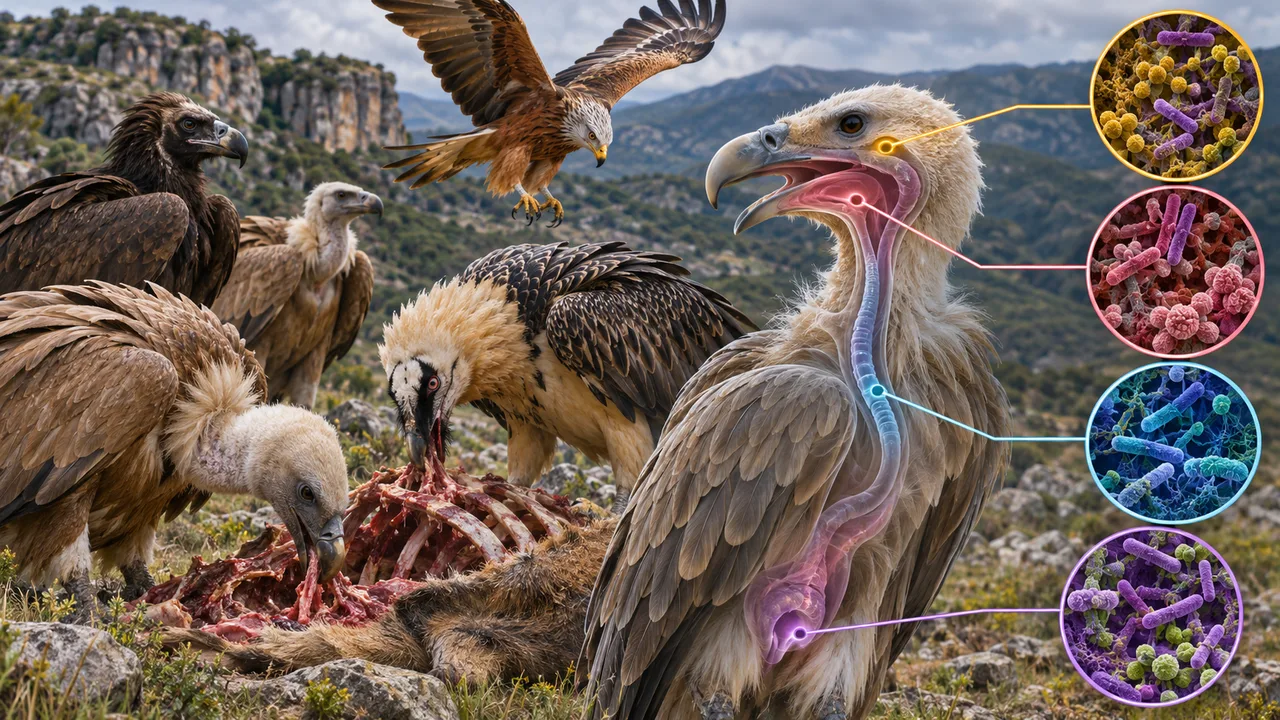
Host and anatomical filters prevent microbiome convergence in avian scavengers.

How host-associated microbiomes assemble under intense environmental microbial exposure remains a central question in microbial ecology. Vultures represent a unique natural system because these species differ markedly in feeding ecology and carcass use. We characterized bacterial communities across four anatomical niches (facial, buccal, tracheal, and cloacal) in 155 individuals spanning all four European obligate vulture species (subfamily Gypaetinae: Gypaetus barbatus, Neophron percnopterus, a

Continue reading
Environment

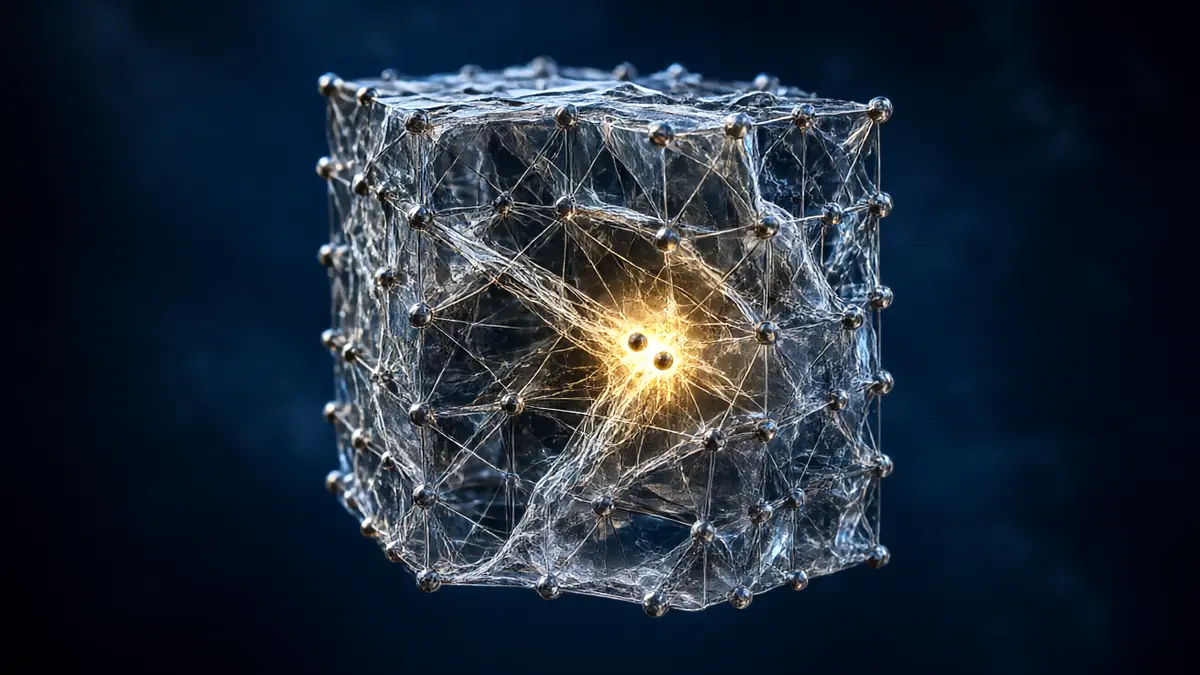
Harnessing lattice distortion for point-defect self-healing in multi-principal element alloys.

Multi-principal element alloys are promising structural materials for nuclear, aerospace, and fusion applications, yet their accelerated discovery is limited by the prohibitive cost of evaluating point-defect transport and self-healing behavior across vast compositional spaces. Here, we establish local lattice distortion (LLD), an intrinsic feature of chemically complex alloys, as a predictive and universal descriptor for vacancy-interstitial diffusivity convergence. We develop and validate a hi

Continue reading
Environment

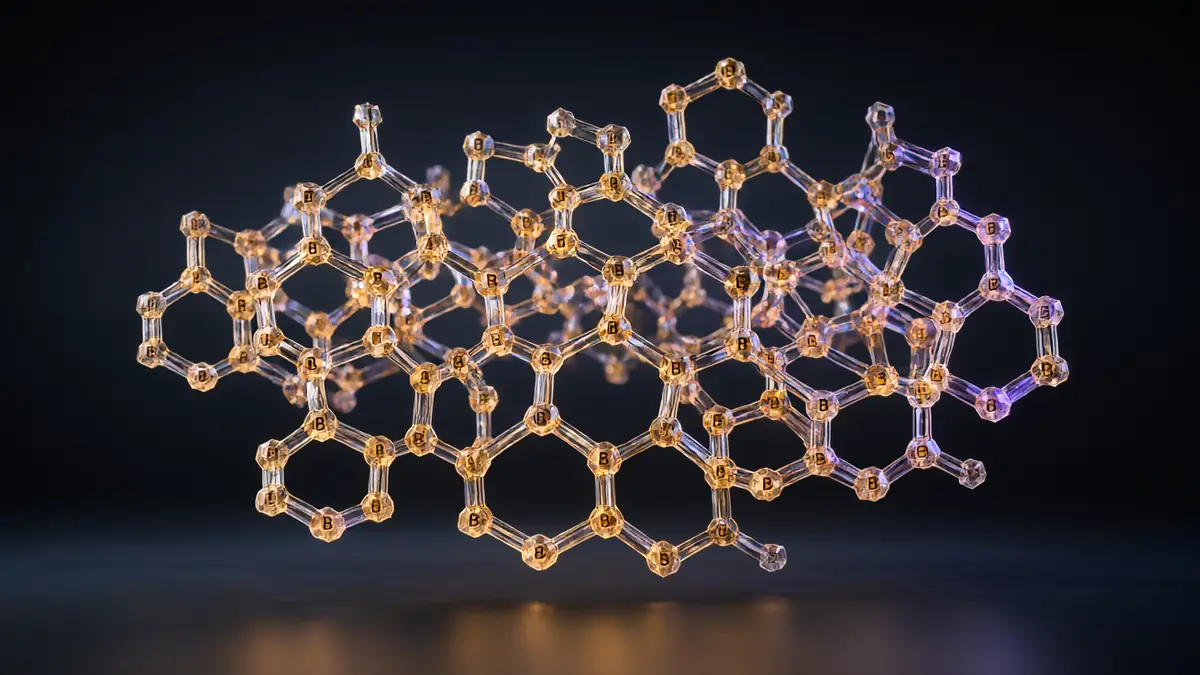
Hydroxamate Reticular Chemistry beyond Metals: Single-Crystalline Two- and Three-Dimensional Boron-Hydroxamate Covalent Organic Frameworks.

Hydroxamate chelation has already enabled robust metal-organic frameworks. Here, to move the corresponding reticular chemistry beyond metal nodes, hydroxamate chelation has been integrated within heteroleptic tetracoordinate B(O,O)(N)(C) centers to construct four single-crystalline boron-hydroxamate covalent organic frameworks, namely SUM-306-SUM-309. Bayesian optimization enabled the growth of diffraction-quality SUM-306 single crystals, while linker isomerism and functionalization yielded a se

Continue reading