Multidomain Intervention for Growth in Term Small-for-Gestational-Age Infants: A Randomized Clinical Trial.
Small-for-gestational-age (SGA) infants face elevated risk of undernutrition and developmental delays. Multidomain interventions may be needed to promote growth and neurodevelopment. To evaluate the effect of an integrated intervention package on growth and neurodevelopment in term SGA infants. Individually randomized clinical trial conducted in low-resource neighborhoods of South Delhi, India. Term SGA infants were enrolled within 14 days of birth; 1300 infants were randomized and followed up t
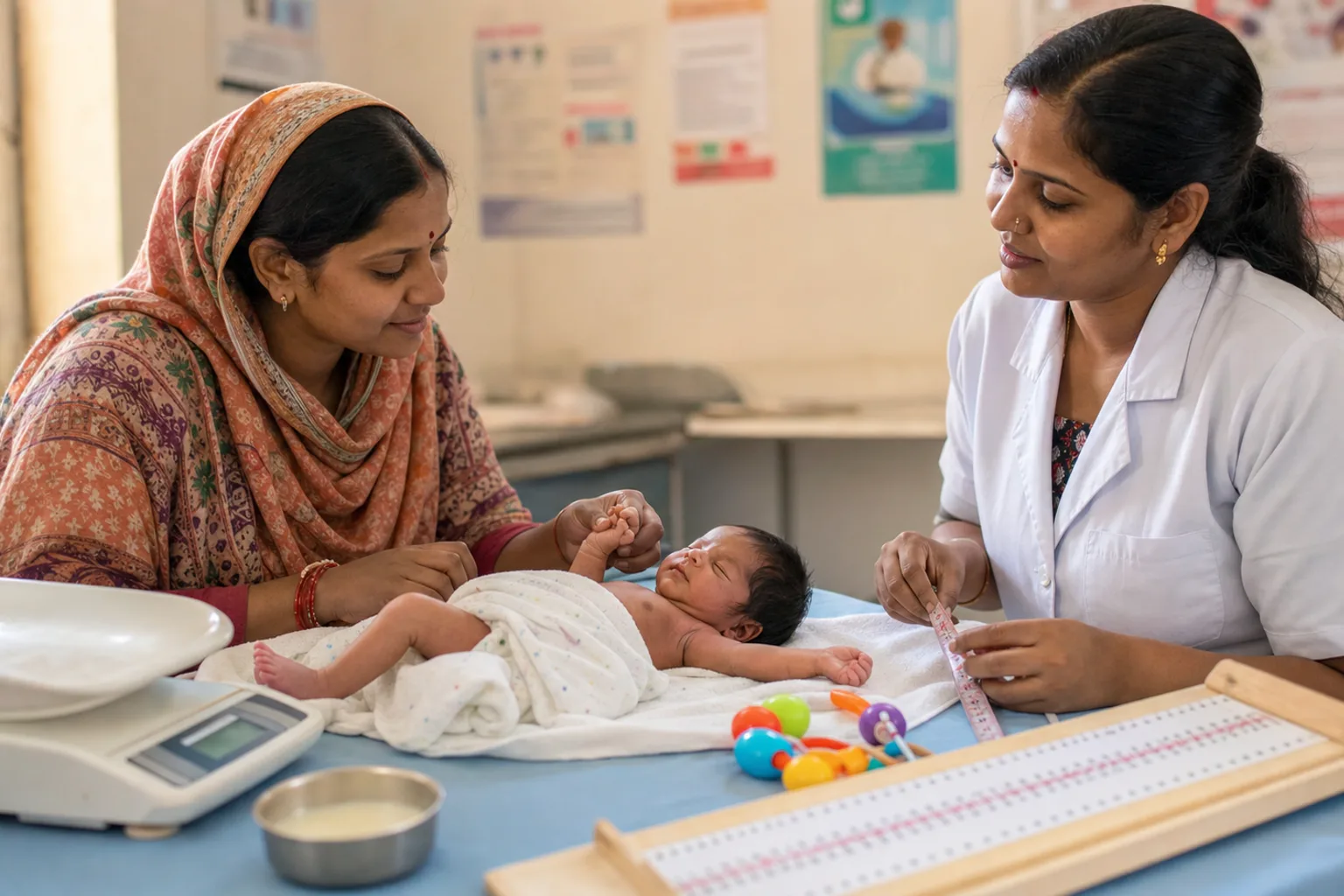
Small-for-gestational-age (SGA) infants face elevated risk of undernutrition and developmental delays. Multidomain interventions may be needed to promote growth and neurodevelopment. To evaluate the effect of an integrated intervention package on growth and neurodevelopment in term SGA infants. Individually randomized clinical trial conducted in low-resource neighborhoods of South Delhi, India. Term SGA infants were enrolled within 14 days of birth; 1300 infants were randomized and followed up to 12 months of age. Recruitment occurred from January 14, 2023, until July 31, 2024, with follow-up completed on August 6, 2025. Outcome assessors were blinded to participant allocation. Infants were randomized in a 1:1 ratio to receive either an integrated intervention package including health, nutrition, early child stimulation, and psychosocial support (n = 647) or usual care through government programs (n = 653). The primary outcomes were weight and weight-for-age z score at 12 months. Secondary outcomes included linear growth, neurodevelopment (assessed using the Bayley Scales of Infant and Toddler Development, Third Edition), anemia, and mortality. At 12 months, 1261 infants (97%) (mean age, 6 days; 48.1% male) had completed follow-up. The mean weight was 8.0 kg (SD, 0.9 kg) in the intervention group vs 7.8 kg (SD, 0.9 kg) in the usual care group (mean difference, 0.22 kg [95% CI, 0.11-0.32 kg]). The mean weight-for-age z score was -1.3 (SD, 0.9) vs -1.6 (SD, 1.0), respectively (mean difference, 0.24 [95% CI, 0.14-0.35]). The intervention group had a lower prevalence of underweight (23.9% vs 32.6%; risk difference, -8.75 [95% CI, -13.70 to -3.80] percentage points), stunting (20.1% vs 27.2%; risk difference, -7.17 [95% CI, -11.85 to -2.49] percentage points), wasting (13.9% vs 19.4%; risk difference, -5.52 [95% CI, -9.63 to -1.41] percentage points), and anemia (34.0% vs 72.5%; risk difference, -38.49 [95% CI, -44.36 to -32.61] percentage points) and higher cognitive scores (mean difference, 1.73 [95% CI, 0.32-3.14]), language scores (mean difference, 2.74 [95% CI, 1.51-3.98]), and motor composite scores (mean difference, 2.32 [95% CI, 1.25-3.38]). Nine children in the usual care group and 5 in the intervention group died. Among term SGA infants, an integrated intervention improved weight and weight-for-age z scores at 12 months. Clinical Trials Registry-India Identifier: CTRI/2021/11/037881.