Physical/Tech

Mitigating China's food-related water scarcity and spatial inequality via integrated basin-city management.

| Source: Proceedings of the National Academy of Sciences of the United States of America

Food production is constrained by water availability at the basin scale, whereas the governance of food trade primarily operates at the city scale. This spatial mismatch hinders the sustainable development of both food and water systems. To bridge this gap, we develop an integrated framework that combines hydrological (basin) and administrative (city) scales and apply it to China to quantify how virtual water flows embedded in food trade affect inequality in water allocation across and within ba

Food production is constrained by water availability at the basin scale, whereas the governance of food trade primarily operates at the city scale. This spatial mismatch hinders the sustainable development of both food and water systems. To bridge this gap, we develop an integrated framework that combines hydrological (basin) and administrative (city) scales and apply it to China to quantify how virtual water flows embedded in food trade affect inequality in water allocation across and within basins. Our results show that 38% of scarce water is traded across basins, exacerbating interbasin inequality by 6%. In contrast, approximately 30% of scarce water is embodied in intrabasin trade, which alleviates intrabasin inequality. Single-scale interventions, whether through production or consumption adjustments, involve trade-offs among interbasin equality, intrabasin equality, and total water savings. By contrast, an integrated basin-city management strategy at a 50% intervention intensity reduces interbasin inequality by 7% and achieves water savings equivalent to more than four-fifths (80%) of total water use in the Yangtze River basin. It also outperforms existing province-city vertical management models across scales. These findings provide valuable insights for developing global virtual water management strategies that integrate both hydrological and administrative perspectives.


Read the original source →

Related Stories

Physical/Tech

The microbial world of male reproduction.

The last decade has brought renewed interest to microbial influences on host biology, yet the roles of microbes in host reproductive biology are underappreciated and often defined by a profound maternal bias. This perspective synthesizes emerging evidence across the tree of life to highlight the paternal microbiome as an overlooked driver of fitness, reproductive output, and intergenerational health, impacting epigenetic sculpting of the sperm and embryo, sexual transmission of microbes, and mal

Continue reading
Physical/Tech

A gut-brain sensory-motor circuit regulates sugar ingestion in Drosophila.

Bidirectional communication between the brain and digestive tract is critical for optimizing nutrient preference and food intake, yet the neural mechanisms that couple gut nutrient sensing with ingestive motor control remain poorly understood. Here we identify a gut-brain sensory-motor circuit that regulates sugar ingestion in flies. We show that the brain neurons that regulate food ingestion, IN1s 1 , receive excitatory input from enteric sensory neurons that penetrate the foregut epithelium an

Continue reading
Physical/Tech

Rare-variant genetic architecture of height in over 1.4 million individuals.

Highly heritable, polygenic and easily measured, adult height has long been the model trait in human genetics 1,2 . Although the landscape of height-associated common genetic variation has been studied extensively 2 , rare variation remains relatively unexplored 1 . Here, using rare protein-altering variants in a discovery set of 826,066 exomes, we identify 207 height-associated genes, 98% of which replicate in an additional 624,567 individuals. The rarest and most deleterious class of variation

Continue reading
Physical/Tech

Intuitive knowledge of object acoustics enables perceptual separation of physical variables from impact sounds.

Upon hearing objects collide, humans can estimate physical attributes such as material and mass. Although the physics of sound generation is well established, the inverse problem that listeners solve-of inferring physical parameters from sound-remains poorly understood. Classical accounts posit the use of acoustic cues that correlate with physical variables but do not explain how humans might distinguish multiple concurrent physical causes. To study this problem, we measured impulse responses fr

Continue reading
Physical/Tech

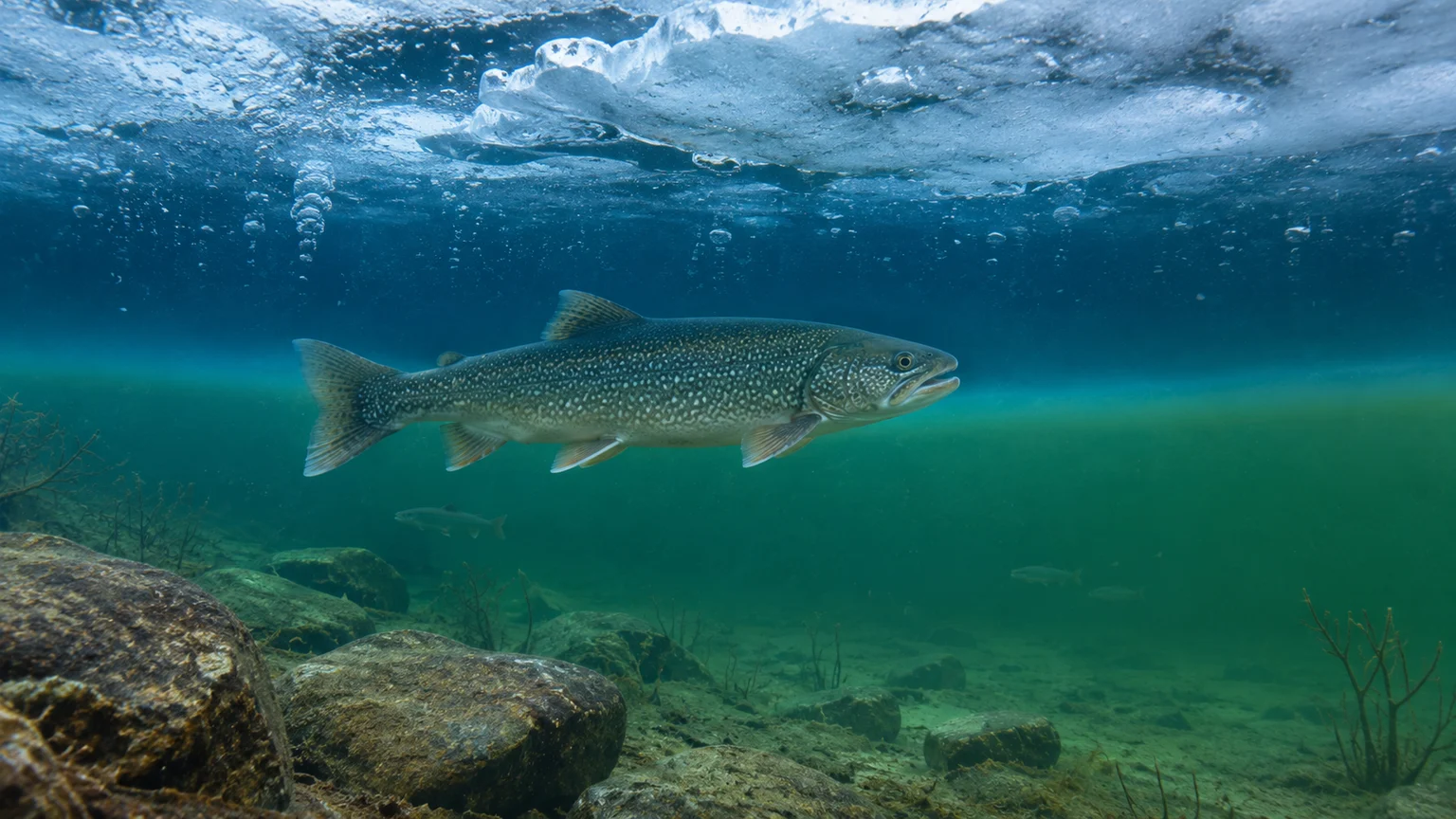
Sub-ice thermal gradients strongly influence winter depth use of an iconic cold-water fish.

In a thermally stratified lake, freshwater fish select habitats that align with their thermal preferences. While most studies of dimictic lakes have focused on habitat selection during summer stratification, less attention has been given to winter when inverse thermal stratification occurs with water temperatures between 0 to 4 °C. Our results show that winter thermal stratifications vary considerably among lakes. Much of the variation in winter depth use by the cold-water predator, Lake Tr

Continue reading