A gut-brain sensory-motor circuit regulates sugar ingestion in Drosophila.
Bidirectional communication between the brain and digestive tract is critical for optimizing nutrient preference and food intake, yet the neural mechanisms that couple gut nutrient sensing with ingestive motor control remain poorly understood. Here we identify a gut-brain sensory-motor circuit that regulates sugar ingestion in flies. We show that the brain neurons that regulate food ingestion, IN1s 1 , receive excitatory input from enteric sensory neurons that penetrate the foregut epithelium an
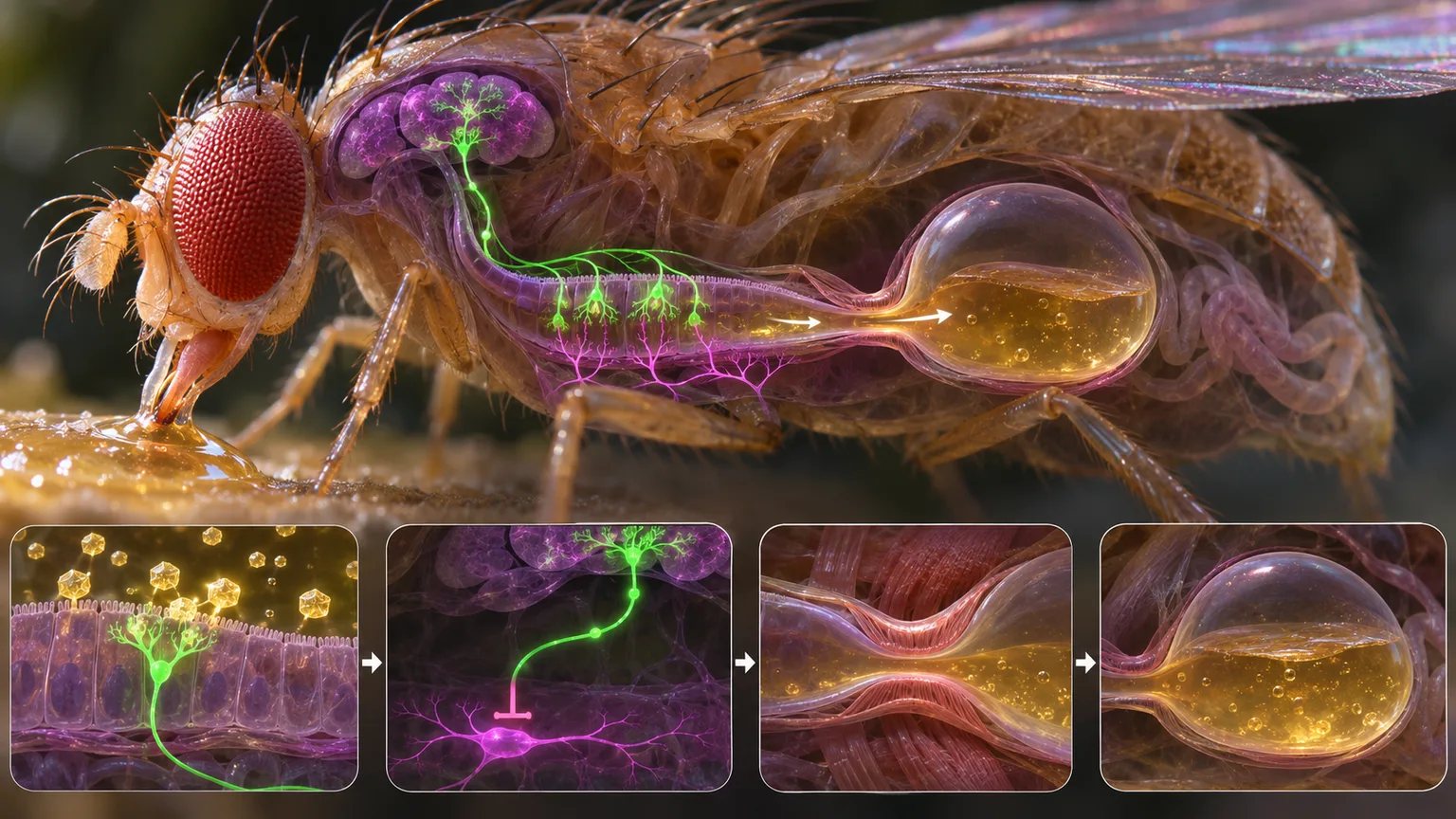
Bidirectional communication between the brain and digestive tract is critical for optimizing nutrient preference and food intake, yet the neural mechanisms that couple gut nutrient sensing with ingestive motor control remain poorly understood. Here we identify a gut-brain sensory-motor circuit that regulates sugar ingestion in flies. We show that the brain neurons that regulate food ingestion, IN1s 1 , receive excitatory input from enteric sensory neurons that penetrate the foregut epithelium and detect sugars in the gut lumen during ingestion. Functional imaging and connectome analyses reveal that IN1s integrate excitatory input from multiple sugar-sensing neurons, including enteric sensory neurons, and provide inhibitory output to enteric motor neurons that control the muscles at the entry of the crop-a stomach-like organ. During ingestion, IN1 activation suppresses these enteric motor neurons, relaxes the crop duct and promotes rapid transfer of food into the crop, thereby enabling sustained food intake. Together, our findings describe a gut-brain circuit that controls the motor activity of digestive tract muscles during feeding and suggest a circuit mechanism by which nutrient signals from the gut contribute to the dynamic regulation of food intake across metabolic states.