Maternal nutrition determines the variable expressivity of STRA6-associated eye malformations.
Mutations in STRA6 , the high-affinity receptor for retinol-binding protein, cause Matthew-Wood syndrome, a congenital disorder characterized by striking phenotypic variability ranging from isolated ocular anomalies to severe multisystem malformations. The mechanisms underlying this variable expressivity and incomplete penetrance remain poorly understood. Here, we used mice to determine how maternal vitamin A status and embryonic Stra6 genotype interact to shape ocular development. Using Stra6 -
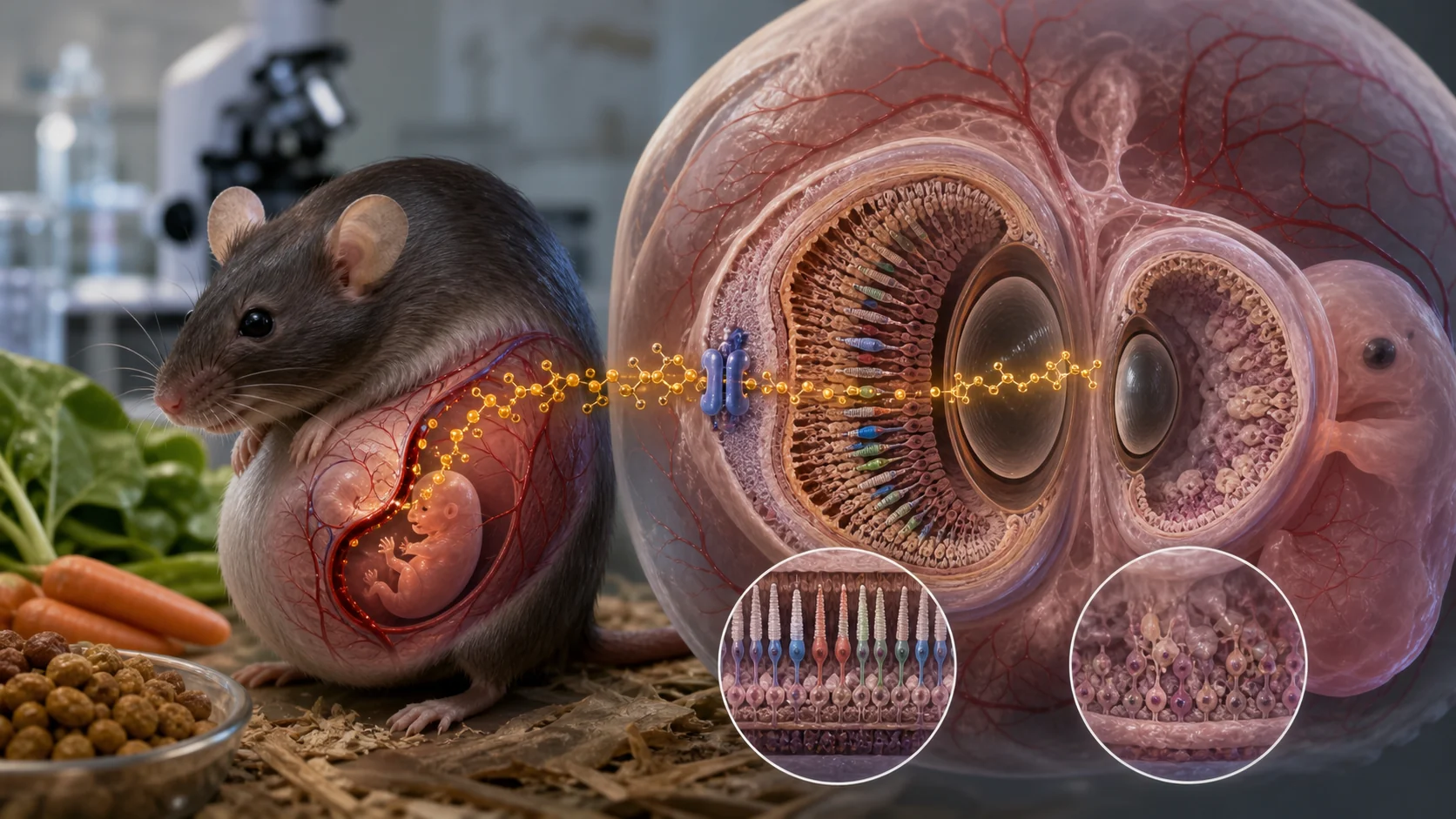
Mutations in STRA6 , the high-affinity receptor for retinol-binding protein, cause Matthew-Wood syndrome, a congenital disorder characterized by striking phenotypic variability ranging from isolated ocular anomalies to severe multisystem malformations. The mechanisms underlying this variable expressivity and incomplete penetrance remain poorly understood. Here, we used mice to determine how maternal vitamin A status and embryonic Stra6 genotype interact to shape ocular development. Using Stra6 -deficient mice bred under defined dietary conditions, we demonstrate that maternal vitamin A availability is a major modifier of phenotypic outcome. Maternal vitamin A restriction resulted in microphthalmia and markedly reduced postnatal survival of the offspring. Remarkably, offspring of Stra6 -/- dams maintained on a vitamin A-sufficient diet, corresponding to the recommended dietary allowance for mice, also developed pronounced ocular abnormalities, including retinal dysplasia and impaired rod and cone opsin differentiation. In contrast, supraphysiological maternal vitamin A intake, as provided by a standard chow, partially rescued ocular development and produced near-normal eye morphology in the offspring. Strikingly, heterozygous Stra6 +/- offspring born to Stra6 -/- dams were protected from both lethality and ocular malformations despite maternal STRA6 deficiency and dietary vitamin A restriction. Biochemical analyses revealed that ocular retinoid availability strictly depended on the Stra6 genotype of the offspring, whereas some circulating retinol remained detectable even under maternal vitamin A deficiency. Together, these findings identify a gene-nutrient interaction that explains the variable expressivity of STRA6 -associated disease and establish maternal vitamin A status as a critical determinant of ocular development and postnatal survival.