Major role for internal variability in tropical Pacific warming pattern over satellite era.
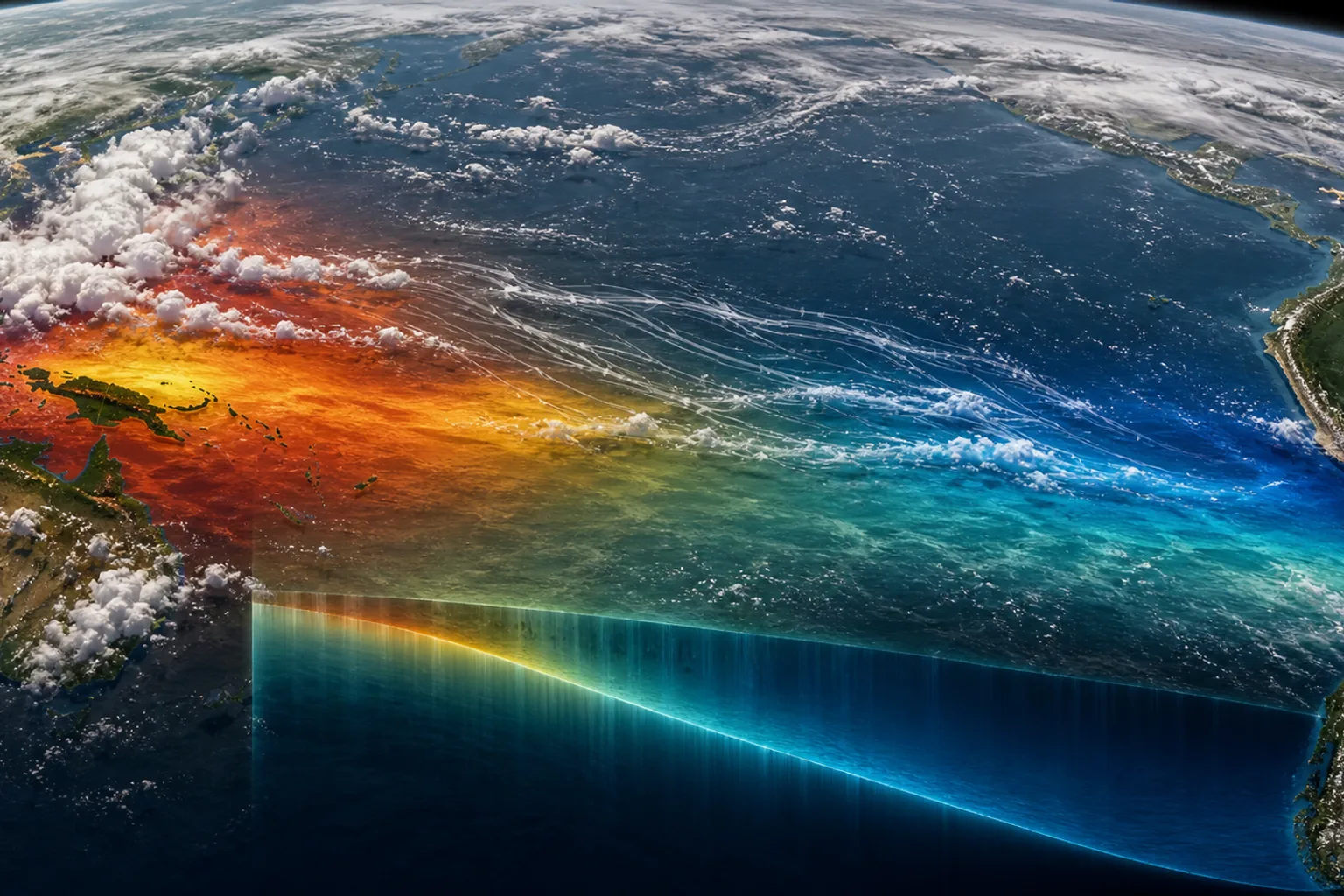
Home to El Niño, the tropical Pacific is a key player in the global climate system. While most of the planet has warmed during the satellite era of 1982-2024, the eastern tropical Pacific surface has mysteriously cooled. What is troubling is that fully coupled global climate models mostly fail to simulate this distinctive pattern. By replacing wind stress applied to the ocean with observations, here we show that climate models successfully reproduce the La Niña-like (LN) trend pattern
Home to El Niño, the tropical Pacific is a key player in the global climate system. While most of the planet has warmed during the satellite era of 1982-2024, the eastern tropical Pacific surface has mysteriously cooled. What is troubling is that fully coupled global climate models mostly fail to simulate this distinctive pattern. By replacing wind stress applied to the ocean with observations, here we show that climate models successfully reproduce the La Niña-like (LN) trend pattern over the satellite era as well as the opposite decadal transition observed during the 1970s. Detailed analysis reveals that the LN (El Niño-like) surface temperature pattern is associated with a multidecadal intensification (slowdown) of the trade winds and deepened (shoaled) thermocline in the western equatorial Pacific. Averaging out cyclic internal variability, longer-term trends from the 1950s are in broad agreement with the radiatively forced response in the same models, with much reduced wind and ocean temperature anomalies in the equatorial Pacific compared to those during the satellite era. These results indicate that unforced internal variability largely explains the satellite-era tropical Pacific change. As such, the LN pattern is expected to wane as tropical Pacific decadal variability transitions from its current negative phase, causing worldwide shifts in rainfall, tropical cyclones, and ocean-atmospheric circulations.