Localized PD-1 CAR T therapy reprograms neuroinflammation.
B cell-depleting therapies are effective in multiple sclerosis (MS), yet some patients relapse, underscoring the need for more precise interventions. To identify new therapeutic targets, we generated a single-cell RNA sequencing (scRNA-seq) atlas of cerebrospinal fluid (CSF), brain, and blood from non-inflammatory controls and patients with MS or other neuroinflammatory diseases. We found disease-associated enrichment of class-switched immunoglobulin G + (IgG + ) B cells and plasma cells in MS C
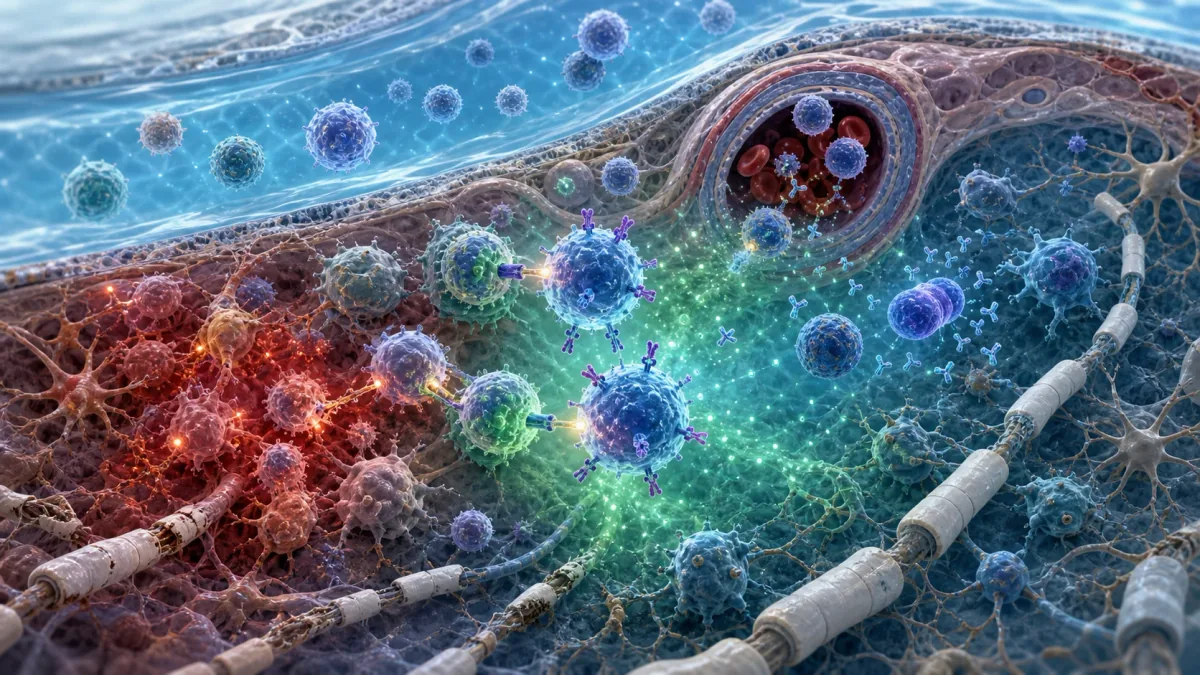
B cell-depleting therapies are effective in multiple sclerosis (MS), yet some patients relapse, underscoring the need for more precise interventions. To identify new therapeutic targets, we generated a single-cell RNA sequencing (scRNA-seq) atlas of cerebrospinal fluid (CSF), brain, and blood from non-inflammatory controls and patients with MS or other neuroinflammatory diseases. We found disease-associated enrichment of class-switched immunoglobulin G + (IgG + ) B cells and plasma cells in MS CSF. Unbiased analysis identified a rare disease-enriched subset of activated, T cell receptor (TCR)-restricted, PD-1 + T follicular helper-like cells with B cell-recruiting features. To target this population, we developed PD-1-directed chimeric antigen receptor (CAR) T cells that selectively depleted pathogenic PD-1 + CD4 T cells and locally released IL-10. This strategy attenuated central nervous system (CNS) inflammation, reprogrammed the local immune milieu, and improved clinical outcomes across murine neuroinflammation models. These findings define a CNS-localized adaptive immune circuit in MS and nominate programmable PD-1 CAR T cells as a strategy to disrupt it.