Isthmin-2 is a first-trimester predictor of preeclampsia and fetal growth restriction.
Preeclampsia and fetal growth restriction (FGR) are major causes of global morbidity and mortality. Both conditions are associated with impaired invasion of the uterus by extravillous trophoblast (EVT). We performed proteomics in maternal serum obtained at ~12 weeks of gestational age in a prospective pregnancy cohort (Pregnancy Outcome Prediction Study). Here we show that low maternal serum isthmin-2 (ISM2) was the strongest protein signal (out of 2,904) in the first trimester of pregnan
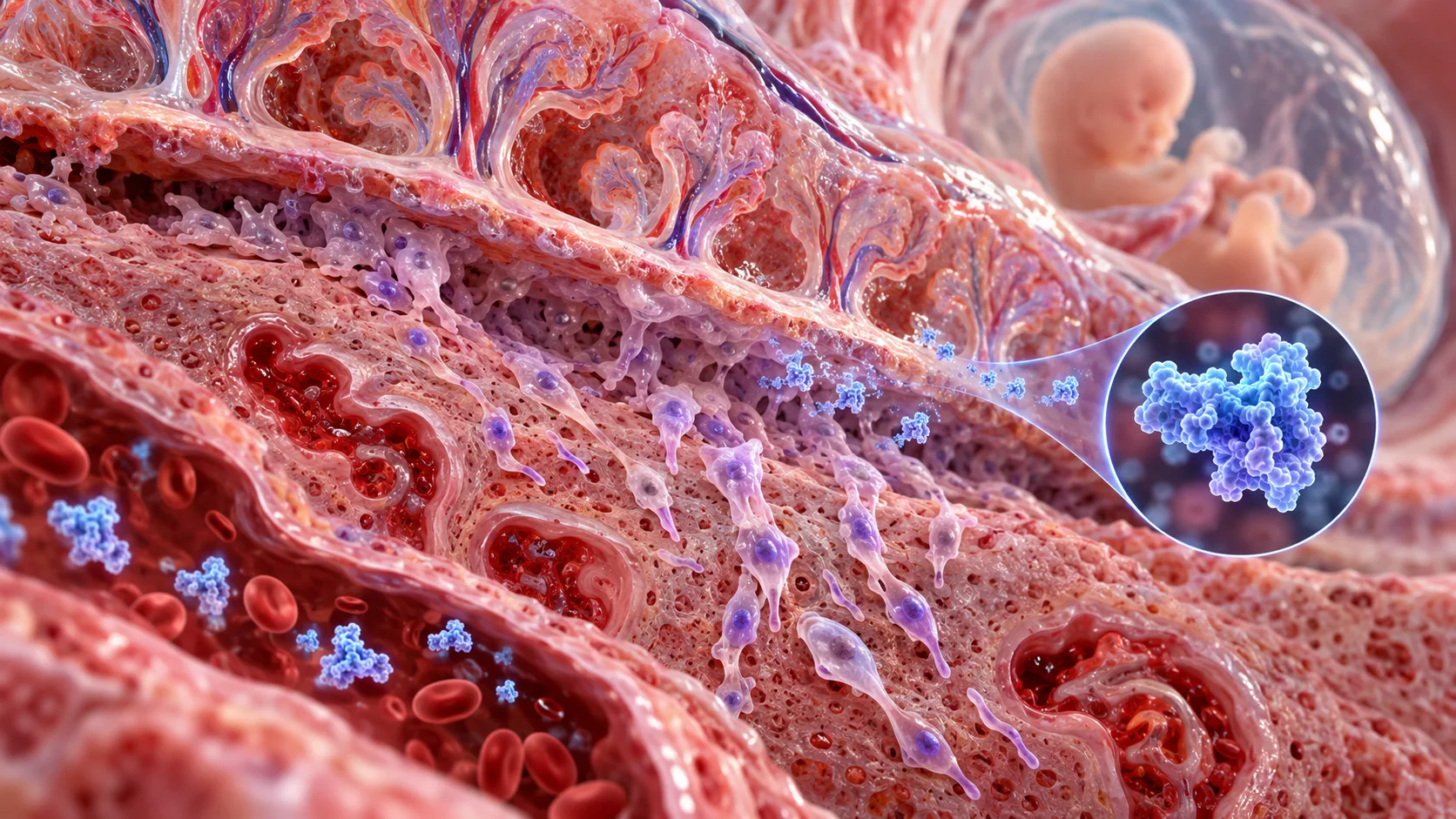
Preeclampsia and fetal growth restriction (FGR) are major causes of global morbidity and mortality. Both conditions are associated with impaired invasion of the uterus by extravillous trophoblast (EVT). We performed proteomics in maternal serum obtained at ~12 weeks of gestational age in a prospective pregnancy cohort (Pregnancy Outcome Prediction Study). Here we show that low maternal serum isthmin-2 (ISM2) was the strongest protein signal (out of 2,904) in the first trimester of pregnancy for preeclampsia or FGR. We validated the association in two independent cohorts (Pregnancy Outcome Prediction Study 2 and Improving Maternal Pregnancy And Child ouTcomes study). ISM2 protein and mRNA are almost exclusively produced in the placenta, and, within the placenta, ISM2 mRNA is highly enriched in EVT. Knocking down ISM2 in cultured human trophoblast stem cells profoundly inhibited EVT invasion. Conversely, expressing ISM2 in a cell line lacking endogenous ISM2 (HEK293 cells) promoted migration. We conclude that ISM2 may be causally involved in the early pathophysiology of failed trophoblast invasion and that the protein and its associated pathways are potential targets for the prediction and prevention of preeclampsia and FGR.