Integrated care pathway in individuals with Long COVID: STIMULATE-ICP, a cluster-randomized, phase 3 trial.
Combining multidisciplinary care plans into integrated care pathways (ICPs) is scalable, generalizable and effective for several long-term conditions, but not evaluated in Long COVID (LC). Our phase 3, cluster-randomized, multicenter clinical trial investigated the effectiveness of ICP interventions for LC. Recruitment of adults ≥18 years with LC was conducted in 6 National Health Service LC clinics in England with specialist ICPs. The intervention arms were (i) multi-organ magnetic reson
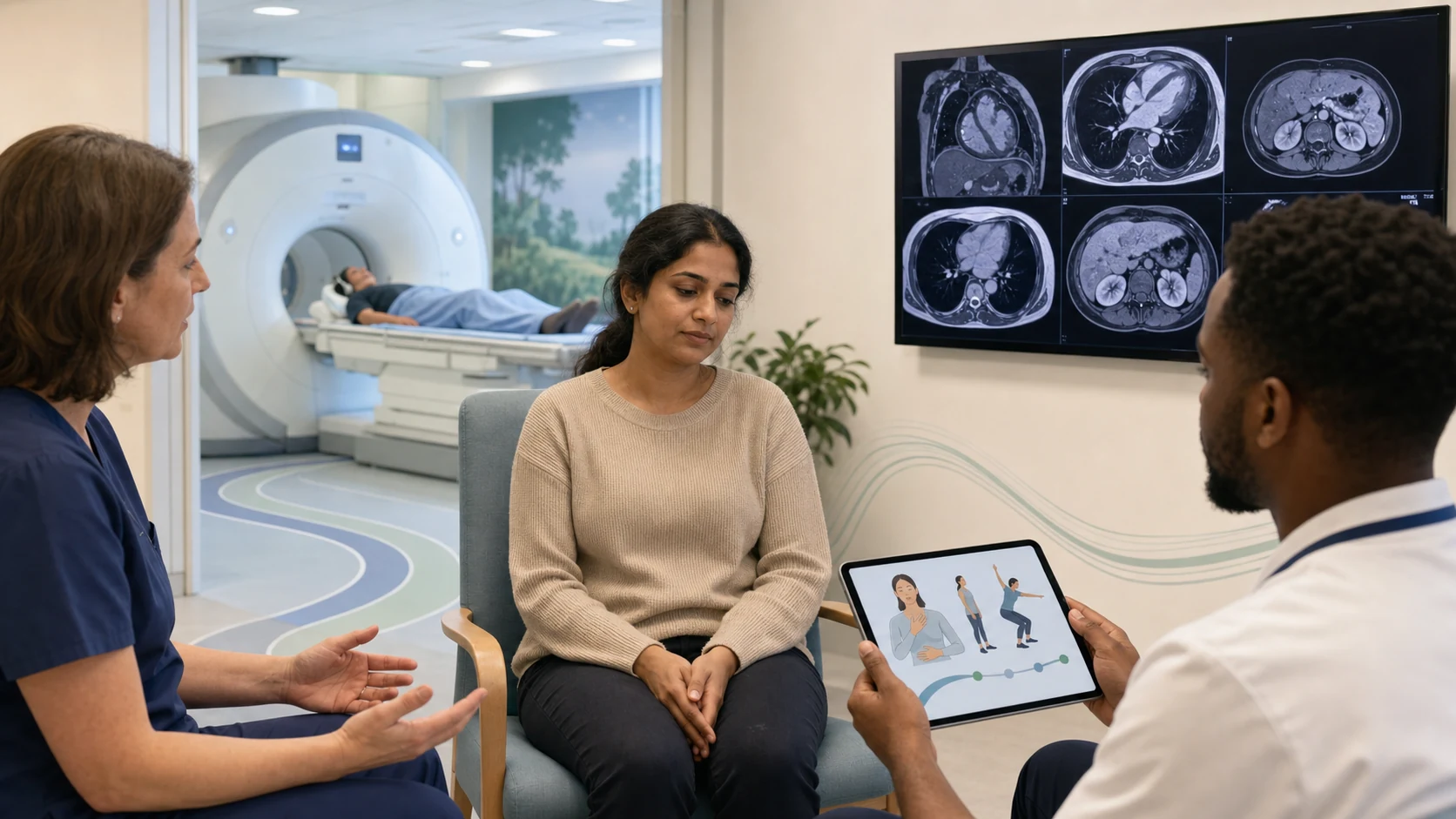
Combining multidisciplinary care plans into integrated care pathways (ICPs) is scalable, generalizable and effective for several long-term conditions, but not evaluated in Long COVID (LC). Our phase 3, cluster-randomized, multicenter clinical trial investigated the effectiveness of ICP interventions for LC. Recruitment of adults ≥18 years with LC was conducted in 6 National Health Service LC clinics in England with specialist ICPs. The intervention arms were (i) multi-organ magnetic resonance imaging (MRI; Coverscan), (ii) digital rehabilitation (Living with COVID Recovery), (iii) both multi-organ MRI and digital rehabilitation, and (iv) neither multi-organ MRI nor digital rehabilitation (usual care); cluster randomizing at primary care network (PCN) level to deliver interventions as 'standard of care' in that area. The primary endpoint was mean Fatigue Assessment Scale (FAS) at 12 weeks. Secondary endpoints included FAS at 24 weeks and EQ-5D-5L visual assessment scale at 12 and 24 weeks. A total of 1,152 participants from allocated PCNs consented to data collection, and 122 PCN clusters were allocated to the multi-organ MRI (33 PCNs), digital rehabilitation (32 PCNs), 'both' (27 PCNs) and 'neither' (30 PCNs) arms. Baseline FAS was equivalent across groups (mean 35.8, s.d. 8.21, 66.4% female). Overall, the primary outcome was achieved in all arms, with scores improving by 4.5 points to 31.3 (s.d. 9.31) at 12 weeks. Compared with usual care, effects on 12-week FAS were -0.18 (95% confidence interval -0.72, 1.09; P = 0.69) with multi-organ MRI; -0.53 (-1.42, 0.36; P = 0.25) with digital rehabilitation; and -0.17 (-1.06, 0.72; P = 0.71) with their interaction. Absolute differences for other interventions from usual care were modest. There were no serious adverse events related to ICP interventions. Multidisciplinary holistic clinical care is associated with fatigue reduction in LC, irrespective of multi-organ MRI. Digital rehabilitation could be useful in longer-term LC management. Large, multi-site trials of optimal ICP interventions are feasible, but further trials are required. ISRCTN identifier: ISRCTN10665760 .