Health & Medicine

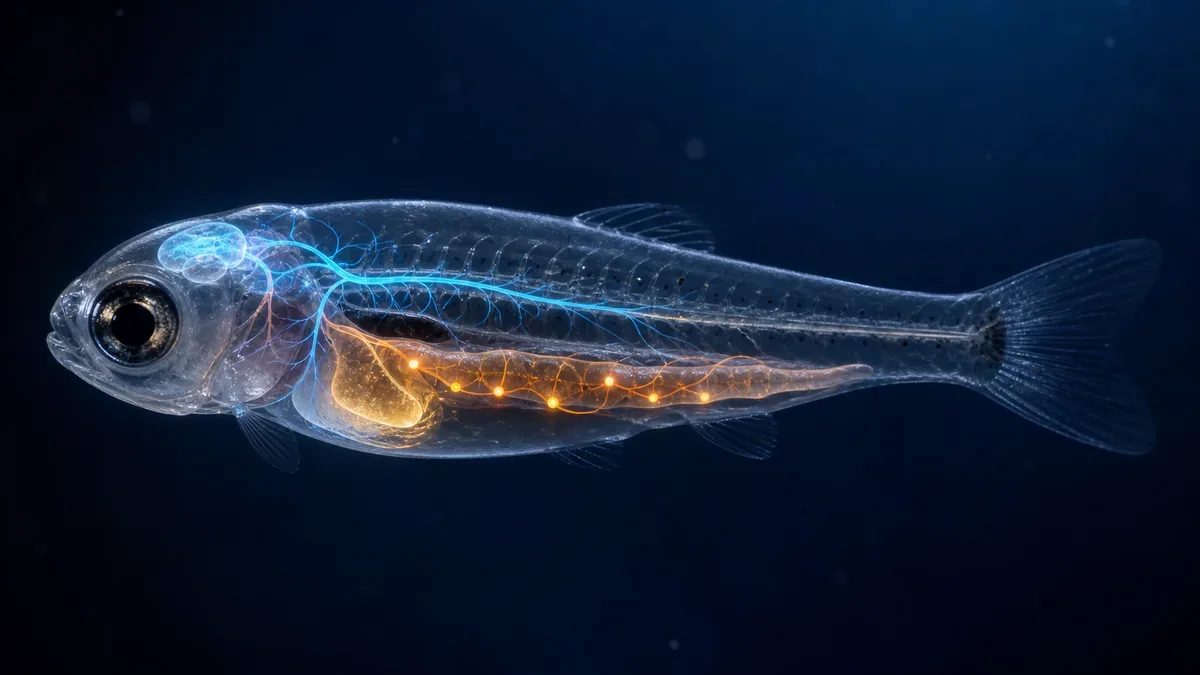
Enteroendocrine cells wire the gut-brain vagal axis.
| Source: Proceedings of the National Academy of Sciences of the United States of America

The vagal sensory nervous system plays important roles in mediating gut-brain communication and maintaining physiological homeostasis. Although recent research has greatly enhanced our understanding of the function of vagal sensory neurons, little is known about what guides the vagal sensory nerve fibers to innervate the intestine and form a complex gut-brain sensory network. Here, using zebrafish genetic models to trace the development of the intestinal vagal network, we found that the developm

The vagal sensory nervous system plays important roles in mediating gut-brain communication and maintaining physiological homeostasis. Although recent research has greatly enhanced our understanding of the function of vagal sensory neurons, little is known about what guides the vagal sensory nerve fibers to innervate the intestine and form a complex gut-brain sensory network. Here, using zebrafish genetic models to trace the development of the intestinal vagal network, we found that the development of the intestinal vagal sensory network is coupled with the formation of enteroendocrine cells (EECs). Vagal sensory neurons begin to innervate the intestine at 2 d postfertilization. Vagal nerve fibers branch out toward the newly formed EECs in the intestinal epithelium. The newly formed EECs display active actin filaments at their base, enabling them to physically engage with the vagal sensory fibers and facilitate the formation of the intestinal vagal sensory network. Genetically ablating EECs impairs intestinal vagal network formation and alters the vagal central projection pattern. Ablating EECs induces apoptosis in a subset of vagal sensory neurons and reduces the number of central projecting axons of the intestine innervating vagal sensory neurons. Moreover, ablating EECs completely alters the brain's response to nutrient ingestion and diminishes nutrient-induced hindbrain and hypothalamus neuron activation. Finally, loss of EECs increases food intake while impairing adipose tissue development and survival. Together, our study revealed that EECs guide vagal sensory neuron development and intestinal vagal network formation. Loss of EECs impairs the anatomical vagal sensory axis and alters gut-brain signaling transmission.
Read the original source →

Related Stories

Health & Medicine

Cryoelectron tomography reveals an age-related decline in mitoribosomes that contributes to T cell dysfunction in older individuals.

Mitochondrial dysfunction drives T cell aging in mice. Yet, due to fundamental differences in T cell aging mechanisms between species, whether human T cells exhibit similar mitochondrial alterations remains unclear, with existing evidence often conflicting. Using cryoelectron tomography, we resolved the structure and spatial organization of mitochondrial ribosomes in primary human CD8 + T cells under physiological conditions. Comparative analysis with human aging models revealed an age-related r

Continue reading
Health & Medicine

RelB NF-κB tunes Notch2 signaling to promote IL-23-secreting solitary isolated lymphoid tissue-resident DCs critical for gut immunity.

While preserving tolerance toward commensals, dendritic cells (DCs) also orchestrate response against pathogens. The noncanonical RelB NF-κB pathway in DCs curbs tolerogenic Tregs in the intestine. Whether RelB-dependent DC regulations also impact intestinal immunity remains less clear. Here, we show that genetic ablation of RelB in DCs compromises IL-23-dependent immune response in the intestine, imparting vulnerability in Relb ΔCD11c mice to infection with Citrobacter rodentium , a

Continue reading
Health & Medicine

X-linked SYTL4 missense variant disrupts RAB27A-dependent vesicle trafficking and synaptic transmission in autism.

Autism spectrum disorder (ASD) is a neurodevelopmental condition characterized by impaired social communication and repetitive behaviors, with genetic studies implicating widespread synaptic dysfunction. However, the contribution of presynaptic vesicle trafficking mechanisms to ASD pathogenesis remains incompletely understood. Here, we identify synaptotagmin-like protein 4 (SYTL4), a RAB27A effector previously characterized in secretory cells, as a regulator of presynaptic function in the mammal

Continue reading
Health & Medicine

Folic acid prevention of neural tube defects requires retinoic acid produced by ALDH1L1.

Folic acid (FA) supplementation during pregnancy is the commonly accepted treatment to prevent neural tube defects. The mechanism by which FA prevents neural tube defects (NTDs) remains unclear. FA also prevents other developmental malformations, including alcohol-induced malformations in Fetal Alcohol Syndrome models. We show that FA acts through a metabolic link to retinoic acid (RA) signaling. Using a pax3 -knockdown Xenopus model of FA-rescuable NTDs, we show that RA or its precursors equall

Continue reading
Health & Medicine

Dynamic principles of concentration buffering through liquid-liquid phase separation.

Living systems must maintain robust biochemical function despite fluctuations that span a wide range of timescales. Biomolecular condensates formed by liquid-liquid phase separation (LLPS) have been shown to buffer concentration fluctuations, but the principles governing their dynamic regulation remain unclear. We address this by probing the response of LLPS to oscillatory perturbations that mimic fluctuations across different timescales, establishing the first systematic frequency-domain analys

Continue reading