Health & Medicine

Efficient and precise programmable DNA knock-in without double-strand breaks.
| Source: Nature

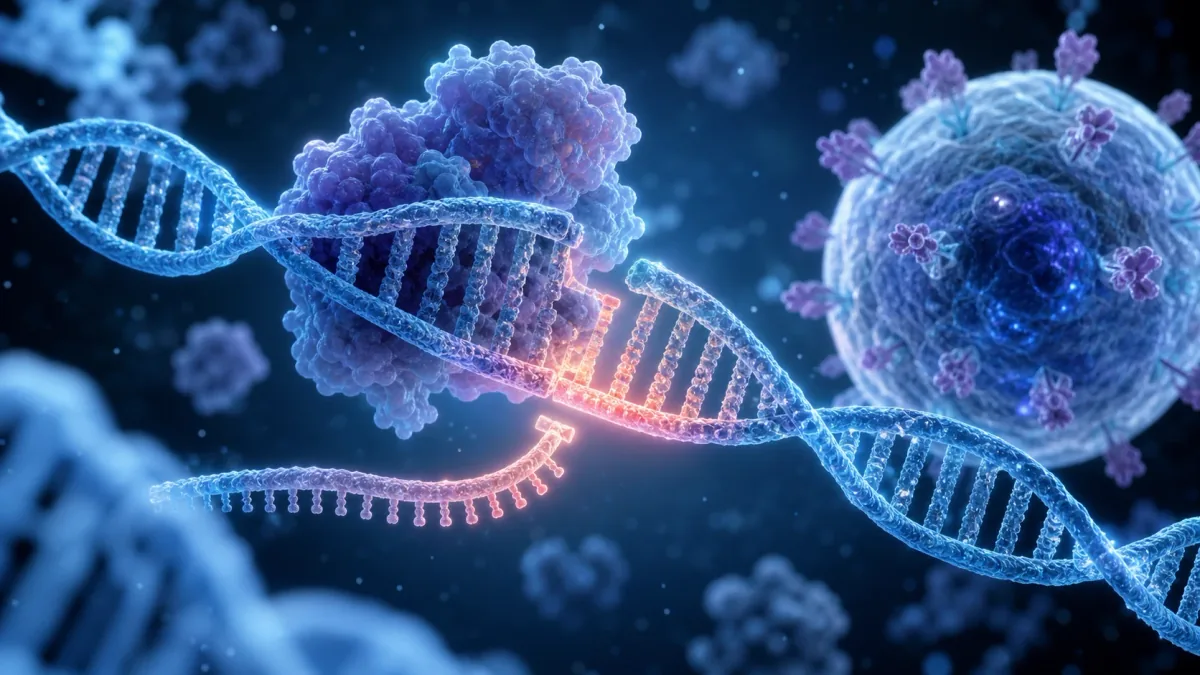
Programmable gene knock-in holds substantial promise for treating genetic diseases and advancing cell therapies. However, achieving precise and efficient kilobase-scale DNA fragment integration remains challenging 1,2 . Here we report CRISPR kilobase-scale nickase-targeting (KNIT) editing for efficient, precise and programmable kilobase-scale DNA insertion without double-strand DNA cleavage, which is enabled through the coupling of a Cas9 nickase with a DNA donor recruiting system. KNIT editing

Programmable gene knock-in holds substantial promise for treating genetic diseases and advancing cell therapies. However, achieving precise and efficient kilobase-scale DNA fragment integration remains challenging 1,2 . Here we report CRISPR kilobase-scale nickase-targeting (KNIT) editing for efficient, precise and programmable kilobase-scale DNA insertion without double-strand DNA cleavage, which is enabled through the coupling of a Cas9 nickase with a DNA donor recruiting system. KNIT editing facilitates programmable integration of DNA fragments from 0.7 kb to more than 10 kb and is effective across genomic loci and cell types. It achieves up to 89% efficiency and markedly reduces unintended insertion-deletion mutation (indels) rates, translocations and off-target editing. The system supports repeated insertion editing and multiloci gene knock-in with minimal translocations. Its enhanced version, KNIT editor 2, further improves efficiency via a single transfection. Moreover, in mutant cells with a pathological mutation, KNIT editing restores normal gene expression by inserting a therapeutic gene into a safe harbour locus or its native locus. Notably, KNIT editing enables non-viral and programmable chimeric antigen receptor T cell (CAR-T cell) engineering without double-strand breaks and with clinically relevant efficiencies. Moreover, the engineered CAR-T cells exhibit effective antitumour activity in vitro and in mouse models. Therefore, by achieving programmable and site-specific kilobase-scale DNA insertions without double-strand breaks while reducing unintended outcomes, KNIT editing provides a versatile platform for advancing personalized medicine.
Read the original source →

Related Stories

Health & Medicine

An innervated and vascularized HNSCC-on-a-chip model built on defined and tunable engineered extracellular matrices.

Understanding the tumor microenvironment requires experimental platforms that faithfully recapitulate its key components. Here, we present an innervated and vascularized head and neck squamous cell carcinoma (HNSCC)-on-a-chip platform built with fully defined and tunable engineered extracellular matrices (eECMs). In a stepwise increase of complexity, we first cocultured patient-derived HNSCC cells, cancer-associated fibroblasts, and endothelial cells within tailored eECMs, revealing extracellula

Continue reading
Health & Medicine

Septin binding restricts Shigella growth and triggers intracellular tolerance.

Pathogen survival relies on their ability to adapt to changing environments, yet how intracellular bacteria tolerate cell-autonomous immunity remains unclear. Septins assemble into cage-like structures around cytoplasmic Shigella targeted by autophagy, but their antibacterial activity was unknown. Using advanced microscopy and cell-free reconstitution, we show that septins polymerize into circumferentially oriented filaments that inhibit bacterial growth. RNA-sequencing reveals that septin bindi

Continue reading
Health & Medicine

DCAF6 reprograms TGF-β responses through TRIM33 destruction.

TGF-β signaling plays a pivotal role in regulating numerous cellular processes, primarily through the Smad-dependent pathway. Disruptions of the pathway are associated with developmental disorders and life-threatening diseases, such as cancer. It has been reported that TRIM33 inactivates Smad4 signaling and also drives its own signaling responses. However, the mechanism controlling TRIM33 activity has remained unclear. In this study, we identify DCAF6 as a previously unrecognized ubiquitin

Continue reading
Health & Medicine

Stimulated protein degradation to promote mitochondrial function and neuronal survival.

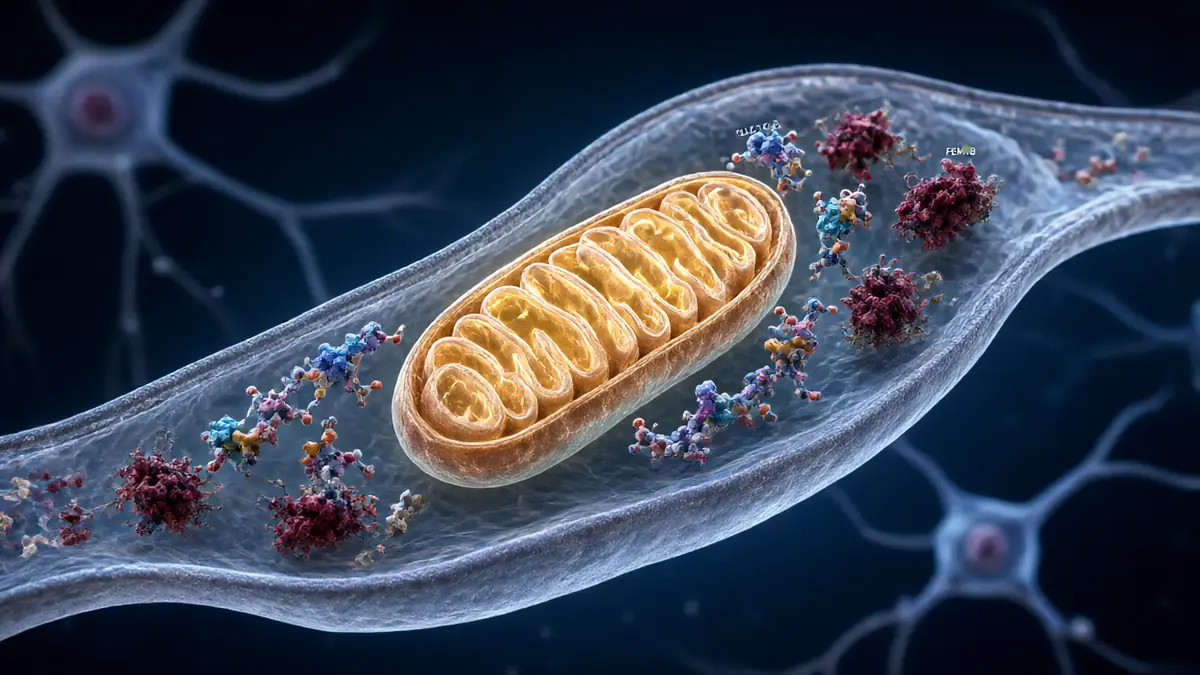
Targeted protein degradation is a promising modality to treat cancer or inflammation, but whether it can provide a similar benefit for disorders caused by pervasive protein dysregulation is unclear. We describe stimulated protein degradation (SPD) as a strategy that leverages agonists of stress-responsive E3 ubiquitin ligases to simultaneously eliminate multiple pathogenic factors. Specifically, we show that activators of the reductive stress response E3 CUL2 FEM1B boost degradation of multiple

Continue reading
Health & Medicine

Spatial coordination in the codevelopment of the human urogenital system during organogenesis.

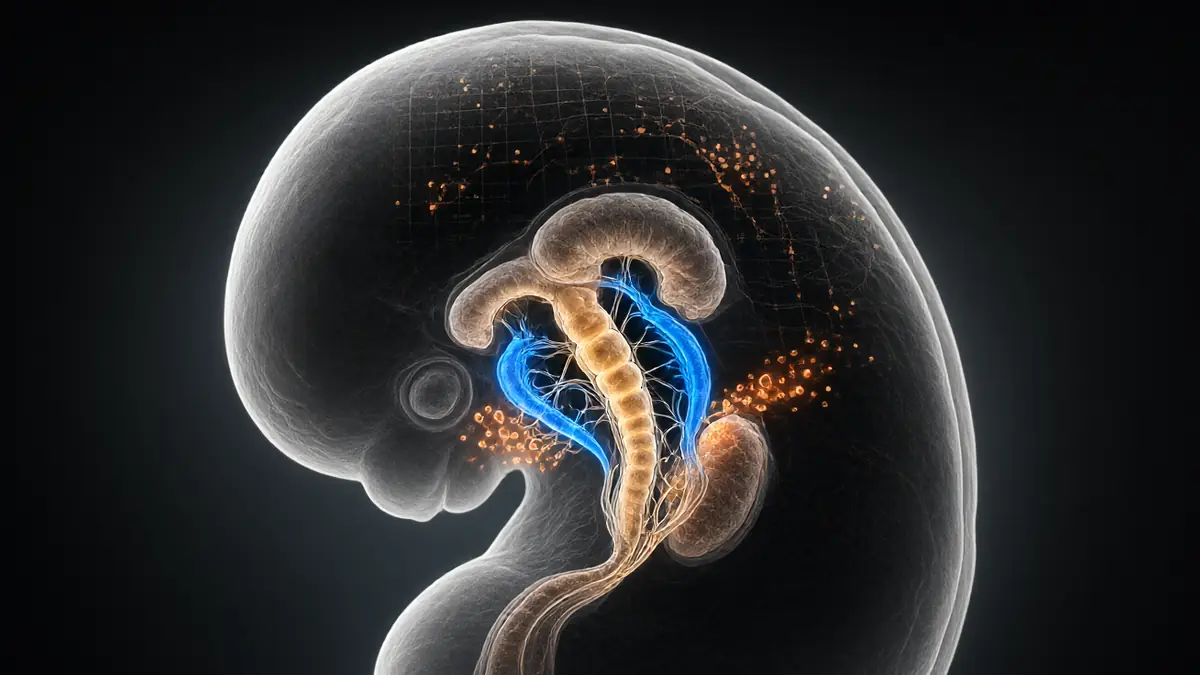
The human urogenital system originates from a common embryonic domain, yet the mechanisms guiding its spatiotemporal coordination remain understudied. Here, we combined high-resolution spatial transcriptomics with single-cell multiomics to profile human embryos from Carnegie stages 15 to 23, capturing the codevelopmental dynamics of the urogenital system. We revealed mesonephros- and adrenal primordium-derived signals that promote gonadal specification and enable efficient in vitro generation of

Continue reading