Effect of two common GVHD prophylaxis regimens on the gut microbiome in a randomized phase 3 trial.
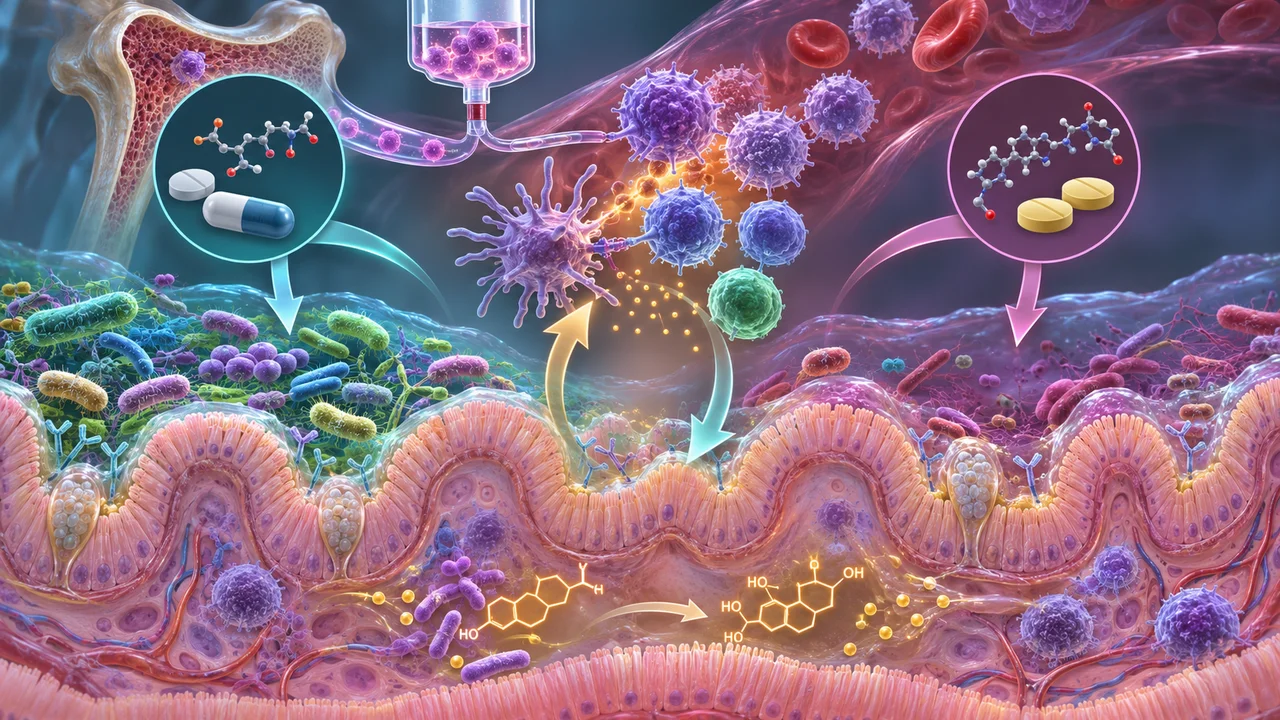
Allogeneic hematopoietic cell transplantation can cure certain hematological disorders but has many complications. In retrospective studies, low gut microbiome diversity is associated with adverse clinical outcomes. In 2023, the Blood and Marrow Transplant Clinical Trials Network 1703 randomized phase 3 trial demonstrated the superiority of post-transplant cyclophosphamide (PTCy) and mycophenolate mofetil to tacrolimus and methotrexate (Tac/MTX) for graft-versus-host disease prophylaxis in parti
Allogeneic hematopoietic cell transplantation can cure certain hematological disorders but has many complications. In retrospective studies, low gut microbiome diversity is associated with adverse clinical outcomes. In 2023, the Blood and Marrow Transplant Clinical Trials Network 1703 randomized phase 3 trial demonstrated the superiority of post-transplant cyclophosphamide (PTCy) and mycophenolate mofetil to tacrolimus and methotrexate (Tac/MTX) for graft-versus-host disease prophylaxis in participants with hematological malignancies undergoing allogeneic hematopoietic cell transplantation. Here we report on the microbiome-focused companion study to 1703, Blood and Marrow Transplant Clinical Trials Network 1801, which coenrolled participants and shared trial registration. The primary endpoint was association between microbiome diversity at neutrophil engraftment and non-relapse mortality after 1 year; secondary endpoints included associations with other clinical outcomes and with baseline microbiome diversity. Based on 2575 longitudinally collected stool samples from 304 participants (Tac/MTX n = 147, PTCy n = 157), no association between engraftment microbiome diversity and non-relapse mortality was observed (P = 0.314), not meeting the primary endpoint. Lower baseline microbiome diversity was associated with shorter overall survival (P = 0.007). Safety data were reported in the original 1703 publication. In exploratory analyses, microbiome diversity and absolute microbial load were lower in PTCy compared to Tac/MTX on days 14-28 following HCT, independent of non-prophylaxis antibiotics exposure. Microbial domination events, when a single species exceeds 30% relative abundance, did not differ significantly between study arms and reflected both pathogen blooms and less severe disruptions of the microbial community. Clostridium scindens and secondary bile-acid metabolism pathways were less prevalent in PTCy than in Tac/MTX following HCT. In summary, we find prophylaxis regimens likely exert independent effects on both the microbiome and immune compartments and can also impact their interaction. Understanding whether and how microbiome-targeted interventions might improve transplant outcomes will therefore require careful disentangling of these effects within each specific treatment context. ClinicalTrials.gov identifier: NCT03959241 .