Drought and disease trigger novel interactions among top predators.
Interactions among species are increasingly recognized as key determinants of climate change impacts on ecosystems 1-5 . However, we know little about how climatic perturbations affect interactions among top vertebrate predators. Here we show that, when an emergent disease caused the decline of shared prey (rabbits), after decades of neutral co-existence a mammalian carnivore (lynx) started to prey heavily on a top predatory raptor (kites). These predation bouts occurred exclusively under drough
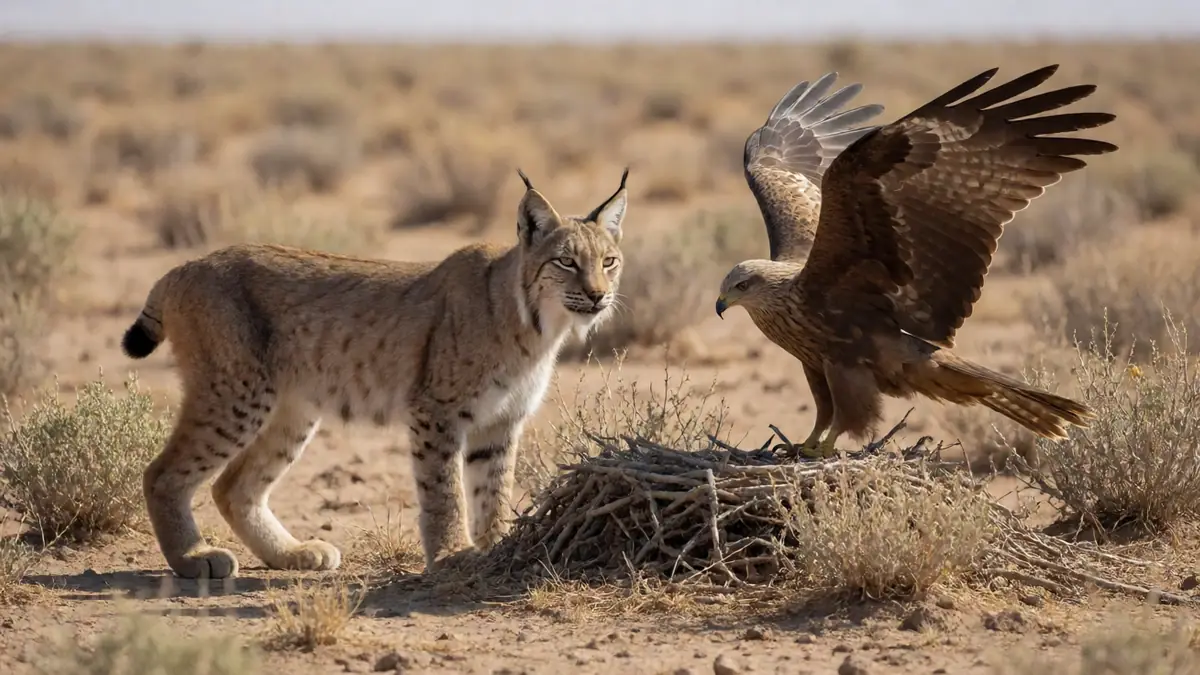
Interactions among species are increasingly recognized as key determinants of climate change impacts on ecosystems 1-5 . However, we know little about how climatic perturbations affect interactions among top vertebrate predators. Here we show that, when an emergent disease caused the decline of shared prey (rabbits), after decades of neutral co-existence a mammalian carnivore (lynx) started to prey heavily on a top predatory raptor (kites). These predation bouts occurred exclusively under drought conditions and when lynx found rabbit remains under the raptor nests, consistent with the removal of a potential competitor. Drought-induced lynx predation depressed lifetime reproductive success and triggered territory abandonment and dispersal by the raptor, suggestive of a new arms race among predators. A reduction in raptor abundance was associated with an increase in an insectivorous bird (a small owl), showing that the new interaction had the potential to reach lower trophic levels. These results underline the importance of diet flexibility and mobility as important mediators of resilience to stressors. In the future, synergistic effects of multiple anthropogenic stressors may reshape the interactions and ecological roles of many apex predators, with potential cascading consequences for whole ecosystems. A key to forecasting the future impact of global change may reside in understanding how behavioural flexibility and interacting keystone species respond to interacting shocks.