Digital Outreach to Improve Statin Refills in Patients With Low Statin Adherence: The ADHERE-ASCVD Randomized Clinical Trial.
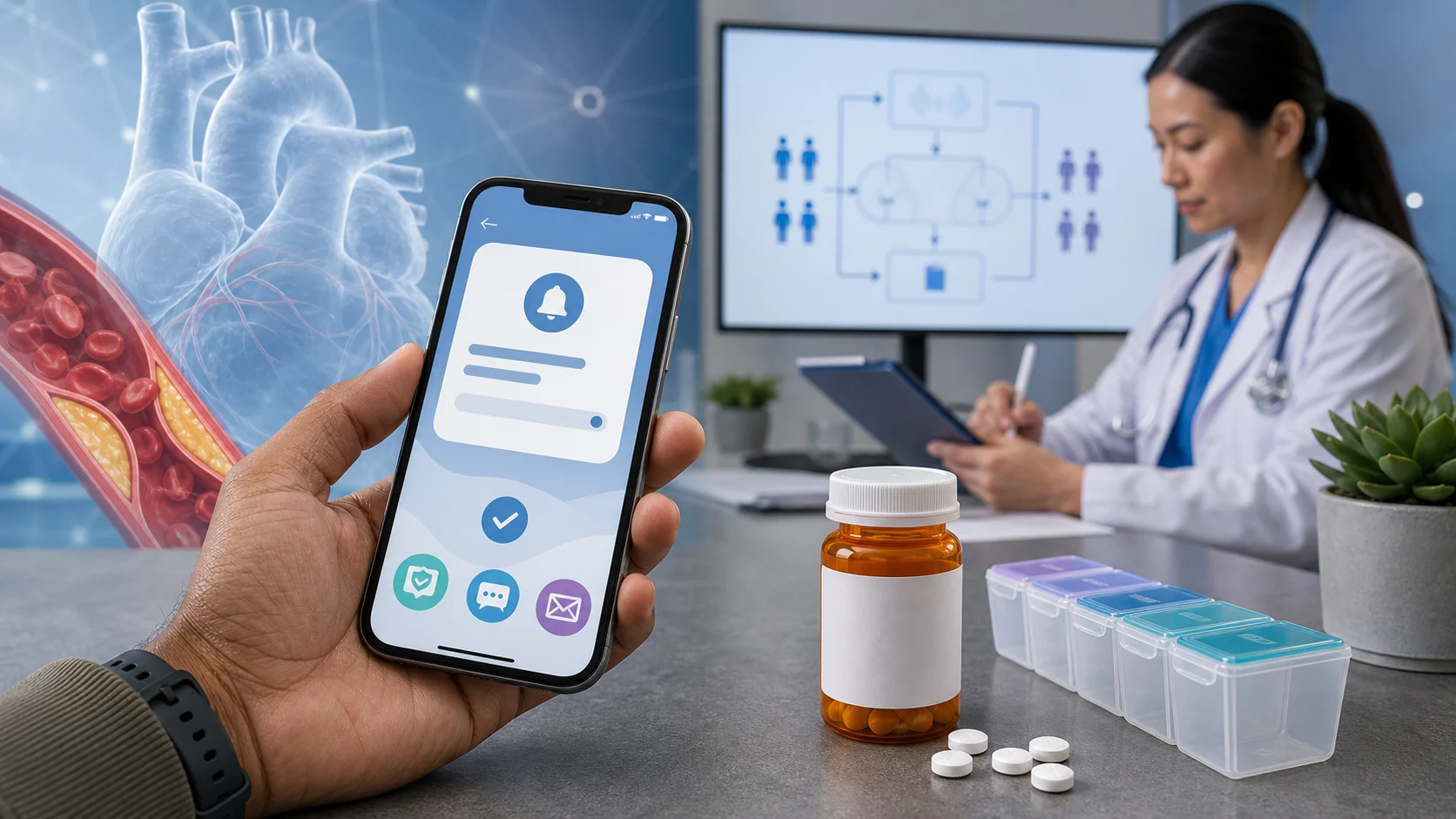
Statin nonadherence is a leading, addressable driver of preventable cardiovascular events. Although health systems routinely use outreach to promote preventive care, most strategies are static and lack evidence from randomized clinical trials. To determine whether an adaptive, sequential digital outreach strategy improves short-term statin refill vs usual communication among adults with established atherosclerotic cardiovascular disease (ASCVD) or high ASCVD risk and recent nonadherence within a
Statin nonadherence is a leading, addressable driver of preventable cardiovascular events. Although health systems routinely use outreach to promote preventive care, most strategies are static and lack evidence from randomized clinical trials. To determine whether an adaptive, sequential digital outreach strategy improves short-term statin refill vs usual communication among adults with established atherosclerotic cardiovascular disease (ASCVD) or high ASCVD risk and recent nonadherence within a rapidly implemented, health system-embedded randomized clinical trial. Pragmatic, health system-embedded, prospective randomized open blinded end point (PROBE) clinical trial using a 2-stage sequential, multiple assignment, randomized trial (SMART) design. The trial was conducted via Kaiser Permanente Northern California, an integrated health care delivery system serving more than 4.6 million members. Eligible participants were adults 18 years or older with established ASCVD or high ASCVD risk, recent statin nonadherence, and eligibility for all study communication modalities. Participants were randomized 1:1:1:1 to receive secure portal messaging, SMS/text messaging, nonsecure email, or usual communication. Initial nonresponders within 14 days underwent prespecified second-stage randomization to repeat the same outreach, switch communication modality, or receive usual communication. Rates of 14-day statin refill following each randomization, with 28-day follow-up. Among 20 604 participants (mean [SD] age, 54.8 [9.0] years; 40.9% female; 27.8% Asian, 10.9% Black, 33.6% Hispanic; 15.3% with established ASCVD), initial digital outreach increased 14-day statin refill vs usual communication (14.4% vs 12.0%; adjusted risk difference, 2.3 percentage points [95% CI, 1.3-3.4]; adjusted risk ratio, 1.20 [95% CI, 1.10-1.30]). Among initial nonresponders, second-stage outreach further increased refill (13.0% vs 10.4%; adjusted risk difference, 2.5 percentage points [95% CI, 1.3-3.7]; adjusted risk ratio, 1.25 [95% CI, 1.11-1.39]). Switching communication modalities did not improve refill vs repeating the same modality (13.2% vs 12.5%; adjusted risk ratio, 1.06 [95% CI, 0.94-1.17]). Cumulative statin refill through 28 days was higher in those receiving any digital outreach vs usual communication (24.9% vs 21.2%; adjusted hazard ratio, 1.21 [95% CI, 1.13-1.30]). Results were consistent across prespecified subgroups. Among adults with a statin indication and recent statin nonadherence, adaptive outreach improved short-term refill vs usual communication. A second outreach produced additional gains among initial nonresponders, although switching communication modalities provided no additional benefit. These findings support adaptive, sequential health system outreach strategies to improve cardiovascular prevention when integrated into population health programs. ClinicalTrials.gov Identifier: NCT07522645.