Developmental xenocortication using human-derived organoids in mice.
The inaccessibility of human brain tissue limits the study of human development and function, a challenge that human stem-cell-derived neural models are beginning to address 1,2 . Transplantation of neural organoids into rodent hosts enables the in vivo study of aspects of human neurodevelopment and circuit function, alongside behavioural phenotyping of the host animals. However, spatial limitations and competition with host circuits constrain the integration of neu
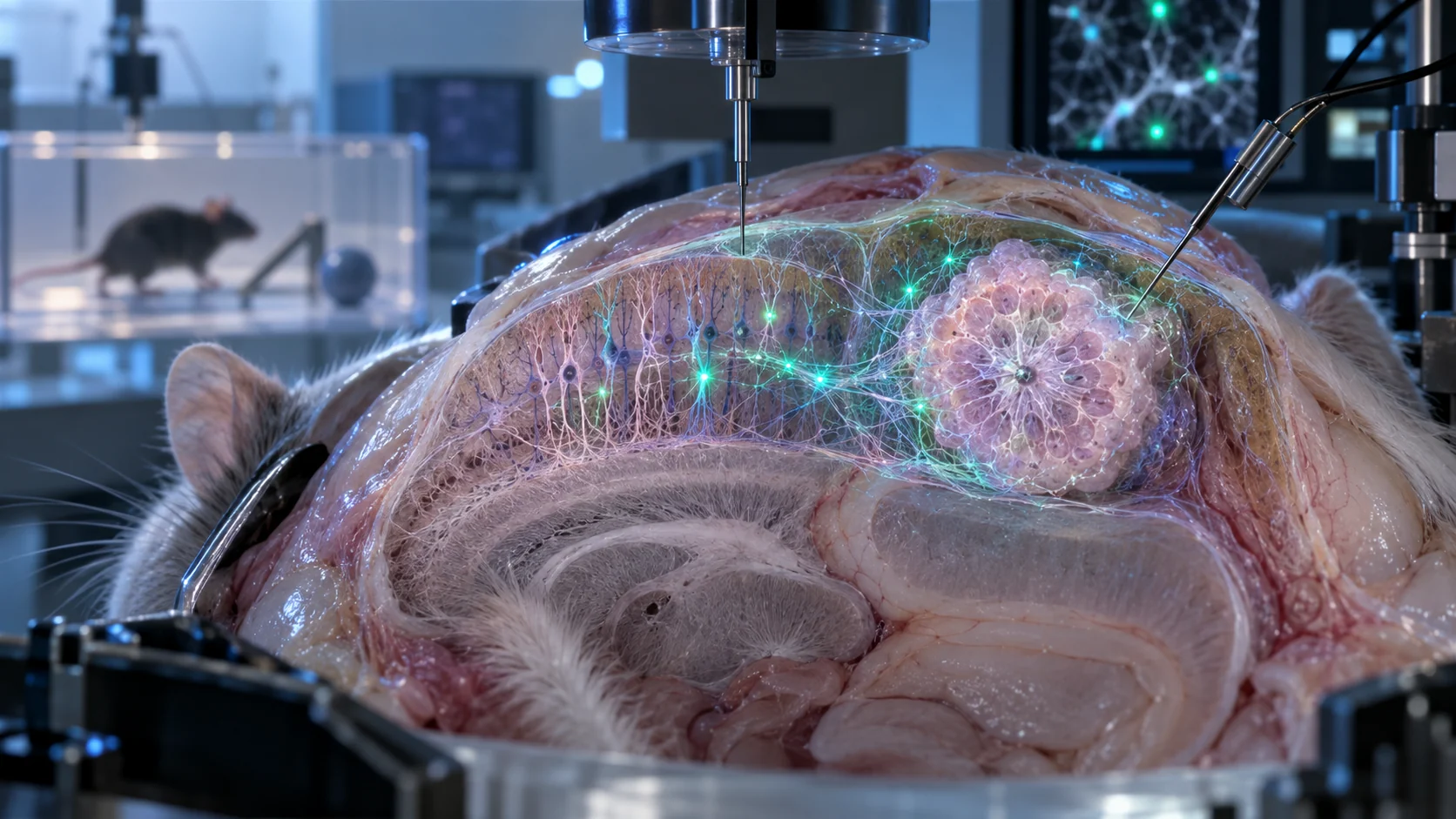
The inaccessibility of human brain tissue limits the study of human development and function, a challenge that human stem-cell-derived neural models are beginning to address 1,2 . Transplantation of neural organoids into rodent hosts enables the in vivo study of aspects of human neurodevelopment and circuit function, alongside behavioural phenotyping of the host animals. However, spatial limitations and competition with host circuits constrain the integration of neural organoids, which is critical for studying disease. Here we establish a transplantation platform using a genetic strategy to effectively deplete glutamatergic neurons from mouse neocortex and hippocampus (apallial) and neonatally engraft the cortical cavity with human stem-cell-derived cortical organoids (hCO) to generate xenocortical mice. This leads to robust graft growth with hCOs occupying most of the cortical volume and generating a diversity of human cortical cell types, including layer 5 extratelencephalic projection neurons. Human cortical neurons integrate with the mouse nervous system, and in vivo cortical graft-wide calcium imaging and electrophysiological analyses revealed patterns of organized activity resembling developing circuits. Behavioural analyses of apallial and xenocortical mice revealed broadly preserved locomotion alongside selective differences in limb coordination and altered organization of spontaneous behaviour. Lastly, this platform enabled behavioural readouts in a model of injury to developing human cortical cells. We envision that xenocortication will be useful for obtaining circuit- and behaviour-level readouts using human neurons to study neurodevelopment, model disease and develop therapeutics.