Society & Culture

Developmental divergence in voice-reward circuitry differentiates autistic from typically developing children and adolescents.

| Source: Proceedings of the National Academy of Sciences of the United States of America

Adolescence is a period of profound social change marked by a developmental shift in attention and motivation from parents toward nonfamilial peers. Autism is a neurodevelopmental condition characterized by lifelong challenges in social communication. However, the neurobiological signatures of adolescent social reorientation in autism are poorly understood. Human voice processing is a primary driver of social learning and communication, but it remains understudied in the autism literature, parti

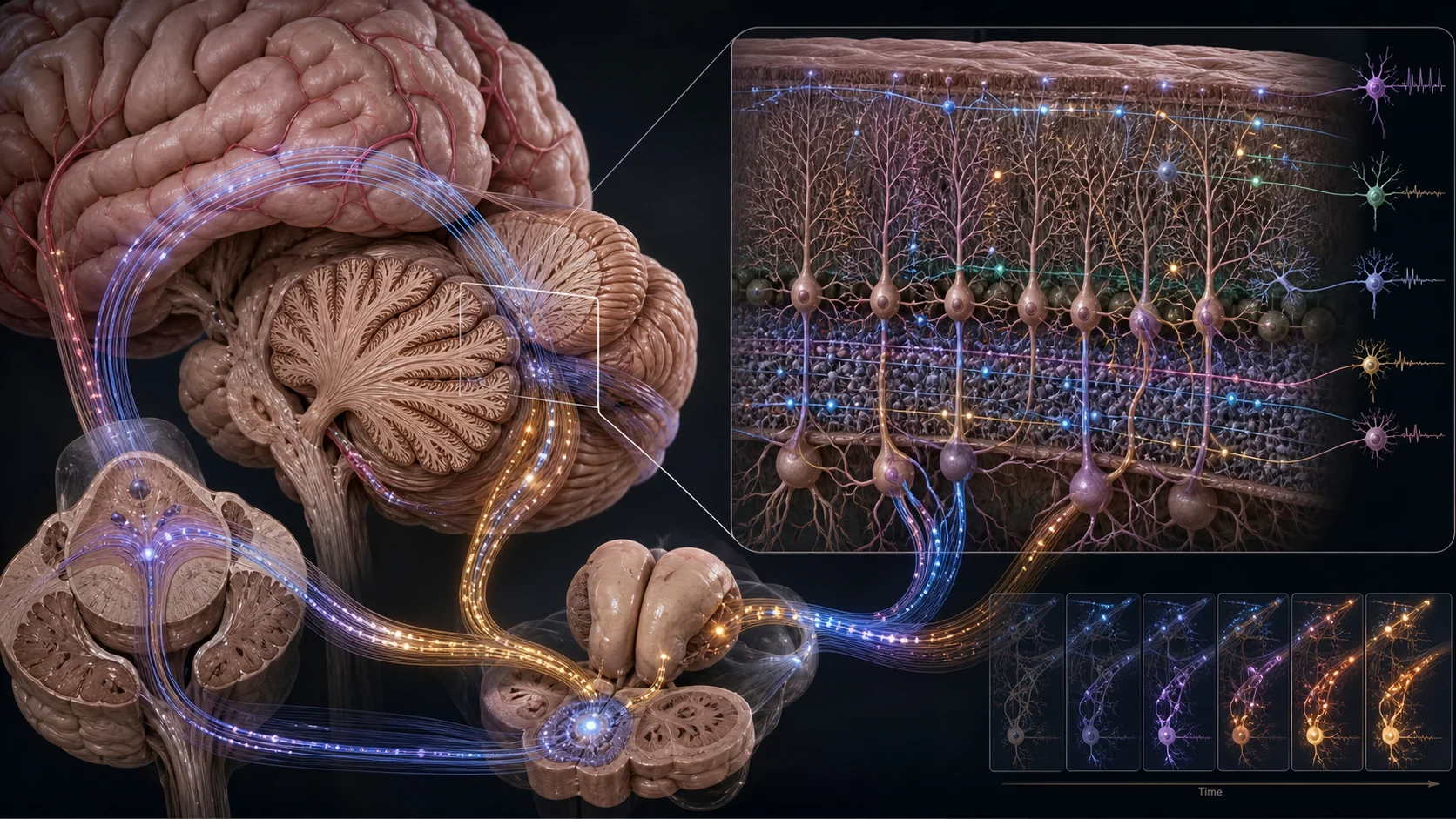
Adolescence is a period of profound social change marked by a developmental shift in attention and motivation from parents toward nonfamilial peers. Autism is a neurodevelopmental condition characterized by lifelong challenges in social communication. However, the neurobiological signatures of adolescent social reorientation in autism are poorly understood. Human voice processing is a primary driver of social learning and communication, but it remains understudied in the autism literature, particularly as it relates to neurodevelopmental change. Here we used functional brain imaging of voice processing in children and adolescents with autism and matched controls (ages 7 to 17) to examine neural responses to mother's voice and nonfamilial voices. We identified divergent age-related patterns in autism across reward, salience, social evaluative, and frontoparietal processing regions consistent with models of an extended voice processing network. Results showed that while typically developing participants exhibited age-related increases in neural activity and connectivity within regions of the voice processing network, individuals with autism showed no age-related increases, and often decreases, in these regions. Adolescents with autism further revealed a reversal of the characteristic developmental pattern: with increasing age, they exhibited decreasing neural engagement with nonfamilial voices and increasing engagement with mother's voice, a pattern that was most pronounced in individuals with more severe social communication challenges. Findings suggest that disrupted organization of the extended voice processing network, including reward, salience, social evaluative, and frontoparietal circuitry, may underlie atypical social neurodevelopment in autism. More broadly, results suggest that individual differences in social communication shape age-related neural patterns supporting social reorientation.

Read the original source →

Related Topics

Related Stories

Society & Culture

Christopher A. Sims (1942-2026): Paradigm-shifting macroeconomist and econometrician.

Christopher A. Sims, who died on March 14, 2026, left behind an indelible mark on macroeconomics and econometrics. His Nobel Prize winning research reshaped the paradigm for empirical macroeconomics, creating a rigorous and flexible framework for inferring the effects of macroeconomic policies. He also made important contributions to time series forecasting, Bayesian econometrics, factor modeling, approximation theory, and models of monetary and fiscal policy. Few academics have had as direct an

Continue reading
Society & Culture

The social-class gap in negotiation: Lower-class individuals negotiate less and face more backlash.

Economic inequality has widened considerably in the United States and globally, raising pressing questions about the mechanisms that reproduce social stratification. One prominent manifestation of this inequality is the "class ceiling" in organizations: individuals from lower social classes earn less and advance more slowly than their higher-class counterparts, even with comparable credentials. We identify a crucial behavioral pathway contributing to this class ceiling: a social-class gap in the

Continue reading
Society & Culture

Dynamic Coordination-Enabled Metal-Dependent Configurational Switching in a Covalent Organic Framework.

The synthesis of crystalline materials capable of precise and chemically triggered structural transformations remains a significant challenge. Herein, we report a dynamic coordination-mediated strategy for constructing a highly stable bis-acylhydrazone-linked covalent organic framework, COF-LIFM20-Zn, featuring an adjustable U-shaped pentadentate Zn coordination center. The dynamic coordination behavior of Zn 2+ enables reversible interconversions between U- and W-shaped configurations through d

Continue reading
Society & Culture

Anionic Passivation Enables Reconstruction-Free Seawater Electrolysis.

Nonoxide electrocatalysts hold great promise for high-efficiency seawater oxidation, yet their practical application is hindered by the inevitable surface reconstruction and pronounced corrosion under high anodic potentials. Herein, we solve this longstanding challenge by developing a rational anionic ligand passivation strategy that stabilizes phosphide lattices against oxidative degradation while preserving inherent electrocatalytic activity. Leveraging Lewis acid-base interactions, we grow an

Continue reading
Society & Culture

Response duration tracks confidence.

The timing of behavioral responses is among the most robust signatures of cognitive processing-with easier, more accurate, and more confident judgments typically made more quickly. But which aspects of response timing carry these signals? Whereas the time taken to initiate a response (e.g., the interval between stimulus onset and keypress) is one of the most popular and informative measures in experimental psychology, another aspect of response timing is its duration (e.g., how long the key is h

Continue reading