Economics

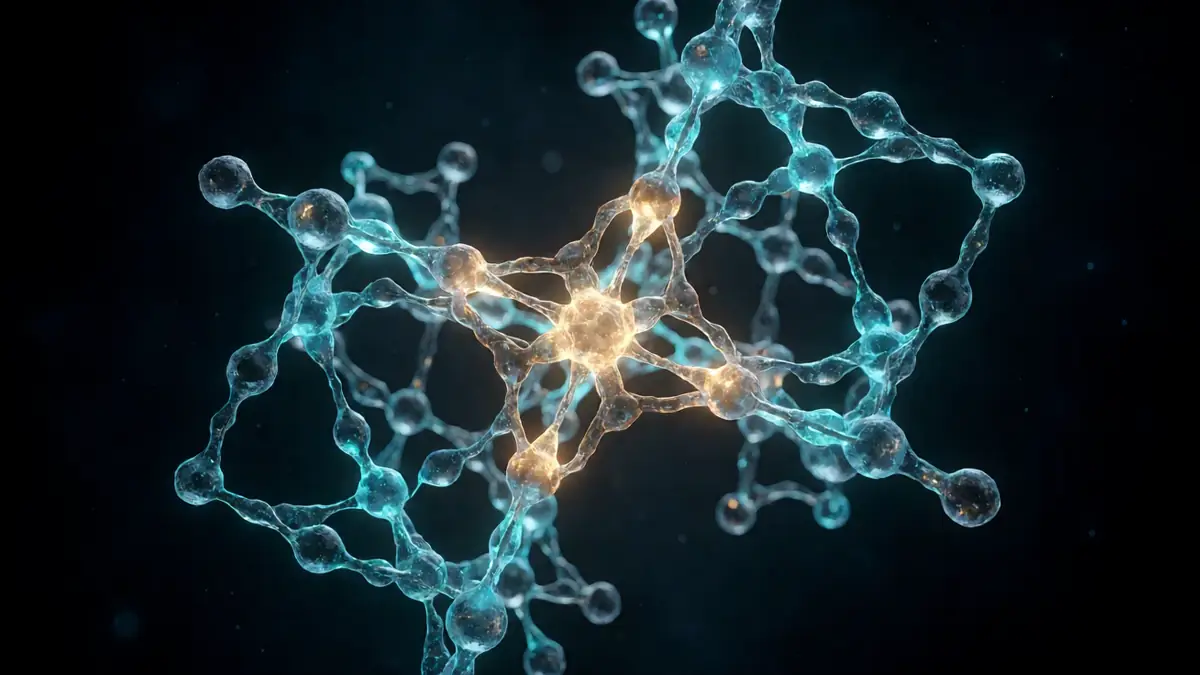
Evolution of the arbuscular mycorrhizal regulatory network through differential GRAS gene retention and protein interaction in land plants.
| Source: Proceedings of the National Academy of Sciences of the United States of America

Plants rely on an ancient genetic "toolkit" to establish arbuscular mycorrhizal symbiosis (AMS) with fungal partners. However, the symbiotic outcomes vary among AMS hosts, indicating divergence in downstream transcriptional reprogramming after the perception of symbiotic signals. To uncover the cross-species variation of the AMS regulatory network, we traced the evolutionary trajectory of the GRAS gene family, which encodes the major group of transcription factors in AMS regulation. Phylogenetic

Plants rely on an ancient genetic "toolkit" to establish arbuscular mycorrhizal symbiosis (AMS) with fungal partners. However, the symbiotic outcomes vary among AMS hosts, indicating divergence in downstream transcriptional reprogramming after the perception of symbiotic signals. To uncover the cross-species variation of the AMS regulatory network, we traced the evolutionary trajectory of the GRAS gene family, which encodes the major group of transcription factors in AMS regulation. Phylogenetic analysis of the GRAS family across land plants placed known symbiotic GRAS members within 12 anciently diverged lineages, with multiple lineages showing pronounced gene loss in nonmycorrhizal plants. This pattern pointed to three additional GRAS lineages as candidates for AMS regulation. Given that tomato harbors single-copy, AMS-induced genes in these lineages, we selected it for functional validation. CRISPR-Cas9 mutagenesis, combined with detailed phenotyping of fungal colonization and arbuscule morphology, and transcriptome profiling of mutant roots, confirmed that all three tomato genes are individually required for AMS development, designated Symbiosis-Required GRAS (SRG) 1 to 3. Large-scale phylogenomic analysis and protein interaction assays (by yeast two-hybrid and bimolecular fluorescence complementation) further showed that both the repertoire and interaction networks of symbiotic GRAS members vary among AMS hosts. In summary, together with 12 previously characterized lineages, the three SRGs identified in this study bring the total number of GRAS lineages with known symbiotic members across land plants to fifteen. Furthermore, our findings demonstrate that the symbiotic GRAS network has been dynamically reshaped by gene loss and rewiring of protein interactions during land plant evolution.


Read the original source →

Related Stories

Economics

Ancient DNA challenges to admixture narratives: Insights from Notre-Dame Cemetery (1683-1796) in Colonial Montreal, Canada.

Historical narratives of early colonization in Quebec frequently portray French-Indigenous relations as cooperative and characterized by admixture; which are often mobilized in modern debates on false-indigeneity. These narratives have been studied through genealogical, genetic, and bioarchaeological analyses, yet individuals of African descent remain mostly absent from them, while Indigenous peoples are framed largely in relation to colonists. Notre-Dame Cemetery (1683-1796) in Tiohtià:ke-

Continue reading
Economics

Understanding consciousness (biological and artificial) as a society of self-schemas.

This article argues that human cognition is more than the performance of functions such as memory, decision-making, and attention. The brain also builds schematic models of those cognitive functions and uses those models to monitor, predict, and partially control them. When you introspect, your understanding of who you are and what is happening inside of you is derived from those schematic, sometimes inaccurate, but generally useful models, rather than from the actual cognitive functions that ar

Continue reading
Economics

A transposon inserted into HELD1 repressed maize husk leaf blade extension during maize domestication.

Husk leaves are the closest photosynthetic organs to the ear, which contribute directly to grain filling and have potential for yield improvement in maize. Teosinte has a long husk extended leaf blade, whereas maize exhibits a reduced or even no husk leaf blade. However, the genetic basis of this transition in the husk leaf during domestication remains unknown. In this study, we identified a major quantitative trait locus (QTL), Husk Extended Leaf Blade 1 ( HELD1 ), corresponding to the tassels

Continue reading
Economics

Educational intervention can rewire village social networks.

Social networks shape behaviour, affect information dissemination and undergird collective action. And they can be exploited in the design of interventions in these domains 1-7 . Although social networks obey fundamental principles, such as the degree distribution 8,9 , they can nevertheless evolve as ties form and break. Here, through a randomized controlled trial involving a total of 8,331 people in 110 remote Honduran villages, we evaluate the secondary effects of a 22-month public-health int

Continue reading
Economics

Hyperfunction of PSD-95 leads to hyperexcitability and cognitive abnormalities in MEF2C haploinsufficiency.

Myocyte enhancer factor 2C (MEF2C) is a transcription factor critical for brain circuit development and cognitive behavior. The loss of one copy of MEF2C leads to MEF2C haploinsufficiency syndrome (MCHS), a neurodevelopmental disorder characterized by intellectual disability, epilepsy, and behavioral phenotypes associated with autism spectrum disorders. Given that numerous genes are regulated by MEF2C, the neuronal and behavioral deficits in MCHS are complex, and there is currently no effective

Continue reading