Cross-species single-cell atlas of the striatum defines cell-type and subregion disease vulnerabilities.
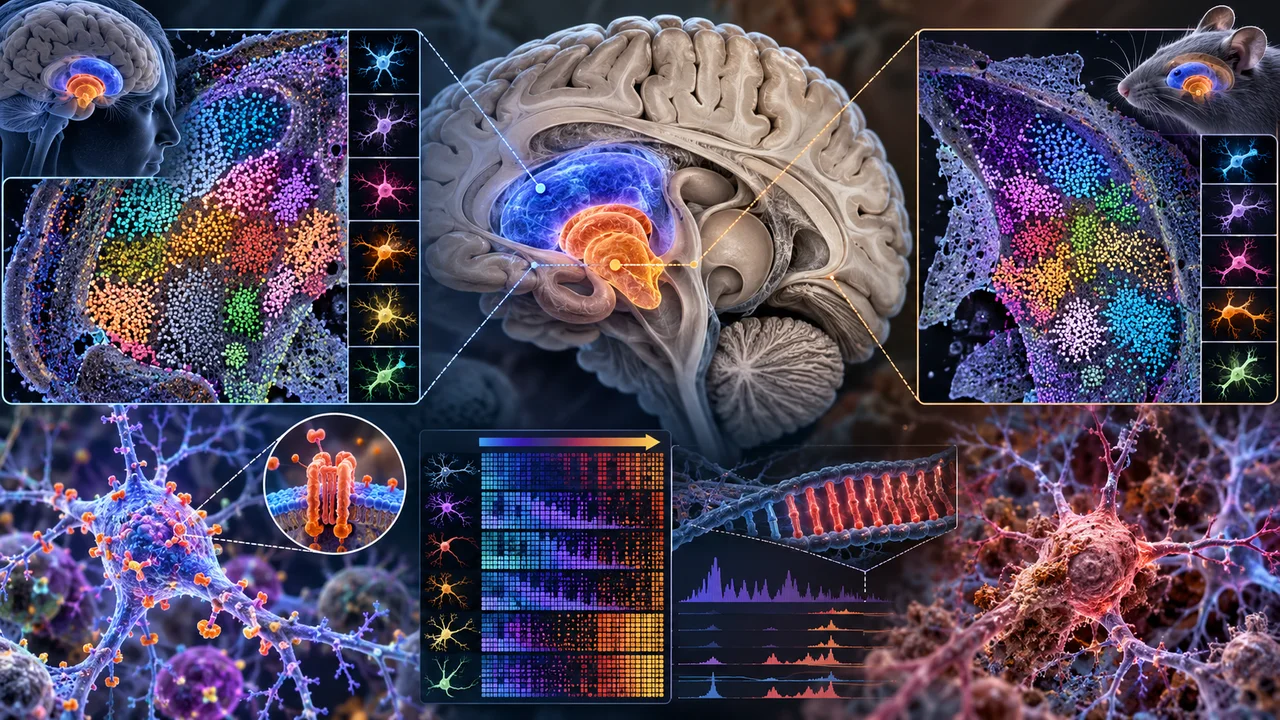
The striatum is critical for decision-making, movement, and reward processing, functions achieved through subregional cellular and molecular specialization. Striatal cell types and subregions are differentially implicated in neurodegenerative and neuropsychiatric disorders, but the mechanisms underlying these vulnerabilities are poorly understood. Using single-nucleus RNA sequencing across 109 human and 22 mouse samples spanning dorsal and ventral striatum, we provide a comprehensive atlas of su
The striatum is critical for decision-making, movement, and reward processing, functions achieved through subregional cellular and molecular specialization. Striatal cell types and subregions are differentially implicated in neurodegenerative and neuropsychiatric disorders, but the mechanisms underlying these vulnerabilities are poorly understood. Using single-nucleus RNA sequencing across 109 human and 22 mouse samples spanning dorsal and ventral striatum, we provide a comprehensive atlas of subregional neuronal specialization. We define rare neuronal subpopulations and transcriptional gradients along the dorsolateral-ventromedial axis with notable differences between species, suggesting divergent pharmacological targets, connectivity, and disease mechanisms. Integration with genome-wide association and pharmacological studies identifies human-enriched sites of opioid receptor expression and ventral-biased chronic antipsychotic action. Lastly, paired single-cell transcriptomic and somatic trinucleotide repeat expansion measurements identify differences in subregion and neuronal subtype vulnerability in Huntington's disease. Our findings lay the foundation for understanding how striatal cell types and subregions contribute to brain function and neurological disorders.