COP1 is a temperature-responsive switch in Arabidopsis.
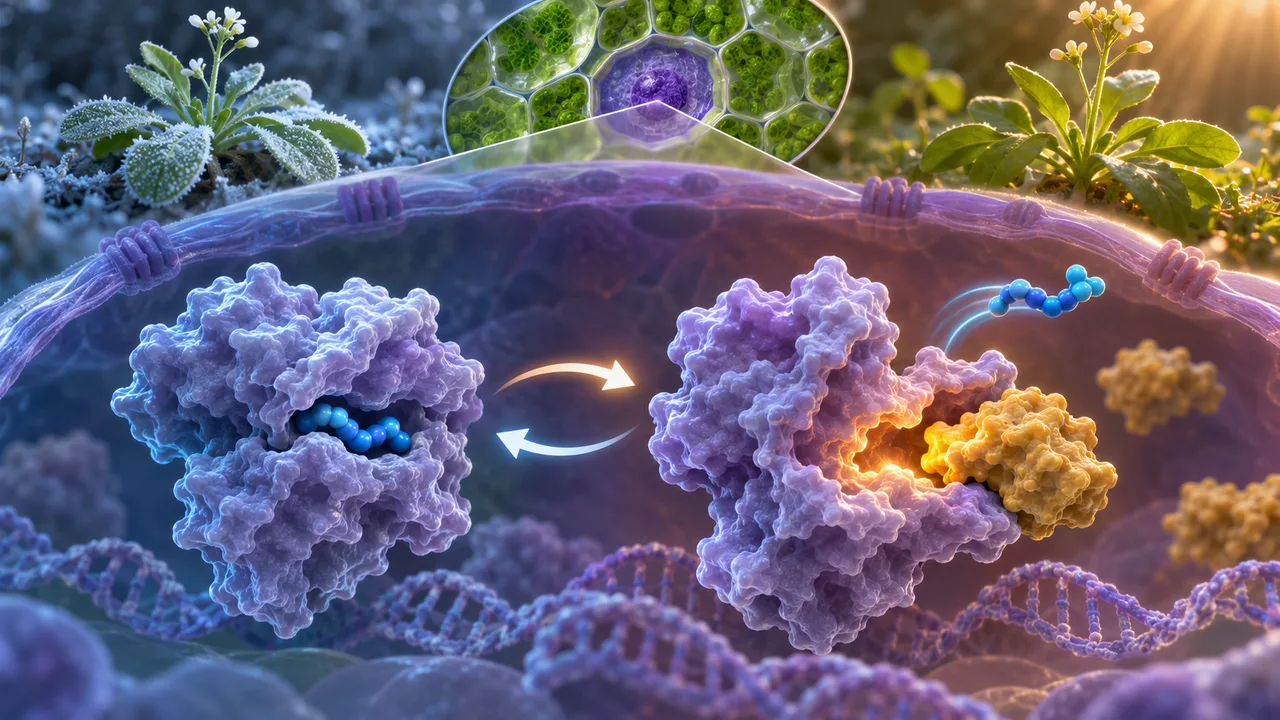
Temperature is molecular motion, but how living systems sense this is poorly understood. Many responses in plants integrate light and temperature signals, for example, via light receptors and the circadian clock. CONSTITUTIVE PHOTOMORPHOGENESIS 1 (COP1) regulates light signaling and is necessary for responding to temperature. We show that COP1 acts as a temperature-dependent switch, becoming activated by a warm temperature-induced conformational change. An intramolecular Val-Pro (VP) motif binds
Temperature is molecular motion, but how living systems sense this is poorly understood. Many responses in plants integrate light and temperature signals, for example, via light receptors and the circadian clock. CONSTITUTIVE PHOTOMORPHOGENESIS 1 (COP1) regulates light signaling and is necessary for responding to temperature. We show that COP1 acts as a temperature-dependent switch, becoming activated by a warm temperature-induced conformational change. An intramolecular Val-Pro (VP) motif binds to the active site of COP1 at low temperatures, preventing substrate docking. At warmer temperatures, the VP motif becomes detached, enabling client proteins to bind and be degraded. This discovery explains how plants are able to obtain a precise readout of temperature within a given climate range. Altering the binding of the VP motif is sufficient to adjust the temperature range within which the plant responds. This helps us understand how plants are able to adapt to different climates.