Auxin signaling.
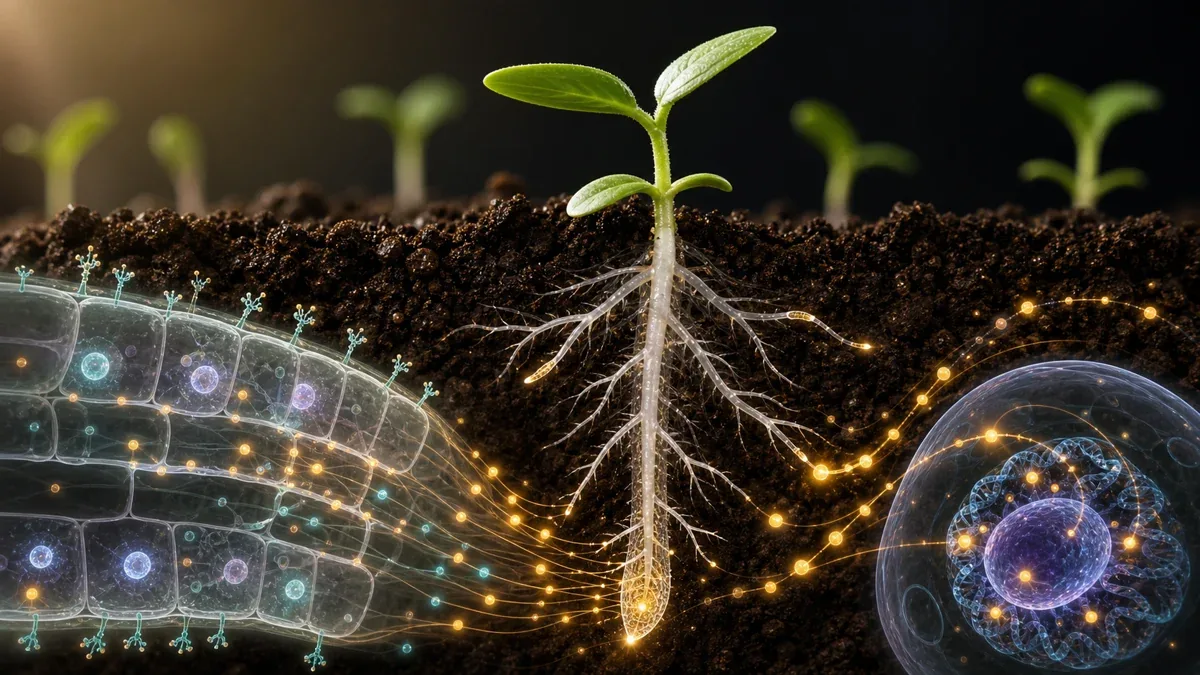
Following its discovery nearly a century ago, the signaling molecule auxin has captured the interest of plant scientists. Mostly through genetics, key components of the auxin response were identified, and these were rapidly connected in a topologically simple nuclear auxin pathway (NAP). While the identification of the NAP established a coherent framework for transcriptional auxin response, recent years have seen a remarkable series of advances in the evolution, mechanisms, and regulation of NAP
Following its discovery nearly a century ago, the signaling molecule auxin has captured the interest of plant scientists. Mostly through genetics, key components of the auxin response were identified, and these were rapidly connected in a topologically simple nuclear auxin pathway (NAP). While the identification of the NAP established a coherent framework for transcriptional auxin response, recent years have seen a remarkable series of advances in the evolution, mechanisms, and regulation of NAP components that shed new light on auxin response. Furthermore, it has long been known that auxin triggers both rapid and slow responses, but success in NAP characterization has eclipsed insights into rapid responses. Recently, a paradigm for rapid responses has emerged. This involves widespread protein phosphorylation, new roles for NAP components, and a set of contentious, yet resurrected, extracellular auxin-binding proteins. Here, we present recent progress in auxin responses, reflect on their historical context, and formulate a set of pertinent questions for the field.