Environment

Asymmetric enzymatic hydrophosphorylation through O 2 activation

| Source: Science

Enzymatic carbon-phosphorus bond formation is extremely rare in nature, limiting biocatalytic access to phosphorus-containing compounds that are widely used in pharmaceuticals and agrochemicals. Here, we report an asymmetric enzymatic hydrophosphorylation through oxygen activation using a repurposed flavin-dependent enzyme. Mechanistic studies revealed that reactive oxygen species are converted into productive phosphorus-centered radicals, followed by radical addition and enzymatic hydrogen atom

Enzymatic carbon-phosphorus bond formation is extremely rare in nature, limiting biocatalytic access to phosphorus-containing compounds that are widely used in pharmaceuticals and agrochemicals. Here, we report an asymmetric enzymatic hydrophosphorylation through oxygen activation using a repurposed flavin-dependent enzyme. Mechanistic studies revealed that reactive oxygen species are converted into productive phosphorus-centered radicals, followed by radical addition and enzymatic hydrogen atom transfer, achieving high enantioselectivity. The enzyme accommodates diverse phosphorus-hydrogen donors that pose challenges to chemical catalysis, enabling the biosynthesis of valuable phosphorus-containing scaffolds. This work expands the scope of biocatalysis to programmable carbon-phosphorus bond formation and establishes a paradigm for channeling oxygen reactivity in enzymes.

Read the original source →

Related Stories

Environment

Maternal ranging strategies facilitate offspring social play at energetic cost in the most solitary ape.

In most vertebrates, social play among peers is considered essential for behavioral development. Yet in solitary species bearing single offspring, opportunities for social play are inherently scarce. Whether mothers of such species actively facilitate play opportunities for their offspring, and at what cost, remains unknown. We used 15 y of behavioral and movement data (∼32,600 observation hours) from 31 wild Bornean orangutan ( Pongo pygmaeus wurmbii ) mother-offspring pairs to test whet

Continue reading
Environment

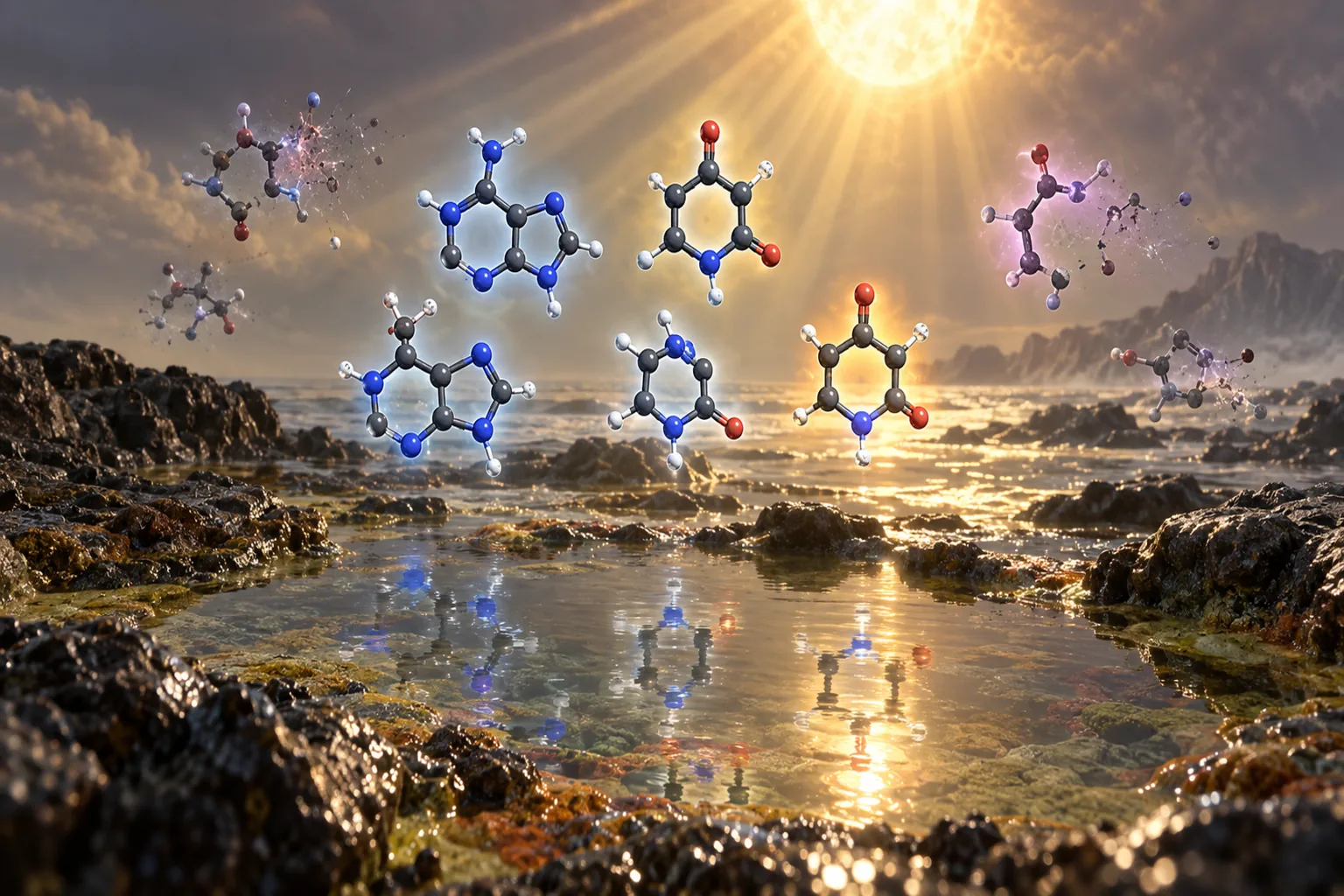
Continuous UV irradiation played an inconclusive role in selecting the canonical genetic alphabet.

An abundance of heterocyclic molecules analogous to canonical nucleobases (i.e., adenine, thymine, guanine, cytosine, and uracil) used as the genetic alphabet in DNA and RNA could have been present in various prebiotic environments on early Earth. However, extant biology generally uses the canonical nucleobases and nucleosides as the genetic alphabet, and not any number of possible noncanonical counterparts. Ultraviolet (UV) irradiation was likely abundant on the surface of the early Earth and h

Continue reading
Environment

Fault-controlled natural hydrogen reservoirs as underground hydrogen storage sites.

Underground hydrogen storage requires geological formations with demonstrated hydrogen containment, yet no conventional storage candidate (salt caverns, aquifers, or depleted hydrocarbon reservoirs) offers direct, prior evidence of H 2 -specific sealing. We propose that subcommercial natural hydrogen reservoirs, where H 2 has accumulated over geological timescales, can serve as precertified storage sites. This proposition is evaluated using the Bulqizë fault-controlled natural H 2 reservoir

Continue reading
Environment

Breaking trait scaling via the evolution and regulation of dimorphic decoupling in ants.

The evolution of allometry, changing how morphological traits scale to body size, has fueled adaptive radiations. In ants, allometry has facilitated the repeated evolution of a worker-soldier caste system. Here, we reveal an unexpected morphological pattern and its superorganismal regulation within the hyperdiverse genus Pheidole . We uncovered that antennal sizing between the small worker and the big soldier is identical, lacking intercaste scaling (antennae-body scaling is decoupled) yet retai

Continue reading
Environment

Global grassland productivity and carbon storage benefit from functional diversity under climate change.

Functional diversity plays an important role for ecosystem services of managed grasslands such as their gross primary productivity (GPP) and soil organic carbon (SOC) stocks. Yet vegetation models assessing functional diversity have been limited to small spatial scales. We used the Lund-Potsdam-Jena managed land (LPJmL) competitor stress-tolerant ruderal (CSR) model to assess the role of functional diversity for managed grassland GPP and SOC under climate change at the global scale. LPJmL-CSR si

Continue reading