Anionic Passivation Enables Reconstruction-Free Seawater Electrolysis.
Nonoxide electrocatalysts hold great promise for high-efficiency seawater oxidation, yet their practical application is hindered by the inevitable surface reconstruction and pronounced corrosion under high anodic potentials. Herein, we solve this longstanding challenge by developing a rational anionic ligand passivation strategy that stabilizes phosphide lattices against oxidative degradation while preserving inherent electrocatalytic activity. Leveraging Lewis acid-base interactions, we grow an
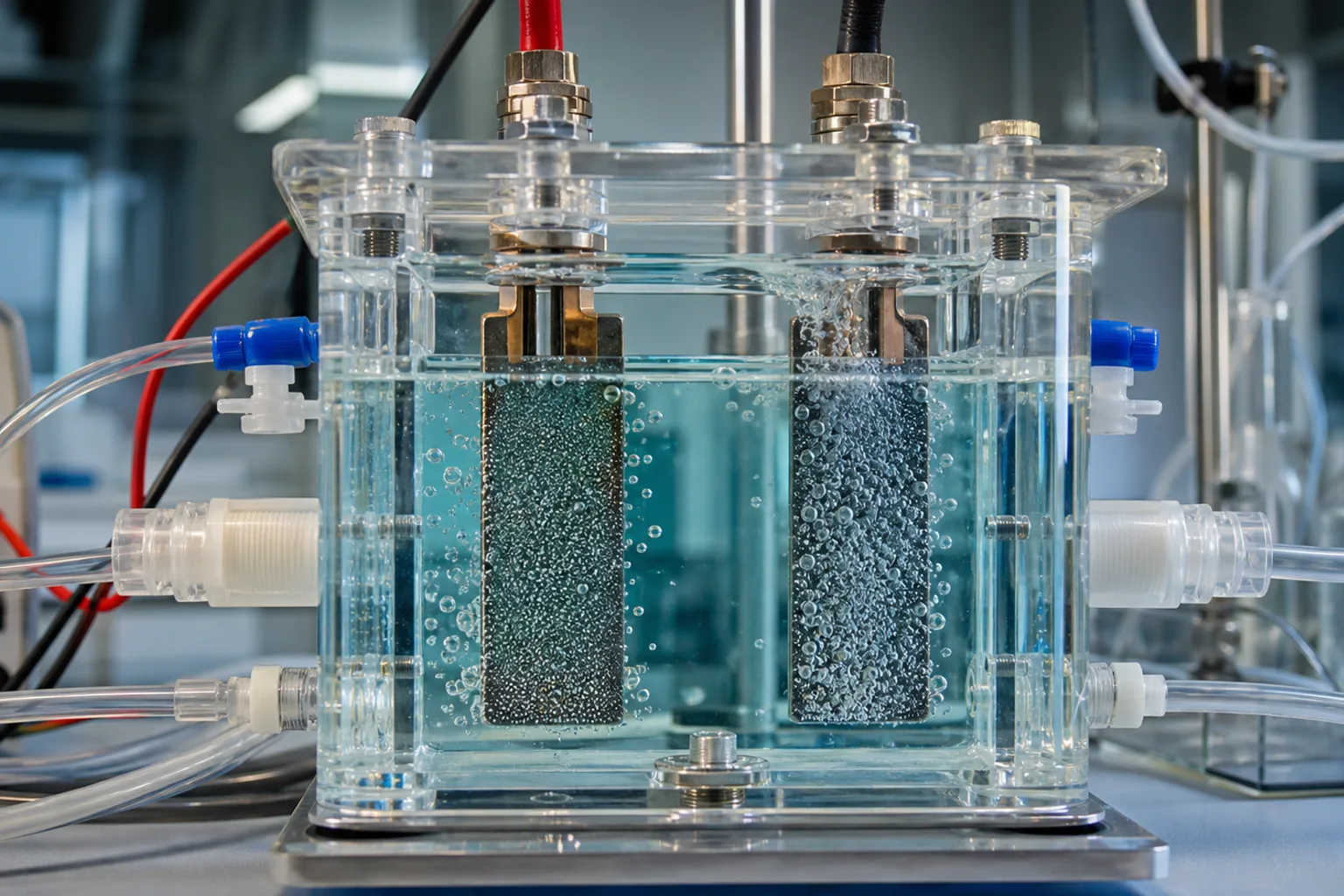
Nonoxide electrocatalysts hold great promise for high-efficiency seawater oxidation, yet their practical application is hindered by the inevitable surface reconstruction and pronounced corrosion under high anodic potentials. Herein, we solve this longstanding challenge by developing a rational anionic ligand passivation strategy that stabilizes phosphide lattices against oxidative degradation while preserving inherent electrocatalytic activity. Leveraging Lewis acid-base interactions, we grow an ultrathin, undercoordinated TiO x overlayer on a FeNiP (FNP) support. This overlayer withdraws electrons from lattice phosphorus, downshifts the P p-band center, and thermodynamically stabilizes the entire anionic sublattice against oxidative leaching. The oxidation-resistant scaffold further enables the anchoring of atomically ordered Ir arrays with a well-defined interatomic spacing of ∼2.8 Å, promoting direct O-O radical coupling via the oxide pathway mechanism and effectively circumventing the corrosive lattice oxygen route. Operando spectroscopy and 18 O isotope tracing confirm fully reconstruction-free OER behavior with negligible lattice oxygen participation. The as-developed TiIr@FNP catalyst achieves ultralow overpotentials (only 310 mV at 1 A cm -2 ), operates stably for over 1200 h in alkaline seawater, and maintains near-unity Faradaic efficiency. The work demonstrates a generalizable strategy for designing durable, high-performance nonoxide anodic electrocatalysts under industrially relevant conditions.