An Oryza orphan gene confers trans-species drought tolerance.
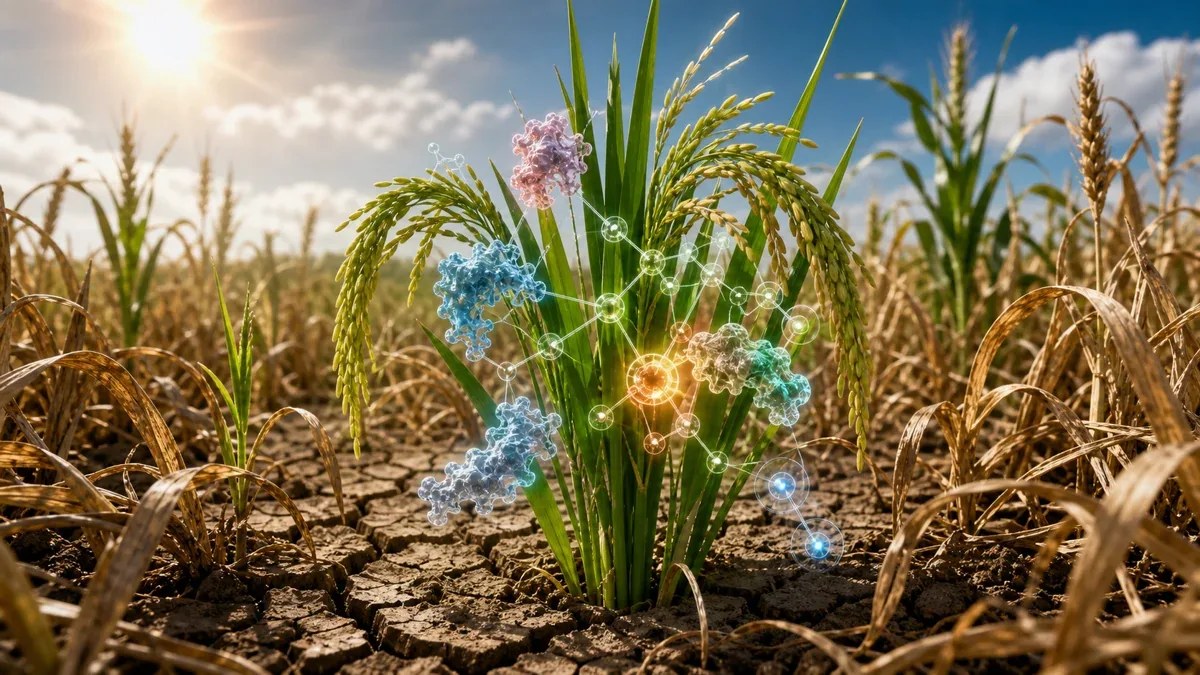
Drought threatens crop productivity, yet enhancing tolerance often compromises yield. Abscisic acid (ABA) signaling is central to drought response, but its deep conservation can constrain adaptive flexibility. Here, we identify ROAD1 (rice orphan gene adapted for drought 1), an Oryza-specific orphan gene that confers robust drought tolerance without obvious growth defects under normal conditions. ROAD1 originated from Oryza meridionalis, and its functional allele, ROAD1 C , was selected during j
Drought threatens crop productivity, yet enhancing tolerance often compromises yield. Abscisic acid (ABA) signaling is central to drought response, but its deep conservation can constrain adaptive flexibility. Here, we identify ROAD1 (rice orphan gene adapted for drought 1), an Oryza-specific orphan gene that confers robust drought tolerance without obvious growth defects under normal conditions. ROAD1 originated from Oryza meridionalis, and its functional allele, ROAD1 C , was selected during japonica domestication. In field trials, elite rice lines carrying ROAD1 C exhibited up to 34.75% higher grain yield than corresponding controls under drought. Mechanistically, ROAD1 bypasses the canonical ABA receptor-ligand complex by binding the phosphatase OsPP2C68, preventing sucrose non-fermenting 1-related protein kinases 2 (SnRK2) dephosphorylation and activating downstream responses. ROAD1 also interacts with protein phosphatase 2C (PP2C) orthologs from maize, wheat, and Arabidopsis, and heterologous expression of ROAD1 C enhances drought tolerance in Arabidopsis, rapeseed, maize, wheat, and poplar. These findings reveal that an Oryza-specific orphan gene can co-opt conserved signaling for potential trans-species drought tolerance.