A cinnamyl alcohol dehydrogenase–like scaffold organizes monoterpenoid indole alkaloid biosynthesis
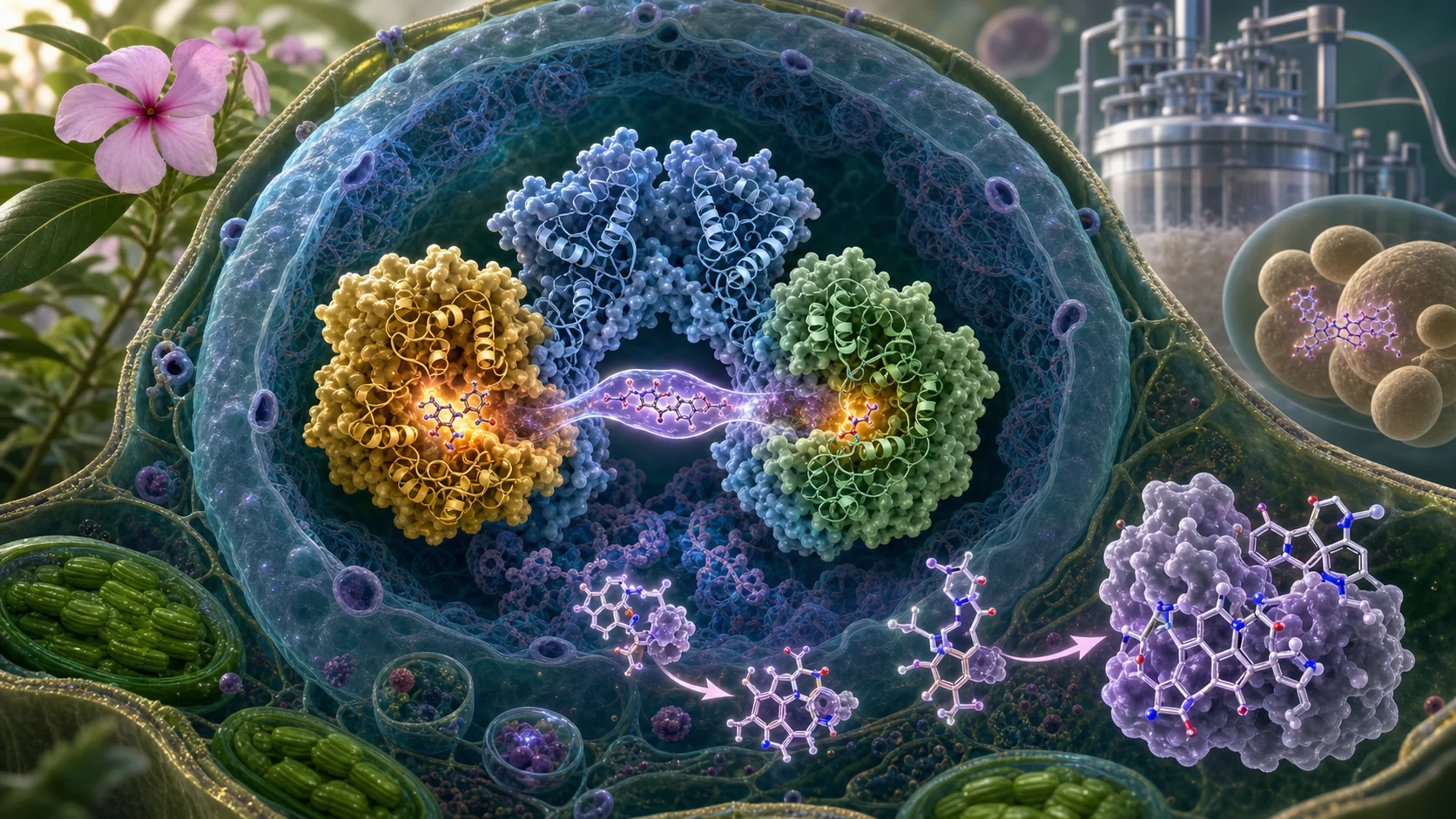
Biosynthesis of ~3000 monoterpenoid indole alkaloids (MIAs), including the anticancer drug vinblastine, involves the highly unstable intermediate strictosidine aglycone. Its formation by strictosidine β-glucosidase (SGD) and subsequent conversion by geissoschizine synthase (GS) occur in spatially separated compartments, representing a major biosynthesis bottleneck. In this study, we discover VinBLAST, a cinnamyl alcohol dehydrogenase–like protein repurposed as a scaffold for efficient processing
Biosynthesis of ~3000 monoterpenoid indole alkaloids (MIAs), including the anticancer drug vinblastine, involves the highly unstable intermediate strictosidine aglycone. Its formation by strictosidine β-glucosidase (SGD) and subsequent conversion by geissoschizine synthase (GS) occur in spatially separated compartments, representing a major biosynthesis bottleneck. In this study, we discover VinBLAST, a cinnamyl alcohol dehydrogenase–like protein repurposed as a scaffold for efficient processing of this labile intermediate. VinBLAST physically mediates the interaction of SGD and GS in the nucleus and allosterically enhances the catalytic efficiency of GS. VinBLAST homologs from diverse plant families enhance the biosynthesis of several representative MIAs, with the production of catharanthine increased to ~160 milligrams per liter in yeast, nearly 1000-fold higher than shown in previous studies. Our discovery provides a missing link in organizing MIA biosynthesis and enables scalable bioproduction of geissoschizine-derived therapeutics.