A blended digital parenting intervention for the prevention of sexual violence, exploitative sex, and maltreatment of children at scale in Tanzania: a cluster-randomised, controlled trial.
Childhood sexual, physical, and verbal violence are global public health priorities, affecting 1 billion children each year. ParentApp integrates sexual violence prevention into WHO-UNICEF's open-access Parenting for Lifelong Health programme, using innovative blended digital delivery. We aimed to test the efficacy of ParentApp in preventing sexual violence and maltreatment against adolescent-aged children and improving preventive mechanisms such as family mental health and adolescent-caregiver
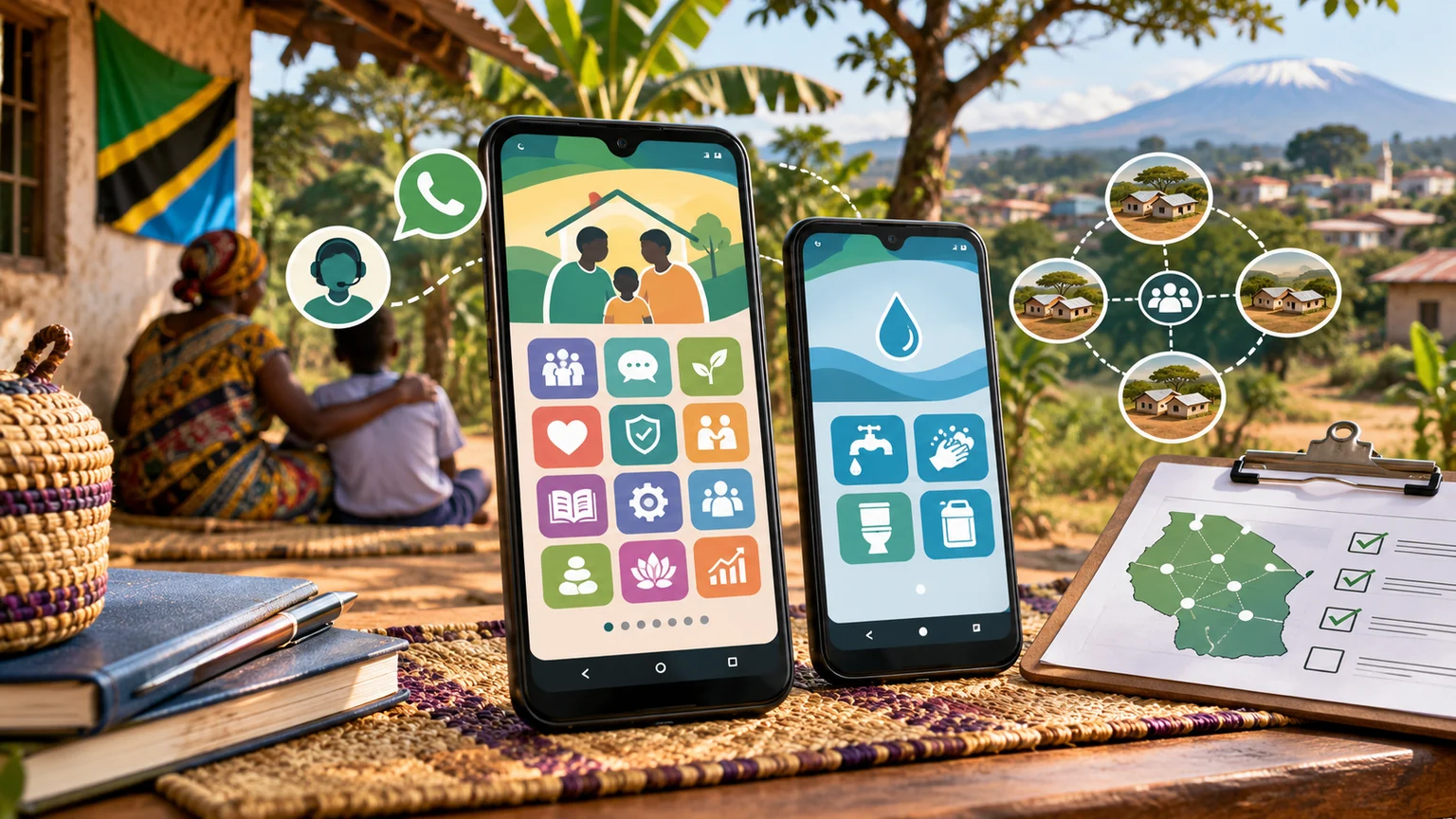
Childhood sexual, physical, and verbal violence are global public health priorities, affecting 1 billion children each year. ParentApp integrates sexual violence prevention into WHO-UNICEF's open-access Parenting for Lifelong Health programme, using innovative blended digital delivery. We aimed to test the efficacy of ParentApp in preventing sexual violence and maltreatment against adolescent-aged children and improving preventive mechanisms such as family mental health and adolescent-caregiver relationships. This cluster-randomised, controlled trial was conducted in 80 Tanzanian sub-wards. Participants were primary caregivers aged 18 years and older and their adolescents (aged 10-17 years). Sub-wards were randomly assigned (1:1) to receive either ParentApp (intervention group) or a control WASHApp programme. Clusters were randomly assigned in blocks of six, stratified by urban versus rural location. Statisticians carrying out randomisation and data analysts were masked; it was not possible to mask participants or researchers. Intervention groups received a low-cost Android phone installed with ParentApp, a 12-module offline-first app, with one in-person orientation session and remote support via WhatsApp group chats, at a delivery cost of US$6 per family at scale, or $10 with 20% smartphone provision. Control groups received a low-cost Android phone installed with WASHApp, a 12-module offline-first app for water, sanitation, and hygiene, with one in-person orientation session. The primary outcomes were adolescent sexual violence victimisation and maltreatment and high-risk situations for sexual violence, assessed in all participants irrespective of uptake and engagement at 5 months and 18 months post-baseline. The trial was registered on March 14, 2023, with OSF (https://osf.io/t9fxz) and is completed. Between May 11 and Oct 9, 2023, 2692 caregiver-adolescent dyads were screened for study eligibility; 2396 adolescents (1217 [50·8%] female and 1179 [49·2%] male) and 2396 caregivers (1795 [74·9%] female and 601 [25·1%] male) were recruited. 2145 (89·5%) adolescents and 2252 (94·0%) caregivers were retained in the study and included in analyses at 18 months. Adolescent girls in ParentApp clusters had a substantial reduction in past-month sexual violence victimisation compared with those in control clusters (incidence rate ratio [IRR] 0·43 [95% CI 0·21-0·86]; p=0·018), with no effect for boys (1·21 [0·59-2·43]; p=0·60). Past-month maltreatment (physical abuse, verbal abuse, and neglect) was lower in ParentApp clusters than in control clusters (adolescent report IRR 0·92 [0·88-0·96]; p<0·0001, caregiver report 0·87 [0·82-0·92]; p<0·0001). Past-month exposure to high-risk situations for sexual violence was lower in ParentApp clusters than in control clusters (adolescent girls IRR 0·87 [0·77-0·97]; p=0·012, adolescent boys 0·85 [0·79-0·91]; p<0·0001, caregiver report 0·81 [0·75-0·88]; p<0·0001). There were no reported adverse events. A low-cost blended digital parenting programme in countries such as Tanzania could simultaneously reduce childhood sexual violence (for girls) and maltreatment and sexual violence risk situations (for girls and boys). UK Research and Innovation Global Challenges Research Fund, The Oak Foundation, The LEGO Foundation, The European Research Council, and an anonymous donor.