Physical/Tech

2D theoretically twistable material database

| Source: Science

The study of twisted two-dimensional (2D) materials, in which twisting layers create moiré superlattices, has created opportunities for investigating topological phases and strongly correlated physics. The broader potential of a seemingly infinite set of twistable 2D materials remains largely unexplored. Here, we define “theoretically twistable materials” as single- or multilayer structures that allow for the construction of simple continuum models of their moiré structures. Our high-throughput

The study of twisted two-dimensional (2D) materials, in which twisting layers create moiré superlattices, has created opportunities for investigating topological phases and strongly correlated physics. The broader potential of a seemingly infinite set of twistable 2D materials remains largely unexplored. Here, we define “theoretically twistable materials” as single- or multilayer structures that allow for the construction of simple continuum models of their moiré structures. Our high-throughput algorithm systematically searches for theoretically twistable semimetals and insulators based on the Topological 2D Materials Database (2D-TQCDB). By analyzing key electronic properties, we identify thousands of candidate materials, propose representative twistable materials, and provide examples of crystal growth and exfoliation for several of them. Our results provide a resource for future experimental and theoretical studies of moiré systems.

Read the original source →

Related Stories

Physical/Tech

Cassiterite U-Pb geochronology: A framework for tin provenance in the Bronze Age world.

The origin of Bronze Age tin is one of the most compelling mysteries in global archaeology. A number of studies were carried out to identify fingerprints to determine tin sources, but all failed to suit the contexts of Bronze Age China. This study provides the first comprehensive provenance analysis of the tin ore utilized during the Shang dynasty of China. Using U-Pb dating analysis on cassiterite grains surviving in various contexts including primary smelting site, metal resource hoard, and br

Continue reading
Physical/Tech

Host-mediated insecticide sequestration in target-site-resistant pests impacts parasitoid fitness and evolution.

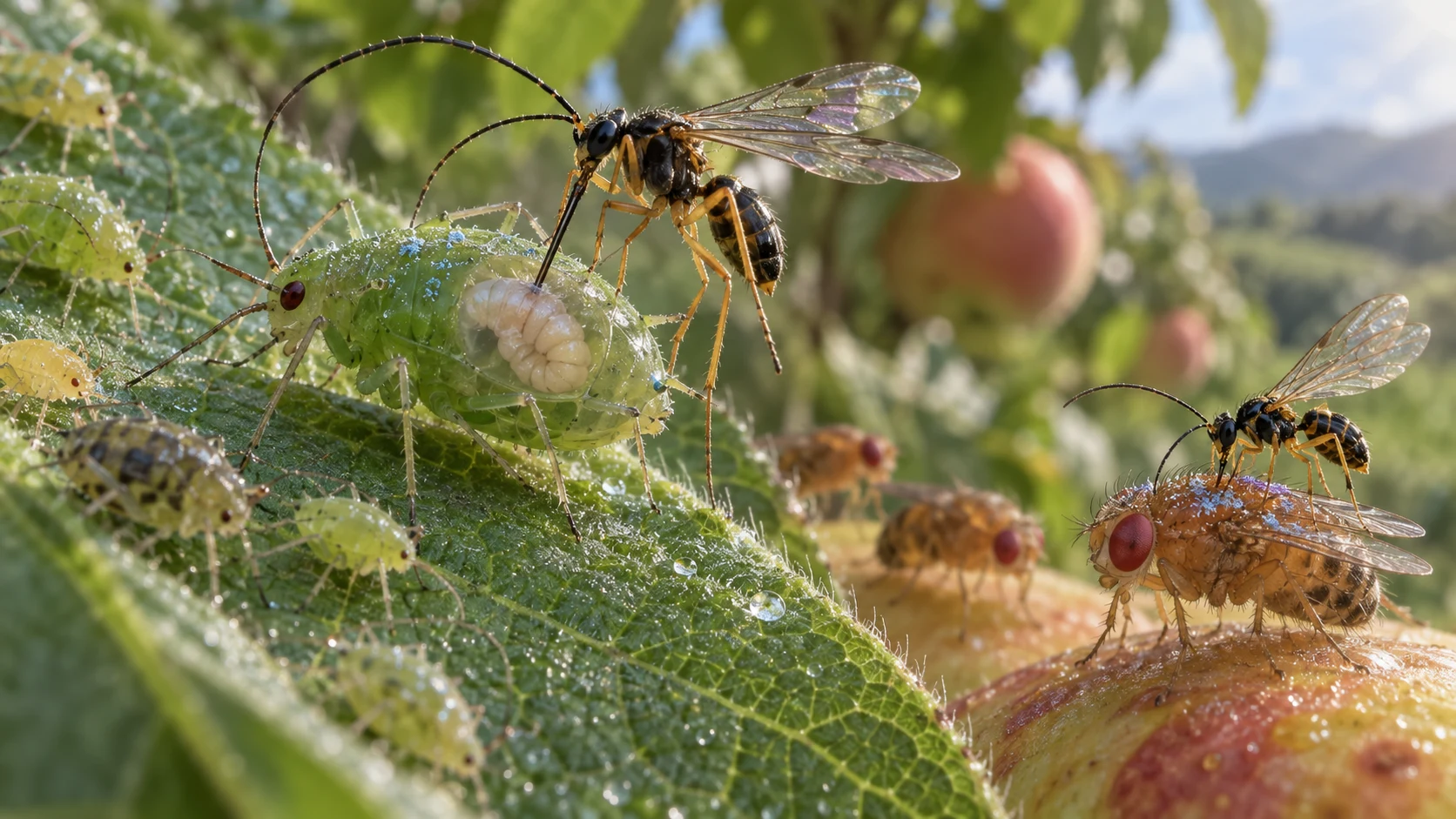
Insecticide resistance poses a major challenge to global pest management, yet its cascading effects on ecological networks remain poorly understood. Here, we show that target-site-resistant herbivorous insects can accumulate unmetabolized insecticides and inadvertently function as "toxic prey," impairing the fitness of their natural enemies. Using neonicotinoid- and spinosyn-resistant Myzus persicae and genetically modified Drosophila melanogaster , we demonstrate that resistant hosts surviving

Continue reading
Physical/Tech

Human learning is an understudied but promising lever for boosting human-AI synergy.

Humans collaborating with AI hold the promise of achieving superior outcomes compared to either acting alone (i.e., human-AI synergy). However, the conditions that facilitate such synergy when humans are advised by AI are not well understood. A recent meta-analysis showed that, on average, human-AI combinations do not outperform the better individual agent. We argue that this pessimistic conclusion arises from insufficient attention to human learning in experimental designs. To substantiate this

Continue reading
Physical/Tech

Experience-driven plasticity in the secondary somatosensory cortex in people born without hands.

In congenital handlessness, where individuals rely on their feet for compensatory manual functions, reorganization in the primary somatosensory cortex (SI) appears to be limited to local shifts by adjacent body parts. It remains unclear how congenital handlessness and lifelong compensatory foot use shape the sensorimotor system beyond SI, and whether compensatory abilities can drive broader functional reorganization. Here, we used task-based and resting-state functional MRI (fMRI) to investigate

Continue reading
Physical/Tech

Splicing suppression alters the STING transcription start site to attenuate antiviral innate immunity.

The cGAS (cyclic GMP-AMP synthase)-STING (Stimulator of interferon genes) pathway plays a central role in antiviral innate immunity in vertebrates. Recent studies have shown that invertebrates possess a related cGLR (cGAS-like receptor)-STING pathway. However, due to the lack of direct evidence demonstrating viral evasion of cGLR-STING-mediated immunity, the functional importance of cGLR-STING pathway in antiviral responses remains uncertain in invertebrates. Here, we show that an insect picorna

Continue reading